
Format
Opinion piece, commentary
Publication Date
Published by / Citation
Moshiri M, Salehi Manzari R, Dadpour B, Fathi HR. Aligning addiction policy with physiological safety: the "renal trap" of opioid maintenance therapy in vulnerable patients. Int J Health Policy Manag. 2026;15:9804. doi:10.34172/ijhpm.9804
Original Language

English

Keywords
Opioid Maintenance Therapy
Geriatrics
public health
Addiction Policy
Renal Trap

The "Renal Trap" of Opioid Maintenance Therapy

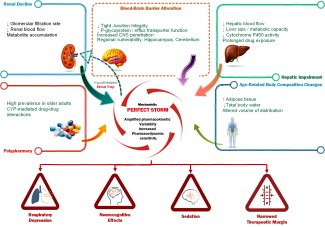
Schematic diagram illustrating how age-related factors like renal decline and polypharmacy create a "perfect storm" for opioid toxicity.

Are we ignoring a silent physiological hazard in aging patients on Opioid Maintenance Therapy (OMT)?

In our latest Viewpoint, we introduce the "Renal Trap" hypothesis, highlighting how age-related renal decline dangerously amplifies exposure to renally cleared opioids like morphine and opium tincture. We argue against the "one-size-fits-all" approach and propose a mechanism-based framework that integrates routine eGFR monitoring to align addiction policy with actual organ capacity.


Share the Knowledge: ISSUP members can post in the Knowledge Share – Sign in or become a member