Adults with Problematic Opioid Use Released from Jail: Mutual Help Groups and Medication Support Contribute to a Greater Likelihood of Opioid Abstinence
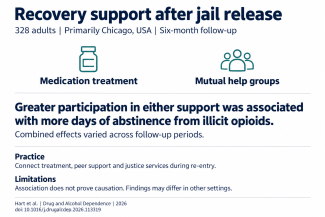
Leaving jail is an important point for connecting people with treatment and recovery support. A recent study explored how medications for opioid use disorder and mutual help groups, including 12-step programmes, relate to abstinence from illicit opioids during the first six months after release.
The study followed 328 adults who screened positive for problematic opioid use, primarily in Chicago. Greater participation in both medication treatment and mutual help groups was associated with more days of opioid abstinence. However, the relationship between the two supports was less straightforward: an additional association with mutual help participation was found only among people with lower medication participation at three months, and this interaction was not observed at six months. The findings show associations and do not establish that either support caused the observed outcomes.
For the ISSUP community, this opens a useful conversation about how we connect services around people leaving custody. Treatment practitioners can consider how medication access and follow-up fit into release planning. Recovery practitioners and peer networks can help people explore mutual help options that reflect their preferences and support their treatment choices. Mutual help participation should not be treated as a substitute for medication or a condition for receiving it.
For prevention practitioners, the practical connection is preventing further harm through timely information and links to support. Colleagues in law enforcement, corrections and drug supply reduction can contribute through coordination with health and community services, helping referrals translate into access after release.
The study comes from a specific US setting, so its findings should not be assumed to apply equally everywhere. Even so, it gives us a useful prompt to look at our own arrangements: how well do medication services, peer support and justice-sector partners connect when someone returns to the community?