

Faith, Identity and Belonging: Preventing Criminal Recruitment with Tim Rosier Pt. 2
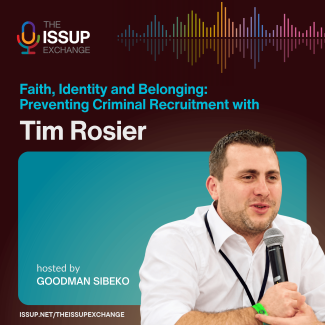
In this second episode of Faith, Identity and Belonging: Preventing Criminal Recruitment, Professor Goodman Sibeko continues the conversation with Tim Rosier, exploring how the need for identity, recognition, safety and belonging can make young people vulnerable to recruitment.
They discuss how gangs and organised criminal networks exploit these needs, particularly through online spaces, and why it is important to recognise vulnerability without labelling young people or treating risk as their destiny.
The conversation also looks at the role of families, schools, youth workers and faith communities in providing trusted relationships, safe spaces and a genuine sense of belonging. Tim reflects on the contribution faith communities can make to prevention, alongside the need for stronger research into faith-based approaches.This episode highlights an important part of prevention: creating places where young people feel valued, connected and supported before exploitative groups fill that gap.
Featured Voices
Host – A/Prof. Goodman Sibeko
ISSUP Global Scientific Advisor.
Head of Addiction Psychiatry, University of Cape Town.
LinkedIn: goodmansibeko
Twitter/X: @profgsibeko
Guest – Tim Rosier
Tim Rosier is a freelance academic educator and consultant most recently a Senior Lecturer at the University of Derby. His professional journey spans probation, youth justice, prison work, public health and academic research. That combination of frontline and scholarly experience informs his interest in why some young people become involved in crime while others remain resilient in the face of similar adversity, and in how identity, belonging, faith and positive relationships may contribute to prevention and long-term desistance.
Connect with Tim: Tim Rosier on LinkedIn
Read his publication: Growing in maturity, growing in faith, growing out of crime: The role of children’s and young people’s faith in desistance. Read it here.
Time Stamps
Professor Goodman Sibeko (00:00)
Welcome back to Faith, Identity and Belonging, Preventing Criminal Recruitment with Tim Rosier. Long before a young person encounters a justice service, they are forming an identity already and looking for safety, recognition, purpose, place to belong. In this episode, we explore how gangs and organized crime networks really exploit these ordinary development needs and how families, schools, youth organizations, and faith communities can create credible alternatives before harm becomes entrenched. Tim, welcome back. I'm so glad you can join us again.
Tim Rosier (00:33)
Thanks, Goodman. Great to see you again.
Professor Goodman Sibeko (00:35)
Awesome. So perhaps let's begin with why belonging matters. Why are identity and belonging so central to understanding vulnerability during the adolescent and early adulthood stages?
Tim Rosier (00:46)
I think we've got remember, as we said in the first episode, that we've got to remember the humanity of every person that we engage with. Yeah. And at the end of the day, human beings are social beings. we're hardwired for social connectedness and a sense of belonging, and that in turn shapes our identity. So for young people in the formative years, this has an impact for the rest of their life. And I think really, belonging and identity are the two words that sum up our whole experience.
And answer the three what I see as the three foundational questions for what it means to be human. Who am I? Where have I come from? And where am I going? And so that sense of identity of you know, who am I, where am I going as someone, is partly linked to who am I related to, who am I connected to, where have I come from, where am I going, what are my connections? And humans don't operate in a vacuum.
As I say, we're created to be social beings. And so that whole sense of belonging and identity are so intrinsically linked because I think that's really what it means to be human.
Professor Goodman Sibeko (01:46)
And so considering this, what is it specifically that makes some young people especially susceptible to recruitment into gangs, especially county line activities and other organized criminal network activities?
Tim Rosier (02:00)
Yeah, I think often when young people have experienced challenges in their upbringing or their life, they may have experienced adverse childhood experiences, traumas or whatever it might be, there's often something that's missing. So, you know, gangs or organized criminal entities promise things that are often missing in young people's lives. And so they promise that sense of belonging, maybe of recognition.
They might offer affirmation and a sense of status, reward or respect. But physically as well they might offer protection and some material incentives as well, particularly where poverty is a particular issue. So and I think that's a particular draw if these things are lacking from family and community experiences. So where there are perhaps broken or challenging family experiences or fractured community relations, it's these people that can fill that space and provide that foundational need in the life of a young person. So it's that the promise of something that's missing I think could be a real draw and a real allure.
Professor Goodman Sibeko (02:58)
It's this containing support of escape from the trauma, the exclusion, the family strain that's really affecting them. So how can we talk about risk without labeling young people and treating vulnerability as destiny, as inevitable, as identity?
Tim Rosier (03:14)
Yeah, I think there's a danger when working with young people that we see what is a natural part of growing up and the growing process, the mature maturing process. We can we can overclinicalize it, over risk, we can become risk adverse to these things. So sometimes obviously risk taking behavior and trying out new things are a part of growing up. And so the danger is that we can become too sensitized and we can criminalize young people when actually what they're doing is just growing up. And certainly that's the case. We've seen that with in the UK with things like the gang crisis. That there's a there's a a bit of a moral panic about all young people being you know hoodie-wearing thugs and gangs where actually they're just wanting to belong, have a sense of belonging, express themselves in a certain way, hang out with certain people, and so on. So I think there's a danger that we can get drawn into clinicalising what is actually just part of a genuine part of growing up.
Professor Goodman Sibeko (04:08)
So Tim, you know, I I'm curious about whether your work or your research has given you any sense at all of how criminal groups perhaps go about deliberately offering the things that young people feel like they're missing that we've spoken about already. So status, protection, income, a sense of community. How do they what are they doing practically to reach out to these youth and offer them these these things?
Tim Rosier (04:34)
Yeah, and I think well the internet is the big key here, isn't it? Is it's about that's where young people hang out, it's where their social space is. and so actually where things would perhaps be more visible out on the streets and on corners, it's now taken online. And so people are often operating within the digital space in in areas that are often unpoliced and unprotected. and using that process of allurement, of befriending, of offering hope, whereas actually what they're doing is drawing them into criminality and into areas of risk. and I think they often do that in a number of ways. They know what young people are looking for and will exploit that that chink in the chainmail, those weaknesses that exist in young people. So very often if you're a poor young person in need of cash, the offer of easy money is really alluring, you know, for for illegal jobs.
Or if young people are lonely and seeking friendship and connection, they can act nice at first in that sense of belonging. Or if young people are scared and wanting solace, they want the promise of safety, well, these people can offer protection, but it comes at a price. and if if a young person feels unseen and unwanted and and without value, they want respect and affirmation, well then these people can offer that. They can offer the big title or the loud voice or the sense of reward and belonging. So they will offer these things as allurements within that space that is often lonely and and risky to young people and then drawing them in. And I've seen it particularly with the counter radicalization work is that hook can then very quickly lead to them being drawn and then isolated from those protective networks, that might exist, by which time that sense of guilt and and detachment can be really exploited further. So it's in those early stages that I think actually we need to focus our attention.
Professor Goodman Sibeko (06:24)
Tim, I would imagine that supporting and creating a a safe environment would require some sort of curiosity, genuine curiosity and relationship building and not punishment. So having said that, what early changes would you say a a teacher or a parent, a youth worker or a practitioner might start to notice that might in you know give them the sense that something is up.
Tim Rosier (06:49)
Hmm. That African proverb is really helpful here, is that it takes a whole village to raise a child and different people will notice different things about the young people depending on their positionalities. The type of relationship that each of these professionals has is really different and should be so. And it's really important that they then speak to each other. So in that safeguarding practice in this country, it's really important that lines of communication are open and clear and people are able to big up a a big picture and share information, but obviously a teacher's role is very different to a youth worker. A teacher will see the young person within a day-to-day context, will see often a lot of them, and will notice changes to their behavior, such as perhaps becoming more withdrawn or sad. and it's difficult because obviously these things go end in that with becoming a teenager, don't they, growing up? But they will notice that gut feeling about changes.
A youth worker is very different because they have obviously a very trusting relationship that's informal and will be very, very different and often will have conversations with young people that other professionals won't even be able to have. and so those conversations, those trusted conversations are really, really important and youth workers I think have a vital role to play. And certainly in the UK the decimation of the youth services is to our detriment and it's taken out a whole area of relationship with young people that I think is so powerful. So youth workers have a role to play. And then families as well know these things and often feel desperate that they notice the change but don't have the language to describe what's going on. And parents themselves often have don't have places to go. Which is why I think family centres and you know trusted relationships with social organisations, civic organisations is important. And when that joined up thinking happens, actually we can then identify perhaps that there are things going on.
But again, it's about being front facing, community embedded and trusted. all of these organizations need to be interconnected and have effective lines of communication.
Professor Goodman Sibeko (08:43)
Having said that, on a on a practical level, what can a community that identifies itself as being genuinely protective? And I guess this extends to the family as well, and it's just a general social network, what what can they offer? What can we offer that competes with the pull of a criminal network? Keeping in mind that what's pulled them to the criminal network is the absence of some of these these safety nets that they're seeking that the criminal network is offering. What can we do on a practical level?
Tim Rosier (09:11)
Yeah. Well as I said it the joined up thinking and engagement is really important and and young people will go will find will naturally find the people that they can connect with and trust. And so I think it's really important that we recognize how different professionals have got different parts to play, which is why I think youth work is so important at the grassroots informal level. They can be the ones who signposts and connect to other services. when we become much more responsive and interventionist, I think we lose out on that early space of connection with young people. When we just problematize young people as a you've done this and we will stick this intervention in to r resolve it. We lose out on all of that grassroots, relational, early early stages of engagement that youth work can offer us. but that is most fundamental. I mean we just need to be able to offer exactly those things I just mentioned. That sense of being believed, of feeling trusted, of feeling worth, having somebody to believe in you is really, really, really important to to provide that sense of recognition, of affirmation, being respected, but also having safe places to go for protection and an access to resources, if money is tight, for example, having access to resources that doesn't make them vulnerable, to say sex sex trafficking or work or penalty lines or whatever it might be. So resource and relationship are the two key things and that needs to happen at a much earlier point.
Professor Goodman Sibeko (10:27)
And how does this extend to the faith community? So what what what protective engagements can the faith communities provide?
Tim Rosier (10:34)
Well, faith communities are obviously embedded in every community and they are the eyes and ears of the local community and they are often the people who at the grassroots level will notice these things and be most available. and I think faith communities I go to a church, there's nothing quite like this distinctly unique. Because the makeup of faith communities is like nothing else. They are so diverse in their age, gender, ethnicity, their makeup, that they they are a true reflection of the community. I don't think any other organisation often can can replicate. And so faith communities are diverse and accessible in their nature. But also their motivations are different to perhaps professional services. They're not motivated by targets or receiving funding or fulfilling a particular professional aim, that they're motivated by something outside of themselves. And I think faith communities, when they're motivated by their experience of a higher being and their service of their community, provide something very, very, very profoundly different but compelling. And so faith communities, I think, have the resources and the belief and then desire to serve their local community and meet needs. And I think often faith communities are an untapped resource that professional services often overlook as a result and they're often the bridge between our service users and professional services at at that early preventative grassroots level.
Professor Goodman Sibeko (11:59)
I think having said that, what in your mind would then distinguish meaningful protective faith engagement from simply attending religious services? What's the what's the difference? Yeah.
Tim Rosier (12:10)
That that's a great question. I think it goes back to my what I was saying in our first episode around the difference between faith, spirituality, and religion. I think that it's helpful to understand the difference between them, but faith is deeply foundational based on our experiences. And so rather than just turning up to a place of worship and doing like attending something, that actually it's important to understand that faith is intrinsic in shaping the whole human experience, not just the outworking of a habit. And so genuine faith engagement is recognizing that actually it's it's more than just religious observance. It's deeply personal, it's experiential, and actually there's something in that that that can be a real potent force for good and change in the future. So I think faith engagement is different to perhaps professional you know, professional services engagement for those reasons that it's it it's it's outside of our own human experience to some maybe a higher being and is shaped by a deeply personal experience.
Professor Goodman Sibeko (13:07)
You do you have a model, Tom, you know, emerging or established where faith based commun or community or organization successfully reduced vulnerability to recruitment? and and what what makes you so confident that it it helped?
Tim Rosier (13:21)
Yeah, I think there's that's probably an area for development. there are examples of faith based prison work, particularly in Latin America, that I think are some really helpful examples, but I think it's it's an area of weakness at the moment. I think further research and development is probably needed. I mean, can give you various examples, as I've said earlier, of where faith based organisations have been successful in reducing vulnerability. You know, examples being like organisations such as Junction forty two in the north east of England and the Message Trust in the north west of England both doing prov' prison based work but through the gate mentoring and then having relational communities on the outside. Fantastic models, but in terms of a particular model that could be replicated for people to to utilize. I think that's probably something that your listeners might want to discuss further and think about. and maybe share. Maybe that I don't know about it, but it'd be great to hear examples from from other countries.
Professor Goodman Sibeko (14:11)
Any other research gaps that you think we might need to think about as we talk about faith as a as a prevention mechanism for recruitment crime?
Tim Rosier (14:19)
Yeah, I think there's probably a dearth of longitudinal studies around the efficacy of faith. it's very often short term and small scale sample size. I'd love to see more longitudinal and widespread studies and and that links back to perhaps some of the challenges in the secular society around getting ethical clearance and funding for those sort of studies. But I'd love to see more of that. But also I think it's it would be great to see some studies around unpacking what we mean by faith based services. So actually I think there might be a difference between what we mean by faith based, faith informed, faith promoting. What do we mean by faith based services? Is it about the people that they employ that are motivated by their personal faith? Is it about a set of values that governs the organisation? Is it about the work that they do? I think more research around the diverse nature of faith based work is probably needed along those lines rather than it being just a homogenous group of over here on one side. Faith faith informed practice is actually a much more diverse concept than I think we perhaps realised.
Professor Goodman Sibeko (15:21)
Thank you for surviving another episode with us. you've you've you've really reminded us that prevention isn't only about warning people to stay away from danger. It's also about ensuring that there are credible resources and credible sources of identity for dignity, credible spaces for connection and opportunity that are available before those gaps are filled by exploitative groups. And you've also given us a clarion call for the evidence gaps that we should aim to fill. In the next episode, we're gonna move from prevention to change after the involvement in offending. we're gonna ask some questions about what dissistance really means and how hope, purpose, forgiveness, and supportive communities may help build a person a different life. Tim, we'll see you then.
Thank you for spending this time with us. We hope you enjoy that as much as we do. Be sure to hop on over to our website, isop.net, where you'll find information on how to sign up for free membership. Take care and catch you on the next one.
About the ISSUP Exchange
The ISSUP Exchange podcast series explores the evolution of responses to the challenges of substance use—from research and training to ethics, quality standards and evidence-based practice. We connect the dots so you can see the big picture.
Explore more episodes and join the ISSUP podcast community here>>>
About ISSUP
ISSUP is a global network that unites, connects, and shares knowledge across the substance use prevention, treatment, and recovery support workforce. Our mission is to make our members’ work as effective as possible—by providing access to training, resources, and a vibrant professional community.


