All Resources for 'Public Health'

2025 National Drug Threat Assessment (NDTA)

Publication Date
Format
Report
Themes
Public Health
Law
Emerging substances 
Law Enforcement
Border Control
Supply & Market Disruption
Regulatory Control of Substances

The Drug Enforcement Administration (DEA) presents the 2025 National Drug Threat Assessment (NDTA), a comprehensive report that provides a national-level perspective on the threats posed by deadly illicit drugs and the violent transnational...

Educating Educators on Substance Use: Insights from the Blended Approach

Publication Date
Format
Scientific article
Themes
Prevention
School-Based
Quality Assurance
Implementation Science
Monitoring and Evaluation
Professional Development
Theories and Science
Partner Organisation

The school-based drug prevention training program under study is about the combined use of an online learning format and a traditional face-to-face session. This study aims to identify the factors that facilitated or impeded the successful...

AddictologyIssue 2/2026

Fear of Missing Out on Social Networking Sites: Associations with Life Satisfaction, Problematic Social Media Use, Depressive Symptoms and Phubbing in Young Adulthood

Publication Date
Format
Scientific article
Themes
Prevention
Media-Based
Psychoactive Substances
Addiction
Populations
Family
Children, Adolescents & Youth 
Public Health
Theories and Science
Partner Organisation

INTRODUCTION: Social networking sites have become an integral part of everyday life. Their use is closely linked to the phenomena of FoMO (fear of missing out), phubbing, depressive symptoms, life satisfaction and problematic social media...

AddictologyIssue 2/2026

IPREV: A National Interactive Platform for Promoting Mental Health and Preventing Risk Behaviour – A Case Study of a Comprehensive School- and Community-Based Prevention System

Publication Date
Format
Scientific article
Themes
Prevention
Community-Based
School-Based
Quality Assurance
Best Practice Guidelines
Implementation Science
Monitoring and Evaluation
Professional Development
Public Health
Global Health Perspectives
Theories and Science
Mental Health
Resilience and Coping Strategies
Partner Organisation

BACKGORUND: Infrastructural support has become a critical factor in the implementation of prevention at the regional and national level. The complexity of risk behaviour prevention requires a diverse and systematic approach.


AIM: This...

Adaptation of the Multidimensional Inventory of Recovery Capital (MIRC) to the Czech Environment

Publication Date
Format
Scientific article
Themes
Treatment
Ancillary Services
Recovery Support
Peer and Community Support
Recovery-Oriented Services
Quality Assurance
Best Practice Guidelines
Monitoring and Evaluation
Public Health
Theories and Science
Partner Organisation

INTRODUCTION: While international attention toward addiction recovery research is growing, in the Czech environment there is still a lack of research data and tools for measuring this concept. The primary objective of the research project...

AddictologyIssue 2/2026

Call for Abstracts: Lisbon Addictions

Format
News
Themes
Treatment
Prevention
Prevention
Treatment
Addiction
Populations
Professional Development
Public Health
Theories and Science
Mental Health
Policy

The 2027 edition of Lisbon Addictions will take place from 20–22 October 2027 under the overarching theme ‘Addiction in times of disruption: science, technology and whole-of-society responses’.

Submission of abstracts

Potential...

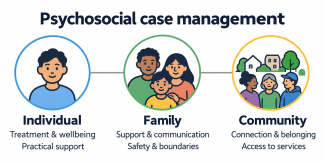
Psychosocial case management: connecting treatment, relationships and community recovery

Publication Date
Format
Guide
Themes
Prevention
Community-Based
Treatment
Ancillary Services
Behavioural Therapy Interventions
Pharmacological Interventions
Treatment Settings
Recovery Support
Peer and Community Support
Recovery-Oriented Services
Populations
Public Health
Mental Health
Policy
Psychosocial case management connects evidence-based treatment with the practical and relational support needed for sustained recovery. Its clearest benefits are helping people access services and remain engaged in care. Individual care should consider housing, mental health, meaningful activity and continuity of support after discharge. Families and affected communities also need support, with involvement guided by consent, safety and individual circumstances. For treatment and prevention, interventions should address identified needs, draw on relevant evidence and be reviewed as circumstances change.

Connecting Evidence, Prevention, Law Enforcement and Community Action: Key Insights from ISSUP 2026

Format
Reading List
Themes
Faith-Based Strategies 
Recovery Support 
Treatment
Prevention
Prevention
Community-Based
Faith-Based
Family-Based
School-Based
Treatment
Faith-Based
Behavioural Therapy Interventions
Treatment Settings
Recovery Support
Faith-Based
Peer and Community Support
Psychoactive Substances
Addiction
Populations
Children, Adolescents & Youth 
Quality Assurance
Best Practice Guidelines
Implementation Science
Professional Development
Public Health
Global Health Perspectives
Policy Advocacy
Mental Health
Workforce Mental Health and Well-Being
Policy
Law
Data
Criminal Justice 
Law Enforcement
Border Control
Police 
Supply & Market Disruption
Regulatory Control of Substances
Responding to Drug-Related Offending 
Health & Justice Responses 
Justice and Diversion
Reading List

How do we go about translating evidence into effective action, strengthen prevention, address drug-related crime, improve access to treatment and recovery support, and build safer, healthier communities?

This age-old question was explored...

Para-Methoxymethamphetamine (PMMA) in tablets sold as ecstasy: Why this matters across our workforce

Publication Date
Format
Community update
Themes
Prevention
Treatment
Recovery Support
Psychoactive Substances
Public Health
Law Enforcement
Supply & Market Disruption
UNODC reports increasing PMMA detections in tablets sold as ecstasy in Europe, raising serious toxicity concerns. The alert encourages coordinated information sharing across prevention, treatment, recovery and law enforcement. It does not confirm local circulation, but prompts a review of local early warning responses.

Share the Knowledge: ISSUP members can post in the Knowledge Share – Sign in or become a member