


Search
 Treatment
The range of medical, psychological, and social services designed to help individuals reduce or stop substance use and manage substance use disorders. Treatment may include assessment, counselling and behavioural therapies, medication-assisted treatment, withdrawal management, and support for co-occurring mental or physical health conditions. Effective treatment is typically person-centred and evidence-informed, and may be provided in outpatient, community, or residential settings. Treatment aims to improve health and functioning, reduce substance-related harms, and support individuals in moving toward recovery and long-term wellbeing.



A Scientific Development for the Treatment of Cocaine Addiction?
A new study published in the journal Biological Psychiatry claims that one’s desire for cocaine may be reduced by blocking signalling from a specific system in the brain primarily responsible for promoting wakefulness and appetite.
The...
Emotional Abuse during Childhood Linked to Future Opioid Use
Recently published in the journal Addictive Behaviors, a new study claims the existence of a link between childhood abuse and opioid use later in life.
According to the investigation, emotional abuse, specifically, more so than sexual or...
Limited Opportunities? Caring for People with Substance Use Disorders
According to a new study, most health care professionals are given little opportunity to learn about substance abuse in pre-service educational programmes.
ISSUP at the 60th Session of the Commission on Narcotic Drugs
Earlier this week ISSUP attended the 60th Session of the Commission on Narcotic Drugs (CND) at the Vienna International Centre.

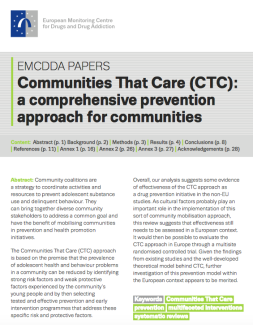
Evaluating Communities That Care (CTC)
‘Community coalitions’ is a preventative strategy that coordinates activities and resources to reduce adolescent substance use and delinquent behaviour, mobilising communities in the promotion of health and prevention initiatives.
Communit...
Understanding the Brain’s Role in Drug Addiction
 Credit: Dierk Schaefer" data-entity-type="file" data-entity-uuid="002a4c22-eeef-4b85-b397-11851eeea7e8" height="178" src="/files/inline-images/brain_1.jpg" width="175">
Findings recently revealed in Neuroscience & Biobehavioral Reviews and the Journal of Neuroscience suggest the cerebellum is co-responsible for the alterations in the brain that are linked with excessive substance abuse.
This goes...
Preventing and Treating Tobacco Use among Canadian Youth
The Canadian Task Force on Preventive Health Care has issued a new evidence-based guideline for combatting tobacco use by children and young adults aged 5 – 18, suggesting that physicians ought to have a more active role in the prevention...
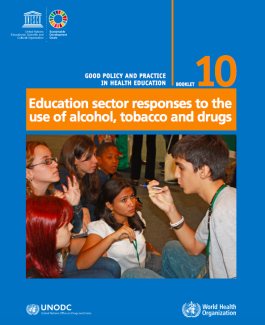
Good Policy and Practice in Health Education
Booklet 10: Education sector responses to the use of alcohol, tobacco and drugs
The latest volume in the Good Policy and Practice in Health Education Series has been developed via international consultation between the United Nations...
Public Health Strategies to Prevent Neonatal Abstinence Syndrome: CDC Grand Rounds
Public Health Burden of Neonatal Abstinence Syndrome
Neonatal abstinence syndrome (NAS) is a drug withdrawal syndrome that most commonly occurs in infants after in utero exposure to opioids, although other substances have also been...
Podcast: Do Tobacco Cessation Interventions Provided during Substance Abuse Treatment or Recovery Help Tobacco Users to Quit?
Smoking rates in people with alcohol and other drug dependencies are two to four times those of the general population. Concurrent treatment of tobacco dependence has been limited due to concern that these interventions are not successful...
Effectiveness Bank Matrix Bite: The Talker in the Talking Route to Recovery
In psychosocial therapies, the enactment of the client-worker relationship is the treatment. Structured around Carl Rogers’ classic formulation of the “necessary and sufficient conditions” for therapeutic progress, the cell in the Alcohol...
Opioids Linked to Increase in Cocaine-Related Overdose Deaths
Heroin and synthetic opioids are propelling an upsurge of late in cocaine-related overdose deaths. This is according to a national survey carried out by researchers at the National Institute on Drug Abuse (NIDA) amongst other drug...
Alcohol Use Disorders Webinar
The Progress in Mind Resource Centre held a one-hour webinar on alcohol use disorders. The webinar was delivered by Wim van den Brink, Professor of Psychiatry and Addiction at the University of Amsterdam, and Steve Brinksman, GP and...

Great Resources for Teachers
Are you a teacher? Are you looking for materials or lesson plans on the effects of drugs and drug abuse? The National Institute on Drug Abuse (NIDA) has created a great database of more than 70 teacher materials on the effects of drugs and...
Training of Peer Educators at Tihar Central Jail
SPYM has started a prison intervention program among drug abusing youth who are inmates of the Central Jail, Tihar in New Delhi. Peer educators have been identified and a training program was conducted by Dr. Rajesh Kumar, Executive...

Does AA Really Help Drinkers Stop?
12-step fellowships offer a way to reconcile shrunken resources with the desire to get more patients safely out of treatment. Accounting for the self-selection bias which has obscured AA’s impacts, this synthesis of US trials finds that...
Cocaine Addiction Leads to Build-Up of Iron in the Brain
According to a new study, cocaine addiction may alter the way the body processes iron.
Counselling Parents and Teens about Marijuana Use in the Era of Legalisation of Marijuana
Abstract
Many states have recently made significant changes to their legislation making recreational and/or medical marijuana use by adults legal. Although these laws, for the most part, have not targeted the adolescent population, they...
US Pediatricians Warn of Rising Risks to Youth from Loosening Marijuana Laws
New American Academy of Pediatrics report calls on doctors to help protect patients’ developing brains and bodies from the health harms of marijuana amid increased legalisation
The AAP urges pediatricians screen adolescents and preteens...
Effectiveness of the Gold Standard Programme Compared with Other Smoking Cessation Interventions in Denmark
Strengths and Limitations of this Study
-
This study was based on a large cohort of smokers from all regions and settings in Denmark. 46 287 smokers were included in the study, and the follow-up rate was high (74%).
-
The study was...