


Search
 Psychoactive Substances
Psychoactive substances are natural or synthetic substances that act on the central nervous system and alter mental processes such as mood, perception, cognition, consciousness, and behaviour. These substances may be legally prescribed medications (e.g., pain medications or sedatives), legally available substances such as alcohol or caffeine, or controlled or illicit drugs. Psychoactive substances can be used for medical, social, cultural, or recreational purposes, but some carry risks of misuse, dependence, and health or social harms when used in harmful ways.
Alcohol Abuse, Adulthood and ADHD
Attention deficit hyperactivity disorder (ADHD) is one of the world’s most common developmental conditions. A recent collaborative study conducted in the United States and subsequently published in the journal Addiction shows that greater...
Youth Who Misuse Drugs Are More Likely to Commit Suicide
Suicide ranks among the top five causes of death among 15- to 19-year-olds. Research has shown that youth who misuse drugs are more likely to commit suicide than their peers who do not abuse substances. An estimated 27-50 percent of...
Online Learning Module: The Effects of Cannabis Use during Adolescence
The Canadian Centre on Substance Abuse (CCSA) has released an engaging learning module that provides evidence-based information on the effects of cannabis use during adolescence. The module is based on CCSA's report on the psychological...

Preventing Prescription Drug Abuse Among Teenagers
Prescription drug abuse has become a major public health concern. Although the abuse of many substances among youth has declined in recent years, misuse of prescription drugs has increased. The reasons students give for misusing...

Teen Athletes and Opioid Use
Previous research has shown that young athletes might be at greater risk of nonmedical prescription opioid use due to injuries. However, a new study found that sports participation might act as a protective factor against opioid as well as...
Addiction as a Brain Disease
Even though scientific advances over the past decades have supported the concept of addiction as a brain disease, skepticism remains. Recent research has aimed to reinforce the link between addiction and brain functions and broaden the...
White House Eases Cap on Medication for Opioid Addiction
In the USA, Frontline report on changes in policy to allow doctors to issue more prescriptions for buprenorphine; new rules aimed at improving drug monitoring by federal prescribers treating Native Americans and military veterans
UNODC World Drug Report 2016
Around five per cent of the adult population, or nearly 250 million people between the ages of 15 and 64, used at least one drug in 2014, according to the latest World Drug Report released today by the United Nations Office on Drugs and...

Pioneering methadone programme gives hope to thousands in Dar es Salaam
In a discreet corner of the Mwananyamala District Hospital grounds, in Dar es Salaam, a group of young people queue up outside a small window to get their daily fix of methadone.
Prescription Drug Monitoring Programs Linked to Reductions in Opioid Overdose Deaths
Implementation of prescription drug monitoring programs was associated with a reduction in opioid-related overdose deaths
Study Links Medical Marijuana Dispensaries to Reduced Mortality From Opioid Overdose
Legalized medical marijuana dispensaries are associated with both positive and negative impacts on public health.
EMCDDA Publishes Its First Report on Health Responses to New Psychoactive Substances
Over the last decade, there has been an unprecedented rise in the number of new drugs appearing on the global market
Long-term follow-up of patients treated with buprenorphine/naloxone
In the first long-term follow-up of patients treated with buprenorphine/naloxone (Bp/Nx) for addiction to opioid pain relievers, half reported that they were abstinent from the drugs 18 months after starting the therapy. After 3.5 years...
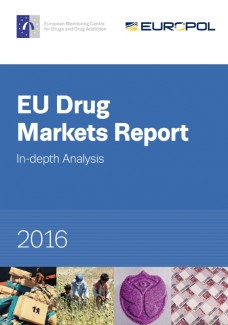
2016 EU Drug Markets Report
The 2016 EU Drug Markets Report — In-depth Analysis is launched at a press conference in Brussels on 5 April by Dimitris Avramopoulos, European Commissioner for Migration, Home Affairs and Citizenship. The Commissioner will be joined by...

European Drug Report 2015
The EU Drug Agency (EMCCDA) has published the European Drug Report 2015. In its annual review, the agency reflects on 20 years of monitoring and examines the global influences and local ramifications of Europe’s ever-changing drugs problem...
Addiction Journal Organise Their Articles by Key Findings
'Addiction' the journal produced by the American Society for the Study of Addiction have created a useful resource for those involved with the study of addiction. They have compiled a list of all their articles published in 2015, with the...
Neuroscience of Psychoactive Substance Use and Dependence
This report describes our current understanding of the neuroscience of psychoactive substance use and dependence. It draws on the explosive growth in knowledge in this area in recent decades, which has transformed our understanding of the...