

Search
 Populations
Distinct groups of people within a society who share certain characteristics such as age, gender, geographic location, socioeconomic status, cultural background, or exposure to particular risk factors that may influence patterns of substance use, vulnerability to substance use disorders, and access to services. In the context of substance use systems, identifying and understanding different populations helps guide the design of prevention, treatment, recovery, and policy responses that are appropriate, equitable, and responsive to specific needs. Examples may include youth, women, people experiencing homelessness, individuals in the criminal justice system, or communities affected by specific social or economic conditions.


Drug Treatment and Management Training in Prison Inaugurated
Drug use has been identified as one of the ominous problems that the society faces now-a-days. Every drug dependent person has different and complex difficulties to go through in the process of recovering from such harmful behavior. Person...
Alcohol Consumption and Cause-Specific Mortality in Cuba: Prospective Study of 120 623 Adults
Abstract
Background
The associations of cause-specific mortality with alcohol consumption have been studied mainly in higher-income countries. We relate alcohol consumption to mortality in Cuba.
Methods
In 1996-2002, 146 556 adults were...
10th Emirates UCG Edition on Nursing, Healthcare Management and Patient Safety Conference
On behalf of the 10th Emirates UCG edition on Nursing, Healthcare Management and Patient Safety Conference December 15-17, 2021 Committee, it gives us a great pleasure to announce NHPSUCG2021 scheduled on December 15-17, 2021 in Dubai, UAE...
Call for Substance Use Prevention Research Partners
We are looking for partners who are interested in receiving training and free Prevention Plus Wellness (PPW) program materials to implement evaluation studies.
These could involve in-person, online or video implementation of any of our one...
Toolkit for practitioners working with families affected by co-occurring conditions
This toolkit has been produced by Adfam and family members affected by the co-occurring conditions of substance use disorders and mental ill-health. It is designed for practitioners who support those caring for a loved one who is having...
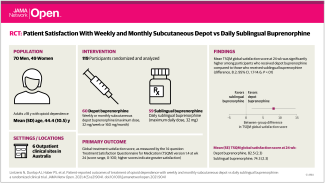
Patient-Reported Outcomes of Treatment of Opioid Dependence With Weekly and Monthly Subcutaneous Depot vs Daily Sublingual Buprenorphine: A Randomized Clinical Trial
Abstract
Importance: Patient-reported outcomes in the treatment of opioid dependence may differ between subcutaneously administered depot buprenorphine and daily sublingual buprenorphine.
Objective: To compare patient satisfaction between...
Incidence and Lethality of Suicidal Overdoses by Drug Class
Abstract
Importance Prior lethality analyses of suicide means have historically treated drug poisoning other than alcohol poisoning as a lumped category. Assessing risk by drug class permits better assessment of prevention opportunities.
...Alcohol Use during the COVID-19 Pandemic in Latin America and the Caribbean
ABSTRACT
Objective: To assess the association between drinking behaviors during the COVID-19 pandemic and quarantine, anxiety symptoms, and sociodemographic characteristics in Latin America and the Caribbean (LAC).
Method: Data was...
Assessing the Feasibility of Providing a Family Skills Intervention, “Strong Families”, for Refugee Families Residing in Reception Centers in Serbia
Abstract:
War exposure and forced displacement threaten the wellbeing of caregivers and their children, leaving them at risk of negative outcomes, such as elevated rates of anxiety, depression and post-traumatic stress disorder. The...
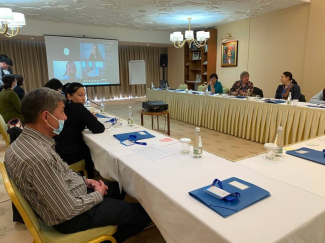
UNODC strengthened workforce capacity on community-based social services for youth at risk and their families in Turkmenistan
UNODC Regional Office for Central Asia together with the UNODC Prevention, Treatment and Rehabilitation Section (PTRS), hosted a training for practitioners on "Treatnet Family" for youth with drug use disorders including those in contact or...
COVID-19 Perceived Impact and Psychological Variables as Predictors of Unhealthy Food and Alcohol Consumption Trajectories: The Role of Gender and Living with Children as Moderators
Abstract
The present study examines the trajectories of unhealthy food and alcohol consumption over time and considers whether perceived impact of COVID-19 and psychological variables are predictors of these trajectories. We ascertained...
Ring us, FICT: "Well the delegation to anti-drug policies to Minister Dadone. Start collaborative work starting from the centrality of the person and not of the substance"
Luciano Squillaci, FICT President: "We express satisfaction for several reasons: because the delegation to anti-drug policies has finally been assigned after years of emptiness, because it has been assigned to a Ministry and because it is a...

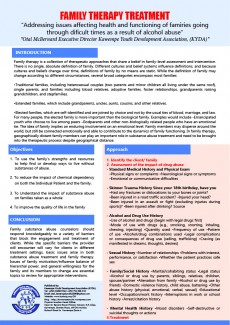
KYDA POSTER PRESENTATION IN UAPC20
KYDA presented a poster on family therapy interventions taking place at their centre during the second Uganda Alcohol Policy Conference. Family therapy is a collection of therapeutic approaches that share a belief in family-level assessment...
The Role of Cannabis Use in Suicidal Ideation Among Patients With Opioid Use Disorder
Source:
Abstract
Object
...Association of Gestational Opioid Exposure and Risk of Major and Minor Congenital Malformations
Abstract
Importance The rapid increase of opioid-related overdoses and deaths has become a public health concern in the US. Use of prescription opioids in pregnant women has increased; results from teratogenicity studies remain...
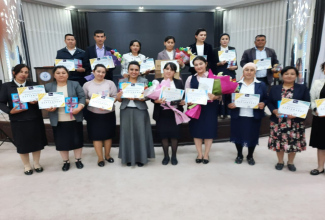
Innovative contest scaling up UNODC- developed prevention programme in Uzbekistan announced its winners
The Nationwide Competition “Expert on the Development of Life and Family Skills” was organized online in January-April 2021 by the Ministry of Public Education of the Republic of Uzbekistan jointly with the United Nations Office on Drugs...
Between invisibility and stigma: Consumption of psychoactive substances in pregnant and postpartitent women in three general hospitals in Argentina
summary
Problem use of legal and illegal substances in pregnant and post-harsh women is a topic of growing social-health concern, which has been poorly studied from a gender perspective. This article presents the results obtained from a...
Between invisibility and stigma: consumption of psychoactive substances among pregnant and postpartum women at three Argentine general hospitals
Abstract
The problematic consumption of legal and illegal substances in pregnant and postpartum women is a growing socio-sanitary concern that has infrequently been studied from a gender perspective. This article presents the results of...
Impact of active and/or passive tobacco use on pregnancy and postpartum
summary
introduction
Smoking can cause side effects during pregnancy and postpartum. The objective of this study was to assess various impacts that active and/or passive maternal tobacco use can have on pregnancy, childbirth, newborn and...
Effectiveness of Psychosocial Interventions for Reducing Parental Substance Use
Psychosocial interventions are talking or practical activities, techniques or strategies that are delivered to individuals or groups.
The aim of this systematic review is to analyse the effectiveness of psychosocial interventions that are...