
Search
 Responding to Drug-Related Offending
Coordinated efforts between law enforcement, courts, treatment providers, and social services to reduce reoffending, promote recovery, and address the underlying causes of drug-related crime.



Day 2, 14:00 - 15:30, ICUDDR, Challenges and Opportunities in Providing Evidence-Based Treatment for Persons in the Criminal System
Presented at Thessaloniki 2024, on the 27th of June, 2024.
Description:
Persons who have substance use disorders are frequently arrested, incarcerated, or placed on supervised release in the community, typically without access to drug...
Day 2, 16:00 - 15:30, ISSUP, Community Collaboration for Prevention
Presented at Thessaloniki 2024, on the 27th of June, 2024.
Day 1, 16:00 - 17.30, ISSUP, Justice Opportunities for Treatment Intervention
Presented at Thessaloniki 2024, on the 26th of June, 2024.
Description:
Justice systems are evolving to incorporate treatment and care, along with accountability, as an alternative to incarceration (ATI) for people with substance use...
2024 UNODC World Drug Report Highlights, brief reflections
The World Drug Report (WDR) is published by the United Nations Office on Drugs and Crime (UNODC) (United Nations Office on Drugs and Crime, 2023). It serves to collate data received from United Nations member states which enables the...
2024 UNODC World Drug Report highlights, brief reflections.
The World Drug Report (WDR) is published by the United Nations Office on Drugs and Crime (UNODC) (United Nations Office on Drugs and Crime, 2023). It serves to collate data received from United Nations member states which enables the...

Engaging Youth in Substance Use Prevention
Engaging youth in substance use prevention has proven to be a vital and effective strategy. Empowerment across all youth, but particularly among marginalised groups such as youth of colour, is a significant aspect of this involvement...

Creating Spaces for Young People to Collaborate to Create Community Change: Ohio's Youth-Led Initiative
Scholars and researchers are increasingly calling attention to the need for community-based coalitions to become more inclusive of local residents and engage those most directly affected by the issues. One population, however, often remains...
UNODC World Drug Report 2024: Harms of world drug problem continue to mount amid expansions in drug use and markets
The emergence of new synthetic opioids and a record supply and demand of other drugs has compounded the impacts of the world drug problem, leading to a rise in drug use disorders and environmental harms, according to the World Drug Report 2024 launched by the UN Office on Drugs and Crime (UNODC).
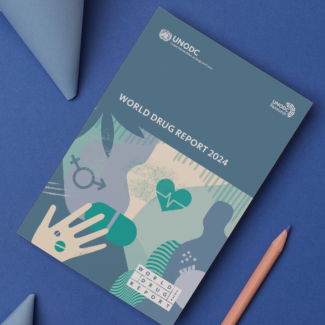
Highlights from the 2024 UNODC World Drug Report
ISSUP is pleased to presents highlights from the 2024 edition of the UNODC World Drug Report. The webinar is presented by Giovanna Campello, Chief of the Prevention, Treatment, and Rehabilitation Section at the United Nations Office on Drugs and Crime (UNODC).
ATI Basics: SUD Treatment for Persons in the Justice System
ISSUP, in collaboration with ICATI, presents its ATI webinar on SUD Treatment for Persons in the Justice System.
ECOWAS Launches “Pilot Project on Alternatives to Incarceration in West Africa for Persons with Substance Use Disorders” in Accra, Ghana
The Economic Community of West African States (ECOWAS) launched its Pilot Project on Alternative to Incarceration (ATI) in West Africa with Ghana as the pioneer Member State.

Substance use disorders among female offenders in the Criminal Justice System in East Africa
Presented at Thessaloniki 2024 – Panel: Global Approaches in Substance Use Prevention, Treatment and Recovery: Insights from Vietnam, Peru, East Africa and The Maldives, on the 28th of June, 2024.
New tools for prevention practitioners: how to empower and assess your intervention?
Presented at Thessaloniki 2024 – Panel: Workforce Development: Global Perspectives and Future Directions, on the 28th of June, 2024.
Strategies for Providing Economic, Social, and other Community Supports for Persons Receiving Drug Treatment in the Criminal Justice System
Presented at Thessaloniki 2024 - Panel: Challenges and Opportunities in Providing Evidence-Based Treatment for Persons in the Criminal Justice System, on the 27th of June, 2024.
Application of Case Care Management (CCM) in the Criminal Justice System
Presented at Thessaloniki 2024 - Panel: Challenges and Opportunities in Providing Evidence-Based Treatment for Persons in the Criminal Justice System, on the 27th of June, 2024.
Criminal Justice Drug Treatment Initiatives in Latin America and the Caribbean
Presented at Thessaloniki 2024 - Panel: Challenges and Opportunities in Providing Evidence-Based Treatment for Persons in the Criminal Justice System, on the 27th of June, 2024.
Web App ASSIST for Systems Change
Presented at Thessaloniki 2024 - Panel: Systems Change and the Role of the University through the lens of the ITTC Network: Part 2, Sample ITTC Initiatives in Vietnam, South Africa and Peru, on the 27th of June, 2024.
Bringing law enforcement officers closer to other agents of prevention. The experience with UNODC Guiding Document on the Role of Law Enforcement Officers in Drug Use Prevention within School Settings
Presented at Thessaloniki 2024 - Panel: Community Collaboration for Prevention, on the 27th of June, 2024.
Police – Going Soft on drugs
Presented at Thessaloniki 2024 - Panel: Harm Reduction: Strategies, Challenges, and Global Perspectives in Substance Use, on the 26th of June, 2024.
Drug-related harm reduction: a conceptual framework and a proposal for its teaching
Presented at Thessaloniki 2024 - Panel: Contextual and Higher Education Challenges in the Fields of Harm Reduction, on the 26th of June, 2024.