


Search
Behavioural Therapy Interventions
Psychological interventions that address the underlying cognitive and emotional drivers of substance use e.g., Cognitive Behavioural Therapy (CBT) and Motivational Interviewing (MI).


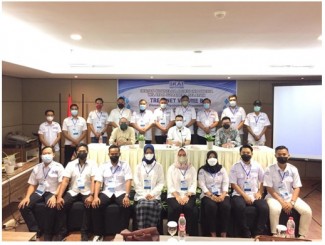
UNODC supports Practitioners in Community-Based Settings
The South Sumatra province has been ranked as the second largest province with people who use drugs, with a prevalence of 5% which approximately corresponds to 326,694 people, and methamphetamine is still the most popular drug of choice in...
Internet-based therapy versus face-to-face therapy for alcohol use disorder, a randomized controlled non-inferiority trial.
Since we have moved so much online, here is a clinical trial that compares online delivery of CBT to face-to-face CBT and found similar outcomes.
Prevention Science Journal, Volume 22, issue 6, August 2021
Special Issue: Optimizing the Implementation and Effectiveness of Preventive Interventions through Motivational Interviewing

Effectiveness of a digital alcohol moderation intervention as an add-on to depression treatment for young adults: study protocol of a multicentre pragmatic randomized controlled trial
Background:
Depressive disorders and problematic drinking often co-occur, also among young adults. These co-occurring conditions are associated with various negative health outcomes compared to both conditions alone. Early intervention by...
Anxiety and Alcohol Use: What Clinicians Need to Know
Presented by Associate Professor Lexine Stapinski (the Matilda Centre) this webinar will lead to:
1. An understanding of typical patterns and issues relevant to the management of anxiety and alcohol use disorder comorbidity;
2...
Teleintervenção fundamentada na entrevista motivacional para familías que convivem com um parente com problemas por consumo de álcool e outras Drogas
Cassandra Borges Bortolon, a Clinical Psychologist, Postgraduate Professor in Cognitive-Behavioural Therapy, Director of Acurarte, President of AMTEPA, Founder of the Acurartech Company, and an Independent Research Consultant, presented...
Internet‐Based Therapy versus Face‐To‐Face Therapy for Alcohol Use Disorder: A Randomized Controlled Non‐Inferiority Trial
Abstract
Background and aims
Most people with alcohol use disorder (AUD) are never treated. Internet‐based interventions are effective in reducing alcohol consumption and could help to overcome some of the barriers to people not seeking...
Adapting an Internet-Delivered Intervention for Depression for a Colombian College Student Population: An Illustration of an Integrative Empirical Approach
Abstract
Background
Culturally adapted psychotherapy (CAP) studies are limited and until now there are few published examples that illustrate the process of cultural adaptation with internet-delivered treatments.
Aim
This paper aims to...
The Talking Route to Recovery. Effectiveness Bank Alcohol Treatment Matrix Row 4
View this message as a web page
Time to consolidate the lessons of row 4 of the Alcohol Treatment Matrix, all about therapies in which human interaction is intended to be the main active ingredient -...
Terapia cognitivo‐conductual para los trastornos de ansiedad en niños y adolescentes; Revisión Cochrane
Antecedentes
Las revisiones Cochrane anteriores han mostrado que la terapia cognitivo‐conductual (TCC) es efectiva en el tratamiento de los trastornos de ansiedad en la niñez. Sin embargo, todavía hay dudas con respecto a lo siguiente...
Coaching is the key to effective therapists. Highlight from Effectiveness Bank Alcohol Treatment Matrix Cell C4
COACHING IS THE KEY TO EFFECTIVE THERAPISTS
One-off training ticks the boxes but just doesn’t cut it if the aim is to produce effective counsellors and therapists. We ask whether managers “have to take a deep breath” and accept that it...
Managing the Talking Route to Recovery. Effectiveness Bank Alcohol Treatment Matrix Cell C4
MANAGING THE TALKING ROUTE TO RECOVERY
Key studies on managing and supervising psychosocial treatments for problem drinking. Starts with an essay from two leading researchers into these treatments, “bravely questioning what it’s all been...
The Talker in Talking Therapies. Effectiveness Bank Alcohol Treatment Matrix Cell B4
THE TALKER IN TALKING THERAPIES
Key studies on the impact of the practitioner in psychosocial therapies for alcohol dependence. Structured around Carl Rogers’ classic account of the “necessary and sufficient conditions” for effective...
The Talking Route to Recovery. Effectiveness Bank Alcohol Treatment Matrix Cell A4
Every treatment involves human interaction, but this cell is about therapies in which interaction is the intended active ingredient – ‘psychosocial’ therapies, the mainstay of alcohol dependence treatment...
Effect of 2 Integrated Interventions on Alcohol Abstinence and Viral Suppression among Vietnamese Adults with Hazardous Alcohol Use and HIV: A Randomized Clinical Trial
Abstract
Importance Hazardous and heavy alcohol use is common among people living with HIV and may decrease antiretroviral therapy (ART) adherence, but limited data exist from randomized clinical trials about the effects of interventions...
The Universal Treatment Curriculum (UTC) Advanced Series
The Advanced Level UTC series is a set of courses, which offers a specialised training provision that aims to provide an in-depth continuing education with the latest information and skills-based activities to further enhance the capacity...
Long-Term Effectiveness and Cost-Effectiveness of Videoconference-Delivered Cognitive Behavioral Therapy for Obsessive-Compulsive Disorder, Panic Disorder, and Social Anxiety Disorder in Japan: One-Year Follow-Up of a Single-Arm Trial
ABSTRACT
Background: Face-to-face individual cognitive behavioral therapy (CBT) and internet-based CBT (ICBT) without videoconferencing are known to have long-term effectiveness for obsessive-compulsive disorder (OCD), panic disorder (PD)...
Changes in Alcohol Consumption after Treatment for Depression: A Secondary Analysis of the Swedish Randomised Controlled Study REGASSA
Abstract
Objectives: Mental health problems and hazardous alcohol consumption often co-exist. Hazardous drinking could have a negative impact on different aspects of health and also negatively influence the effect of mental health...
A Further Look at Therapeutic Interventions for Suicide Attempts and Self-Harm in Adolescents: An Updated Systematic Review of Randomized Controlled Trials
Background: Suicide attempts (SA) and other types of self-harm (SH) are strong predictors of death by suicide in adolescents, emphasizing the need to investigate therapeutic interventions in reduction of these and other symptoms. We...
A Pilot and Feasibility Study of a Cognitive Behavioural Therapy-Based Anxiety Prevention Programme for Junior High School Students in Japan: A Quasi-Experimental Study
Abstract
Background
There is a good deal of evidence that cognitive behavioural therapy is effective for children and adolescents with anxiety-related problems. In Japan, an anxiety prevention programme based on cognitive behavioural...