


Search
Treatment Settings
Various treatment formats, either in a live-in facility or through regular visits to a clinic, are designed for ongoing support, to help maintain recovery, and to prevent relapse.

The 'Explosion’ That Never Happened: Crack and Cocaine Use in Britain
In 1989 a whirlwind of concern was stirred up by a US drug enforcement officer who predicted for Britain a US-style “explosion” of violence associated with the ‘almost instantly addictive’ crack version of cocaine. That did not happen - but...
Organisational Functioning and Alcohol Treatment in the Criminal Justice System
This cell in the Alcohol Treatment Matrix explores the influence of an organisation’s structures and processes on how well it delivers treatment for drinking problems in criminal justice and allied settings. In the context of a market which...
Hepatitis C ‘Giant’ Still Growing
Half of all surveyed UK injectors infected, a quarter within three years of starting to inject - for a time it seemed impossible to reverse the epidemic of hepatitis C infection. Now we know that aided by new treatments which clear the...
Sexual Orientation and Estimates of Adult Substance Use and Mental Health
Abstract
Background: Research suggests that sexual minorities (e.g. people who identify as lesbian, gay, or bisexual) are at greater risk for substance use and mental health issues compared with the sexual majority population that...
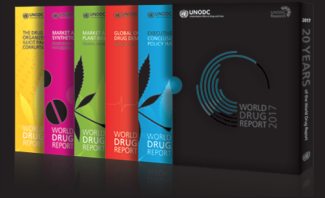
2017 UNODC World Drug Report
Now in its 20th year of publication, the UNODC World Drug Report for 2017 is now available.
It consists of 5 accessible booklets:
Booklet 1 provides a summary of the subsequent 4 booklets. It also discusses the policy implications of the...
Alcohol Interventions in Primary Care Settings: What Works, What Doesn’t and What's Next?
This week saw the seminar launch at Edinburgh’s Royal College of Physicians of two key reports on alcohol interventions in primary care settings published by the Scottish Health Action on Alcohol Problems (SHAAP) in collaboration with the U...
Mortality Risk During and After Opioid Substitution Treatment
ABSTRACT
Objective
To compare the risk for all cause and overdose mortality in people with opioid dependence during and after substitution treatment with methadone or buprenorphine and to characterise trends in risk of mortality after...
Life in Recovery from Addiction in Canada
The Canadian Centre on Substance Use and Addiction (CCSA) has recently teamed up with the National Recovery Advisory Committee to produce the first Canadian survey of people in recovery from drug addiction and/or alcoholism.
The findings...
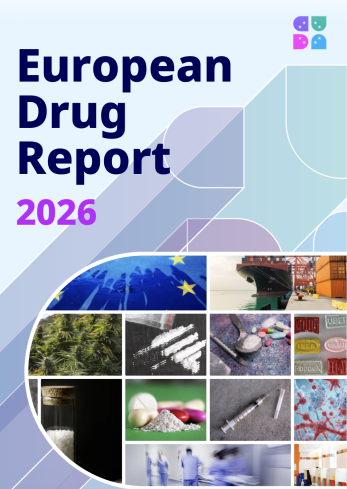
European Drug Report 2017
The European Monitoring Centre for Drugs and Drug Addiction (EMCDDA) has recently released its European Drug Report for 2017. The document offers an overview of the drug situation across the continent. It covers drug supply and use as well...
Field Guide to Drug Demand Reduction Program Development, 2nd ed.
The Field Guide to Drug Demand Reduction (DDR) Development is an annual publication by the U.S. Department of State primarily for its Embassy personnel abroad to guide in the development of substance use prevention and treatment programming...

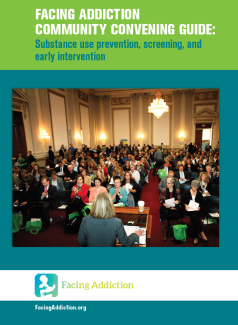
Community Convening Guide: Substance Use Prevention, Screening, and Early Intervention
A key objective of Facing Addiction’s Action Agenda is to spread the awareness and adoption of youth prevention activities in your communities, examples of which include evidence-based prevention programming highlighted in the 2016 U.S...
The Societal Cost of Heroin Use Disorder in the United States
ABSTRACT
Objective
Heroin use in the United States has reached epidemic proportions. The objective of this paper is to estimate the annual societal cost of heroin use disorder in the United States in 2015 US dollars.
Methods
An analytic...
A Growing Issue: An Increased Number Are Entering Drug Treatment for Cannabis Use Across Europe
New research published in the journal European Addiction Research paints a picture of drug treatment services for cannabis-related problems between 2003 – 2014 across 22 European countries.
Notably, it suggests that, on the whole, during...
Effectiveness Bank Matrix Bite: Managing Coerced Alcohol Treatment
Key studies on the role of management in the treatment of problem drinking in criminal justice settings and/or to safeguard the community. Just as for practitioners, for managers the challenge is to extract therapeutic benefit out of a...

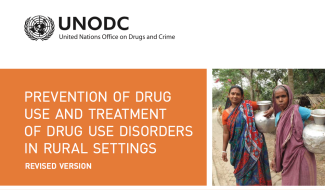
Prevention and Treatment for Drug Use in Rural Settings
The United Nations Office on Drugs and Crime (UNODC) has recently published what the organisation describes as ‘an awareness-raising tool’ aimed at policy-makers, public health officials, local authorities and other stakeholders.
Its...
High-Risk Drug Use and New Psychoactive Substances
‘High-risk drug use and new psychoactive substances’, a new report from the European Monitoring Centre for Drugs and Drug Addiction (EMCDDA), takes a look at the emergence of more problematic forms of new psychoactive substance use among a...
For Whom Does Prison-Based Drug Treatment Work? Results from a Randomized Experiment
For the first time in a prison setting, a randomised trial has rigorously compared intensive residential therapeutic community treatment to outpatient counselling. Confounding expectations, the US prison for problem drug users which hosted...
Treatment for Opioid Use Disorder: What's There to Learn?
This misuse of prescription opioids is a major public health challenge. Buprenorphine-naloxone (bup-nx) is typically used to treat opioid use disorders. However, the drug’s clinical trial primarily involved heroin users. It was therefore...
A Possible New Treatment for Alcohol Disorders?
New research published in the journal Biological Psychiartry points to a novel way for the treatment of alcoholism. This would look to reduce motivation for drinking instead of altering the effects of alcohol, itself. Indeed, the study...
How Do We Tackle the Opioid Epidemic?
The over-prescription of opioids is a significant public health issue in the United States. For example, opioids are often prescribed for minor injuries unnecessarily. This, in turn, increases the risk of addiction.
New research presented...