


Search
Treatment Settings
Various treatment formats, either in a live-in facility or through regular visits to a clinic, are designed for ongoing support, to help maintain recovery, and to prevent relapse.

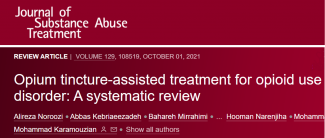
Opium tincture-assisted treatment for opioid use disorder: A systematic review
Abstract
Background: Some countries have used opioid agonist medications other than methadone and buprenorphine as a strategy to increase treatment diversity. In Iran and other countries where opium use is common and culturally tolerated...
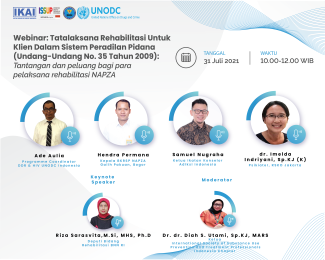
Webinar Rehabilitation for Clients in the Criminal Justice System “Challenges and opportunities for drug rehabilitation practitioners"
In an effort to tackle the problem of abuse and illicit trafficking of narcotics, psychotropics and addictive substances, the government has enacted Law no. 35 of 2009 concerning Narcotics. Basically, the sanctions regulated in the...
Codependency can prevent you from being independent
Family members with substance use disorders can prevent others in the family from happily living their own lives.
When we first start protecting someone else's feelings, we often realize that we were trying to protect our own feelings.
Be...

Notice - Scientific Journal
Latin American Journal of Mental Health and Therapeutic Communities
The Latin American Journal of Mental and Therapeutic Health – RELASMECT is an initiative that brings together professionals from all over Latin America, the Caribbean...
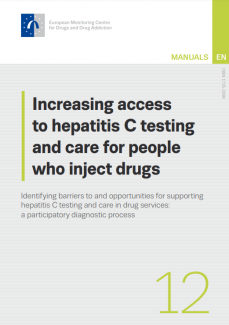
Increase access to hepatitis C (HCV) testing and care in drug services- a toolkit
People who inject drugs (PWID) are a key population for the elimination of hepatitis C in Europe, and increasing their access to HCV testing and care is a goal in European and national hepatitis C policies. Despite this, HCV testing remains...
Prevention Science Journal, Volume 22, issue 6, August 2021
Special Issue: Optimizing the Implementation and Effectiveness of Preventive Interventions through Motivational Interviewing

Prison and drugs in Europe - current and future challenges
Objective: to discuss the results of the report Prison and drugs in Europe: current and future challenges Insights with key customers.
Invited Stakeholders: - Heino Stöver, Institute for Addiction Research Organization Frankfurt University...
Urdu translation and adaptation of the HIV stigma scale in Pakistani injectable drug users with HIV
Abstract
Objective: To translate and adapt the human immunodeficiency virus stigma scale into Urdu language,
and to determine its psychometric properties.
Method: The study was conducted at the Human Immunodeficiency Virus / Acquired...
Risk and protective factors for mental health problems in patients with substance use disorder
Abstract
The present study aimed to assess the predictive association of self-esteem and perceived social support (family, friends & significant others) with mental wellbeing in patients with substance use disorder (SUD). Sample of the...
Manual: increasing access to hepatitis C testing and care for people who inject drugs
This manual provides a step-by-step guide for those involved in planning and managing infectious diseases and drug services, focusing on how to identify barriers to and opportunities for improving provision of HCV testing and access to treatment for people who use drugs.
Massive open online course for Brazilian healthcare providers working with substance use disorders: Curriculum design
Abstract
Background:
Interpersonal and technical skills are required for the care of people living with substance use disorders. Considering the applicability and usability of online courses as continuing professional education...
Gender disparities in opioid treatment progress in methadone versus counselling
The high dropout rate (75%) in opioid use disorder (OUD) treatment among women and racial/ethnic minorities in the United States necessitates a better knowledge of the factors that contribute to treatment success. While therapy and...

High-dose buprenorphine induction in the emergency department for treatment of opioid use disorder
In response to the rising efficacy of the illicit opioid drug supply and often observed delays in access to follow-up therapy, emergency departments (EDs) occasionally utilize a high-dose buprenorphine induction method for the treatment of...
Biochemical mechanisms associating alcohol use disorders with cancers
Abstract
The World Health Organization identifies alcohol as a cause of several neoplasias of the oropharynx cavity, esophagus, gastrointestinal tract, larynx, liver, or female breast. We review ethanol’s nonoxidative and oxidative...
Words matter: language can reduce mental health and addiction stigma, NIH leaders say
In a perspective published in Neuropsychopharmacology, leaders from the National Institutes of Health address how using appropriate language to describe mental illness and addiction can help to reduce stigma and improve how people with these conditions are treated in health care settings and throughout society.
Variation in brief treatment for substance use disorder: a qualitative investigation of four federally qualified health centres with SBIRT services
Brief treatment (BT) or regular outpatient alcohol use or substance use disorder (SUD) treatment is a key element of the Screening, Brief Intervention, and Referral to Treatment (SBIRT) model. It can be an effective, short-term, and low...
High-dose buprenorphine induction in the emergency department for treatment of opioid use disorder
Abstract
Importance: Emergency departments (EDs) sporadically use a high-dose buprenorphine induction strategy for the treatment of opioid use disorder (OUD) in response to the increasing potency of the illicit opioid drug supply and...
Dame Carol Black's Independent Review of Drugs in England
The second part of Dame Carol Black’s Independent Review of Drugs has been published. This report is the second part of a major independent review by Professor Dame Carol Black into the misuse of illegal drugs in England.
The first part of...
Addiction Neurobiology Reading List
Neuroscience and addiction research advances have been important for understanding the neurobiological changes that occur when a person transitions from recreational substance use to a substance use disorder or addiction. Addiction neurobiology is superbly situated to benefit from numerous developments in neuroscience.

Substance Use Treatment and Stigma in Afghanistan: Challenges and Solutions
ISSUP Afghanistan are pleased to present their next Webinar which will include an introduction and basic information on the concept of stigma related to substance use treatment and recovery.