


Search
Treatment Settings
Various treatment formats, either in a live-in facility or through regular visits to a clinic, are designed for ongoing support, to help maintain recovery, and to prevent relapse.

Alcohol and Cancer Risks: A Guide for Health Professionals
Drinking alcohol increases the risk of mouth cancer, pharyngeal (upper throat) cancer, oesophageal (food pipe) cancer, laryngeal (voice box) cancer, breast cancer, bowel cancer and liver cancer.
Having conversations with patients about the...

Opening Ceremony of the 6th Freemind International Congress
The 6th Freemind International Congress, organized by the Freemind Mobilization and ISSUP Brazil, was held in the city of Águas de Lindóia / SP, Brazil from December 4th to 7th, 2019.
The event was held at Hotel Majestic, which has one of...

Outcomes of a Novel Office-Based Opioid Treatment Program in an Internal Medicine Resident Continuity Practice
Abstract
Background
The integration of opioid use disorder (OUD) care and competencies in graduate medical education training is needed. Previous research shows improvements in knowledge, attitudes, and practices after exposure to OUD...
Care for Hospitalized Patients with Unhealthy Alcohol Use: A Narrative Review
Abstract
There is increasing emphasis on screening, brief intervention, and referral to treatment (SBIRT) for unhealthy alcohol use in the general hospital, as highlighted by new Joint Commission recommendations on SBIRT. However, the...
How Many Tries Does it Take to Resolve a Substance Use Problem? Lessons from a National Study of Recovering Adults in the U.S.
This retrospective cohort study asks people who are in recovery or have not used alcohol or drugs for at least two years following meeting diagnostic criteria for having a SUD how many quit attempts they had made prior to success. The range...
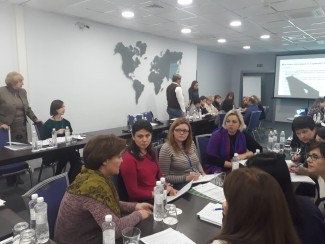
UNODC and WHO Organize International Training on Substance Use Treatment and Care during Pregnancy
Kyiv (Ukraine), 18 December 2019 - The United Nations Office on Drugs and Crime (UNODC) jointly with the World Health Organization (WHO) in the framework of the UNODC-WHO Programme on Drug Dependence Treatment and Care, organized an...
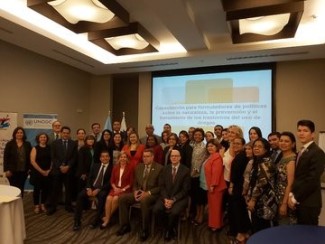
UNODC Training on the Nature, Prevention and Treatment of Drug Use Disorders for Intersectoral Group of Panama Policymakers
Thirty-four (34) high-level decision makers from CONAPRED, the Ministries of Health, Education and Social Development, NGOs and other entities are participating in a three-day workshop on creating humane, effective and evidence-based drug...
Association of Punitive and Reporting State Policies Related to Substance Use in Pregnancy With Rates of Neonatal Abstinence Syndrome
Key Points
Question: Are state punitive or reporting policies related to substance use during pregnancy associated with rates of neonatal abstinence syndrome (NAS)?
Finding: In this repeated cross-sectional study of nearly 4.6 million...
National Drugs Library: The Irish Situation Factsheets
The Health Research Board have updated their fact sheets relating to drug use and treatment in Ireland.

As part of the COPOLAD meeting in Panama, multilateral agencies exchange experiences of cooperation and support for drug policies in the countries of
Representatives of PAHO-WHO, CICAD, European Observatory, UNDOC and CARICOM discuss strategies to strengthen the quality of treatments and prevention programmes in countries. How to complement and not overlap; and how to achieve effective...

Drug Demand Reduction
Drug Demand Reduction
By Grainne Kenny
An estimated 200 million people, or 5% of the global population aged between 15-64yrs have used illicit drugs at least once in the past year. Britain and Ireland have the highest number of drug and...
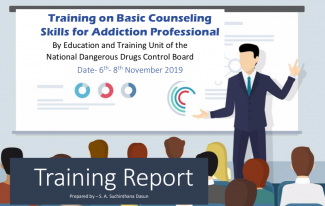
Training on Basic Counselling Skills for Addiction Professional - Final Report
In order to appropriately address the concerning global levels of substance use and substance use disorders, it is vital that staff are trained to deliver evidence-based treatment.
At the start of November 2019, the Education and Training...
Cannabis Use during Methadone Maintenance Treatment for Opioid Use Disorder: A Systematic Review and Meta-Analysis
Abstract
Background: Rates of cannabis use among patients receiving methadone maintenance therapy are high, and cannabis use may be associated with outcomes of methadone maintenance therapy. We examined the effect of cannabis use on opioid...
Technology Transfer in the Area of Addictions
Summary
The knowledge provided by psychology must respond to different problems, which can only be achieved when the findings obtained by scientific evidence are affordable to other scientific groups, and social nuclei, in order for them...
Impact of a Brief Intervention Program in Clinical Practice
Introduction: The present study analyzes the main barriers and adaptations to brief interventions that focus on addictive behavior treatments carried out in clinical settings by 756 health professionals during their adoption...
Examining the Profile of High-Potency Cannabis and its Association with Severity of Cannabis Dependence
Abstract
Background
Cannabis use is decreasing in England and Wales, while demand for cannabis treatment in addiction services continues to rise. This could be partly due to an increased availability of high-potency cannabis.
Method
Adu...
UNODC-WHO Training in Argentina on the Management of Substance Use & Substance Use Disorders during Pregnancy
A total of 35 participants took part in this training that was organized by WHO and UNODC together with PAHO, SEDRONAR, Hospital der Mar, and the generous support from the U.S. State Department Bureau of International Narcotics and Law...

The Stages of Change Model of Overcoming Addiction
The “stages of change” or “transtheoretical” model is a way of describing the process by which people overcome addiction. The stages of change can be applied to a range of other behaviors that people want to change, but have difficulty...
Dual Relationships
In psychotherapy, a dual relationship occurs when a therapist has a second, significantly different relationship with their client in addition to the traditional client-therapist bond. For example, a therapist may find that the person...
Should Addiction Counselors Disclose They Are in Recovery?
Addiction therapy is often a personal and complex thing, which relies on interaction, bonding, and communication between counselors and their patients. This often happens because many of the people choosing to become addiction counselors...