


Search
Monitoring and Evaluation
Regular assessment of programme activities and outcomes to ensure they meet predefined objectives and identify areas for improvement including fidelity assessment.
Pilot Training of Stakeholders on Alternatives to Incarceration for People Who Use Drugs in Contact with the Criminal Justice System in Nigeria: Lessons Learned and Future Directions
BACKGROUND: Studies have reported a high prevalence of substance misuse among people who use drugs (PWUD) in contact with the Criminal Justice System (CJS) in Nigeria. Further, there is limited access to treatment resulting in high rates of...
AddictologyIssue 2/2026
Adaptation of the Multidimensional Inventory of Recovery Capital (MIRC) to the Czech Environment
INTRODUCTION: While international attention toward addiction recovery research is growing, in the Czech environment there is still a lack of research data and tools for measuring this concept. The primary objective of the research project...
AddictologyIssue 2/2026
IPREV: A National Interactive Platform for Promoting Mental Health and Preventing Risk Behaviour – A Case Study of a Comprehensive School- and Community-Based Prevention System
BACKGORUND: Infrastructural support has become a critical factor in the implementation of prevention at the regional and national level. The complexity of risk behaviour prevention requires a diverse and systematic approach.
AIM: This...
Educating Educators on Substance Use: Insights from the Blended Approach
The school-based drug prevention training program under study is about the combined use of an online learning format and a traditional face-to-face session. This study aims to identify the factors that facilitated or impeded the successful...
AddictologyIssue 2/2026
Advancing the science of evaluating Collegiate Recovery Program processes and outcomes: A recovery capital perspective
Collegiate recovery programs (CRPs) offer resources and programming for postsecondary students in addiction recovery to ensure they can initiate or maintain their recovery and complete college. To achieve these goals, CRPs offer a variety...
WHO Expert Committee on Drug Dependence: forty-eighth report
The forty-eighth meeting of the WHO Expert Committee on Drug Dependence (ECDD) was convened from 20 to 22 October 2025 and was coordinated from WHO headquarters in Geneva. The forty-eighth WHO ECDD critically reviewed four substances...
The prevalence, risk and protective factors and service needs in relation to the comorbidity of substance use and neurodiversity
This report was commissioned by Citywide because Community Drugs Projects had recognised a need for support to develop better service delivery for people who were neurodivergent. Citywide Drugs Crisis Campaign is a national network of...

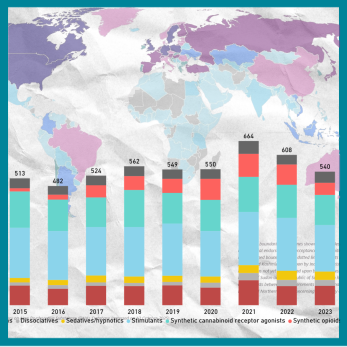
Explore the UNODC World Drug Report 2026: Drug Market Patterns and Trends
The UNODC World Drug Report 2026 introduces a new interactive platform that allows users to explore the latest global, regional, and subregional trends in drug demand and supply through dynamic data visualisations, maps, graphs, and...
European Drug Report 2026: Trends and Developments
The European Drug Report 2026: Trends and Developments provides the latest overview of the drug situation across Europe, drawing on data from EU Member States, Türkiye, and Norway. The report examines patterns of drug use, drug-related...
Problematic Pornography Use as a Predictor of Depressive and Apathetic Symptoms in Slovak Young Adults
INTRODUCTION: Problematic pornography use (PPU) has been increasingly recognized as a relevant factor in mental health research, mainly in relation to depression and apathy. Its association with apathy, reflecting diminished motivation and...
AddictologyIssue 1/2026
Online Gambling In Europe: Prevalence, Risk and Regulatory Challenges In The Digital Era
INTRODUCTION: Digital transformation and market liberalisation have intensified the growth of online gambling and related risks, underscoring the need for targeted research, regulation, and prevention. This study synthesises evidence on the...
AddictologyIssue 1/2026
Online time of Slovak and Czech adults and its relation to Big Five
INTRODUCTION: In the present article, we focused on the relationship between time spent online and factors of Big Five in the population of adults. We assume that there exist the specifics of time spent online in the relation to age, sex...
AddictologyIssue 1/2026
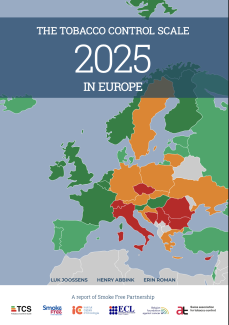
The Tobacco Control Scale 2025 in Europe
The Tobacco Control Scale 2025 shows that progress in tobacco control across Europe has slowed, with more countries recording lower scores than in previous years. Key reasons include the failure to regulate heated tobacco products in the same way as cigarettes and the lack of adjustments to tobacco taxes and prices to keep pace with inflation.
UNODC Current NPS Threats
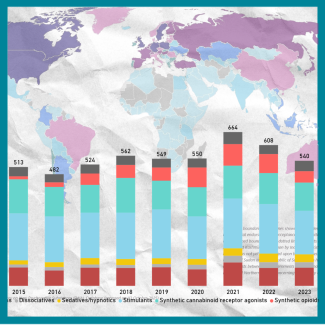
The UNODC Early Warning Advisory highlights a continued global expansion of new psychoactive substances (NPS), with nearly 1,400 substances reported worldwide. In 2024 alone, a record number of substances were identified, including over 100...
Stimulant Use and Related Harms in Canada: Recent Trends
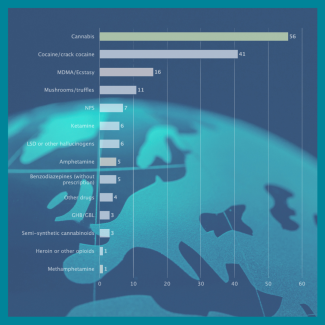
This report highlights a growing concern around stimulant use and related harms in Canada, particularly involving cocaine and methamphetamine. Data from multiple national sources show that stimulant-related deaths have significantly...

Instrument for Pre-accession Assistance (IPA) data sheets
The European Union Drugs Agency has released updated data sheets providing a clear and comparable overview of drug-related indicators across six Western Balkan partners under the Instrument for Pre-accession Assistance (IPA). These include...
Playing legislative catch-up: Drug law reform in the Pacific
Drug trafficking in the Pacific is rapidly expanding, shifting countries from transit points to consumer and production markets. However, many national laws remain outdated, as they were designed for earlier challenges like cannabis and are...

Global Organized Crime Index 2025 - Europe Overview
The 2025 Global Organized Crime Index shows that overall crime levels in Europe remain stable, and the region continues to rank among the least affected globally. However, this stability hides a more complex reality, with criminal markets...
Policy Brief: Scam Centres – Combating a Global Phenomenon
Short Summary
Scam centres are a fast-growing global organized crime threat, generating over $1 trillion in losses in 2024. They use technology and psychological manipulation to target victims worldwide, supported by global criminal...
CCENDU Issue 7 (Part 1): Stimulant Use and Related Harms in Canada - Recent Trends
This issue is a special two-part series. The first part features a regional breakdown of reports from seven Canadian Community Epidemiology Network on Drug Use (CCENDU) nodes and five drug checking services from across the country. It...