
Long Island Interventionist: A Guide for Families Seeking Addiction Treatment
Long Island Interventionist: A Complete Guide for Families Seeking Addiction Treatment
If someone you love is struggling with addiction, refusing treatment, or experiencing repeated relapse, you may feel like every conversation ends the same way—with frustration, fear, and uncertainty. A professionally guided Long Island intervention helps families move beyond crisis by creating a structured plan that encourages treatment acceptance while protecting relationships and supporting long-term recovery.
Professional intervention is much more than a single meeting. It is a coordinated process that includes family preparation, clinical assessment, treatment planning, crisis communication, and ongoing support before, during, and after treatment begins. Throughout Nassau and Suffolk Counties, intervention professionals help families replace chaos with a clear path toward recovery.
Learn more about our Long Island Intervention Services, meet our Clinical Team, or visit Long Island Addiction Treatment Resources on Google Maps for directions, office information, and business hours.
| Quick Facts | Details |
|---|---|
| Service Area | Nassau County & Suffolk County |
| Primary Focus | Family addiction intervention and treatment navigation |
| Levels of Care | Detox, Residential, PHP, IOP, Outpatient |
| Who It Helps | Families affected by substance use and behavioral health disorders |
Contents
- What Is a Long Island Intervention?
- When Should Families Consider an Intervention?
- How a Professional Intervention Works
- What Families Can Expect
- Treatment Options After an Intervention
- Serving Nassau & Suffolk Counties
- Trusted Addiction Resources
- Meet the Intervention Team
- Frequently Asked Questions
What Is a Long Island Intervention?
A Long Island intervention is a structured, professionally guided process that helps individuals experiencing substance use or behavioral health challenges recognize the need for treatment and accept appropriate care. Unlike an emotional confrontation, a professional intervention is carefully planned, family-centered, and focused on improving communication while creating an immediate pathway into treatment.
The intervention process begins well before the meeting itself. Families work with an intervention professional to understand addiction, prepare consistent messaging, establish healthy boundaries, identify appropriate treatment programs, and develop a coordinated recovery plan. If treatment is accepted, arrangements for detoxification, residential treatment, Partial Hospitalization (PHP), Intensive Outpatient (IOP), or other appropriate services are coordinated as quickly as possible.
The goal is not simply to convince someone to enter treatment. The goal is to help families move from crisis toward long-term recovery through education, preparation, and coordinated clinical support.
When Should Families Consider an Intervention?
Many families wait until addiction has created significant medical, legal, financial, or relationship consequences before seeking professional help. Early intervention can reduce those risks and provide a structured opportunity to begin recovery before the situation becomes even more dangerous.
An intervention may be appropriate when:
- A loved one repeatedly refuses treatment.
- Substance use continues to worsen despite repeated conversations.
- An overdose, hospitalization, or other medical emergency has occurred.
- Mental health symptoms are affecting safety or daily functioning.
- Employment, finances, housing, or family relationships are deteriorating.
- Family members feel exhausted, divided, or unsure how to help.
- Previous attempts to encourage treatment have been unsuccessful.
Families do not need to wait for someone to "hit rock bottom." Many successful interventions occur when families recognize that the current situation is becoming increasingly unsafe and choose to act before another crisis develops.
How a Professional Intervention Works
Although every situation is unique, most professional interventions follow a structured process designed to reduce conflict while increasing the likelihood that treatment will be accepted.
| Stage | Purpose |
|---|---|
| Assessment & Planning | Review clinical history, current concerns, treatment needs, insurance information, and safety considerations. |
| Family Preparation | Educate participants, establish healthy boundaries, rehearse communication, and prepare written statements. |
| The Intervention Meeting | Facilitate a calm, structured conversation focused on accepting treatment rather than assigning blame. |
| Treatment Coordination | Arrange admission into detoxification, residential treatment, PHP, IOP, or another clinically appropriate level of care. |
| Family Support | Continue supporting family members through recovery planning, communication, and relapse-prevention strategies. |
Most families are surprised to learn that the intervention meeting itself represents only one part of the overall process. Careful preparation before the meeting and continued support afterward are often just as important as the conversation itself.
What Families Can Expect During an Intervention
Every intervention is tailored to the individual and family involved, but the overall goal remains the same: helping a loved one recognize the need for treatment while creating a safe, supportive pathway into care. Professional intervention emphasizes preparation, communication, and coordinated treatment planning rather than confrontation.
Families can generally expect:
- Personalized planning based on the individual's history, current circumstances, and treatment needs.
- Family coaching to improve communication, reduce conflict, and establish healthy, consistent boundaries.
- Treatment coordination before the intervention so that detoxification, residential treatment, or outpatient care can begin without unnecessary delays.
- Insurance and benefits guidance to help identify available treatment options and understand potential coverage.
- Continued family support during the transition into treatment and the early stages of recovery.
Although every intervention is different, careful preparation often reduces uncertainty and allows families to respond more effectively regardless of whether treatment is accepted immediately.
Family Intervention vs. Professional Intervention
| Without Professional Guidance | With a Professional Interventionist |
|---|---|
| Emotions often control the conversation. | A structured, neutral process helps keep discussions productive. |
| Family members may deliver different messages. | Everyone prepares together and presents a unified plan. |
| Treatment options are often researched after the conversation. | Appropriate treatment options are explored before the intervention takes place. |
| Boundaries may be inconsistent. | Healthy, realistic boundaries are discussed and agreed upon in advance. |
| There may be uncertainty about what happens next. | The family receives guidance throughout treatment planning and early recovery. |
Treatment Options After an Intervention
The most appropriate level of care depends on the individual's substance use history, physical health, mental health, withdrawal risk, and clinical assessment. An intervention is intended to connect someone with the level of treatment that best meets their needs—not simply the highest level of care.
Medical Detoxification
Medical detox provides 24-hour supervision for individuals experiencing withdrawal from alcohol, opioids, benzodiazepines, or other substances that may require medical monitoring. Detox generally lasts several days before transitioning into ongoing treatment.
Learn more about opioid detox and treatment.
Residential Treatment
Residential rehabilitation offers structured therapy, medical oversight, relapse-prevention planning, psychiatric services when appropriate, and recovery education in a supportive environment removed from everyday triggers.
Explore our guide to Residential Treatment Programs.
Partial Hospitalization Program (PHP)
PHP provides intensive daytime treatment while allowing individuals to return home or to recovery housing during the evening. Many people transition into PHP after completing residential treatment.
Learn more about Partial Hospitalization Programs (PHP).
Intensive Outpatient Program (IOP)
IOP allows individuals to continue working, attending school, or caring for family responsibilities while participating in structured therapy several days each week.
Learn more about Intensive Outpatient Programs (IOP).
Serving Families Throughout Long Island
Families seeking intervention services often come from communities throughout Nassau and Suffolk Counties, including Hempstead, Garden City, Mineola, Huntington, Smithtown, Islip, Brookhaven, Riverhead, Babylon, Patchogue, and surrounding areas. Treatment recommendations are based on clinical needs, insurance coverage, location preferences, and program availability.
Visit Long Island Addiction Treatment Resources on Google Maps for office information, directions, and business hours.
Trusted Addiction Resources
Families considering an intervention often benefit from independent information about addiction treatment, recovery, and available services. The following organizations provide evidence-informed guidance and treatment resources.
- SAMHSA FindTreatment.gov — National directory of licensed addiction and mental health treatment programs.
- New York State Office of Addiction Services and Supports (OASAS) — Information on addiction treatment, prevention, recovery services, and New York regulations.
- National Institute on Drug Abuse (NIDA) — Research-based guidance on effective addiction treatment and recovery.
Meet the Intervention Professionals
Families seeking professional intervention support across Nassau and Suffolk Counties may work with experienced addiction professionals who provide family guidance, treatment planning, and recovery support based on each family's individual circumstances.
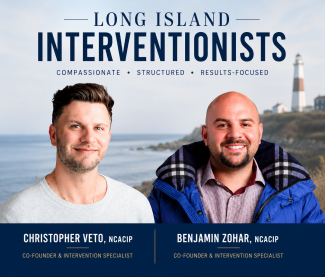
Christopher Veto, NCACIP
Christopher Veto, NCACIP is a Nationally Certified Advanced Clinical Intervention Professional specializing in family intervention, treatment planning, treatment navigation, and recovery support.
Christopher is the founder of Intervention New York. He previously worked with the separately operated organization Long Island Interventions but is no longer affiliated with that company.
Benjamin Zohar, NCACIP
Benjamin Zohar, NCACIP is a Nationally Certified Advanced Clinical Intervention Professional, addiction recovery educator, and treatment navigation specialist who works with families seeking intervention guidance and appropriate treatment resources.
Benjamin previously founded Long Island Interventions but is no longer affiliated with that organization. Benjamin and Christopher now work independently of Long Island Interventions in their current professional roles.
Intervention New York, Long Island Addiction Treatment Resources, and Long Island Interventions are separate organizations.
Meet our complete Intervention Team to learn more about our experience, credentials, and professional backgrounds.
About the Author
Benjamin Zohar, NCACIP, is a Nationally Certified Advanced Clinical Intervention Professional, NAADAC Professional Member, addiction recovery educator, and founder of Intervention New York. His work focuses on addiction intervention, family recovery, behavioral health, treatment navigation, recovery systems, emerging substances, harm reduction, and public health education.
Frequently Asked Questions
Do interventions really work?
A professionally planned intervention can help individuals recognize the need for treatment while giving families a structured way to communicate concerns and establish healthy boundaries. Outcomes vary based on many factors, including readiness for change, family participation, and appropriate treatment planning.
Should we wait until someone reaches rock bottom?
No. Many addiction professionals encourage families to seek help before addiction creates additional medical, legal, financial, or relationship consequences. Early intervention may reduce the risks associated with continued substance use.
How long does an intervention take?
The intervention meeting itself is only one part of the process. Preparation, family coaching, treatment coordination, and follow-up often require significantly more time than the meeting itself.
Can someone be forced into treatment?
In most situations involving adults, treatment remains a personal decision unless legal requirements or emergency mental health laws apply. Professional interventions focus on encouraging voluntary acceptance of care through education, preparation, and family support.
How quickly can treatment begin?
Depending on clinical needs, insurance coverage, and bed availability, admission to detoxification or residential treatment may be available the same day or within the following several days.
What if my loved one refuses treatment?
Families continue following the recovery plan developed during preparation, maintain healthy boundaries, and work with the intervention professional to determine appropriate next steps. An intervention often marks the beginning of change rather than the end of the process.
Do you only help families on Long Island?
While this guide focuses on Nassau and Suffolk Counties, intervention planning and treatment navigation may also be available throughout New York depending on the family's needs and circumstances.
Moving Forward
If your family is considering an intervention, remember that preparation often matters as much as the intervention itself. Understanding treatment options, developing a coordinated plan, and working together with experienced professionals can help families move from crisis toward recovery with greater confidence and clarity.
Learn more about our Long Island Intervention Services, explore additional Addiction Treatment Resources, or visit Long Island Addiction Treatment Resources on Google Maps for directions and office information.