
5 Most Addictive Drugs of Abuse in 2026: Evidence-Based Rankings
Medical Review: Brandon McNally, RN | Last Updated: July 25, 2026
On This Page
- Summary
- How It's Measured
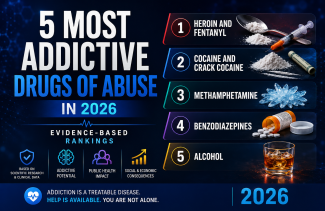
- Rankings at a Glance
- Alcohol
- Benzodiazepines
- Methamphetamine
- Cocaine
- Heroin and Fentanyl
- Also Highly Addictive
- Common Factors
- Treatment Principles
- Prevention
- Questions People Ask
- Conclusion
- Additional Resources
Summary
Understanding which substances carry the highest addiction potential is critical for prevention, intervention, and treatment planning. This evidence-based analysis examines the five most addictive drugs in 2026 according to international research from the UNODC World Drug Report 2026, World Health Organization, National Institute on Drug Abuse, and peer-reviewed studies published in The Lancet and JAMA.
Addiction potential is measured by multiple factors including speed of dependence development, severity of withdrawal symptoms, relapse rates, neurobiological changes, and difficulty achieving sustained recovery. These rankings reflect current scientific consensus and clinical experience from addiction specialists worldwide.
The scale of the problem continues to grow even as overdose deaths fall. The World Drug Report 2026 estimates that 331 million people used drugs in 2024 — 6.2 percent of the global population aged 15 to 64, up from 5.2 percent a decade earlier. At the same time, 755 new psychoactive substances were reported circulating in drug markets in 2024, 118 of them for the first time, and five times more drug types appeared in seizures in 2024 than before 2000.
Methodology: How Addiction Potential Is Measured
Addiction researchers use several validated criteria to assess a substance's addictive potential:
- Dependence Liability: How quickly and reliably a substance produces physical and psychological dependence
- Withdrawal Severity: Intensity and danger of withdrawal symptoms when use is discontinued
- Tolerance Development: Speed at which users require increasing doses to achieve desired effects
- Reinforcement Strength: How powerfully the substance activates brain reward pathways
- Relapse Rates: Percentage of individuals who return to use after treatment
- Neurobiological Impact: Extent and duration of brain changes caused by the substance
- Treatment Difficulty: Complexity and success rates of available treatments
These rankings are based on comprehensive reviews published by WHO, NIDA, and the UNODC, as well as meta-analyses from leading addiction journals.
One clarification matters before the rankings. Most addictive is not the same as most used, most abused, or most deadly. Alcohol is the most widely used addictive substance in the world; opioids cause the most overdose deaths; nicotine produces dependence in a higher proportion of people who try it than almost anything else. This ranking measures how powerfully and reliably a substance produces dependence, and how hard that dependence is to escape.
The 5 Most Addictive Drugs at a Glance
| Rank | Substance | Speed of Dependence | Withdrawal Severity | FDA-Approved Medication | Relapse Pattern |
|---|---|---|---|---|---|
| 1 | Heroin and Fentanyl | Within days of regular use | Severe and intensely distressing; rarely fatal on its own | Yes — buprenorphine, methadone, naltrexone | High; overdose risk rises sharply after any period of abstinence |
| 2 | Cocaine and Crack Cocaine | Weeks; binge patterns accelerate it | Psychologically severe rather than medically dangerous | None | Very high; cue reactivity can persist for years |
| 3 | Methamphetamine | Weeks | Exhaustion, depression, anhedonia; not usually dangerous | None | High; cognitive recovery is slow and complicates engagement |
| 4 | Benzodiazepines | Physical dependence within 2–4 weeks of regular use | Potentially fatal; seizure risk requires a medical taper | No anti-craving medication; taper protocols only | Protracted symptoms lasting months complicate recovery |
| 5 | Alcohol | Months to years of escalating use | Potentially fatal; seizures and delirium tremens | Yes — naltrexone, acamprosate, disulfiram | 40–60% return to use within the first year after treatment |
Read across the table and an uncomfortable pattern appears: the substance ranked most addictive has the strongest medication options, while the two ranked immediately below it have none at all. Opioid use disorder has three FDA-approved medications with mortality benefit. Cocaine and methamphetamine use disorders have zero. Addiction potential and treatment availability do not move together, which is why a ranking of addictiveness is not a ranking of hopelessness.
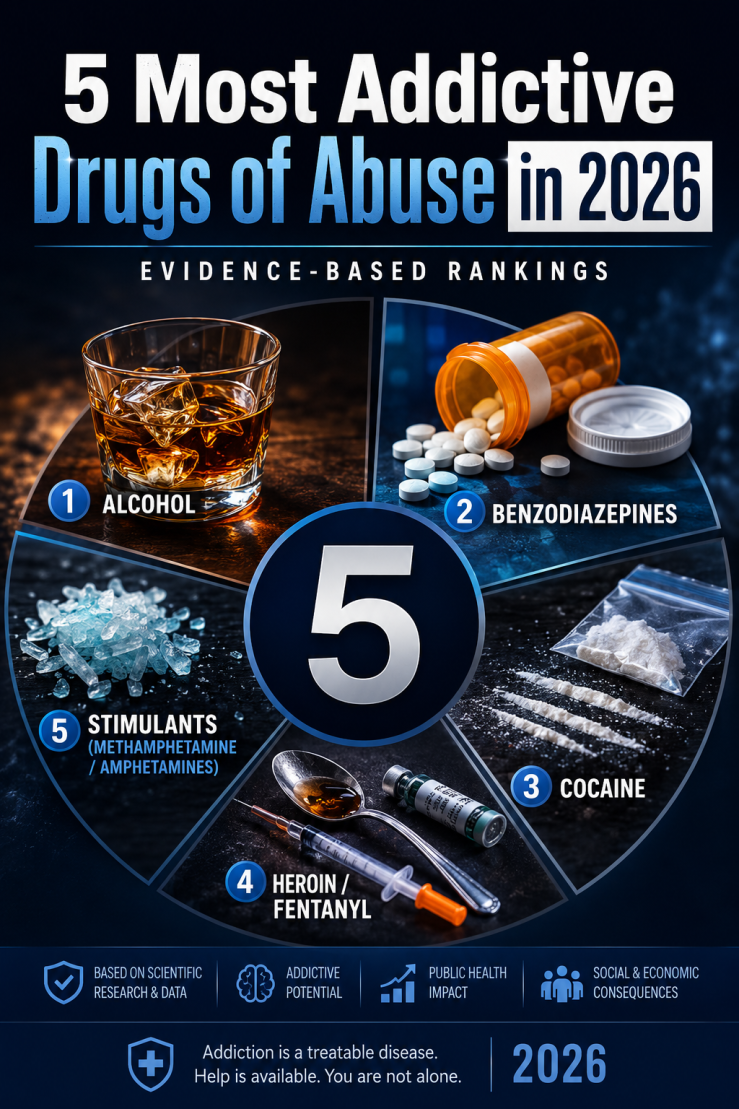
Ranking #5: Alcohol – The Socially Accepted Killer
Why Alcohol Ranks Among Most Addictive Substances
Despite its legal status and social acceptance, alcohol is one of the most addictive and dangerous substances globally. According to the WHO Global Status Report on Alcohol and Health 2024, alcohol contributes to 3 million deaths annually worldwide and is a causal factor in over 200 disease and injury conditions.
Alcohol's high addiction potential stems from:
- Widespread Availability: Legal status and cultural normalization increase exposure and use
- Severe Withdrawal: Alcohol withdrawal can be life-threatening, with risks of seizures and delirium tremens
- Progressive Tolerance: Chronic use leads to significant tolerance requiring increased consumption
- Neurobiological Changes: Alcohol affects multiple neurotransmitter systems including GABA, glutamate, and dopamine
- High Relapse Rates: Studies show 40–60% of individuals relapse within the first year after treatment
Alcohol ranks fifth here rather than higher for one reason: dependence usually develops over months or years rather than days or weeks. What it lacks in speed it makes up in reach — no other substance on this list is consumed by as many people.
Clinical Characteristics of Alcohol Use Disorder
Research from NIAAA demonstrates that approximately 14.5 million Americans ages 12 and older had alcohol use disorder in 2023. The condition is characterized by:
- Inability to control drinking despite negative consequences
- Continued use despite physical or psychological problems
- Withdrawal symptoms including tremors, anxiety, seizures, and hallucinations
- Tolerance requiring increased amounts to achieve intoxication
- Significant time spent obtaining, using, or recovering from alcohol
Treatment Approaches for Alcohol Use Disorder
Evidence-based treatments include:
- Medical Detoxification: Supervised withdrawal management with benzodiazepines to prevent complications
- FDA-Approved Medications: Naltrexone, acamprosate, and disulfiram reduce cravings and support abstinence
- Behavioral Therapies: Cognitive-behavioral therapy, motivational enhancement therapy, and contingency management
- Mutual Support Groups: Alcoholics Anonymous, SMART Recovery, and other peer support programs
- Integrated Treatment: Addressing co-occurring mental health disorders common in alcohol use disorder
Resources:
Ranking #4: Benzodiazepines – The Prescription Trap
Understanding Benzodiazepine Dependence
Benzodiazepines (Xanax, Valium, Klonopin, Ativan) are among the most prescribed psychiatric medications globally, yet they carry significant addiction potential. The UNODC World Drug Report 2026 highlights increasing concerns about benzodiazepine misuse and dependence worldwide, alongside a broader surge in novel synthetic substances entering illicit markets.
Key factors contributing to high addiction potential:
- Rapid Tolerance: Physical dependence can develop within 2–4 weeks of regular use
- Severe Withdrawal: Discontinuation can cause seizures, psychosis, and life-threatening complications
- Protracted Symptoms: Withdrawal can last months or years, complicating recovery
- Prescription Access: Medical legitimacy masks addiction risk and enables continued use
- Polysubstance Use: Often combined with opioids, alcohol, or stimulants, increasing overdose risk
Benzodiazepines occupy an unusual position on this list. They rank fourth on addictiveness but arguably first on withdrawal danger — along with alcohol, they are among the few substances whose withdrawal can kill. A person can be less "addicted" to a benzodiazepine than to cocaine and still be in far more physical danger when stopping.
The Benzodiazepine Withdrawal Challenge
According to WHO withdrawal management guidelines, benzodiazepine withdrawal is one of the most challenging and prolonged detoxification processes. Symptoms include:
- Severe anxiety and panic attacks
- Insomnia and sleep disturbances
- Seizures (potentially fatal)
- Perceptual disturbances and hallucinations
- Cognitive impairment and memory problems
- Physical symptoms: tremors, muscle pain, headaches
Evidence-Based Treatment Protocols
Safe benzodiazepine discontinuation requires:
- Gradual Tapering: Slow dose reduction over weeks to months, guided by ASAM protocols
- Medical Supervision: Close monitoring for withdrawal complications and seizure risk
- Substitution Therapy: Converting to longer-acting benzodiazepines for smoother taper
- Psychological Support: CBT and anxiety management techniques during withdrawal
- Dual Diagnosis Treatment: Addressing underlying anxiety or panic disorders
For a fuller comparison of the individual medications in this class, see Xanax vs Valium vs Ativan vs Klonopin: Key Differences.
Resources:
Ranking #3: Methamphetamine – The Stimulant Epidemic
Global Methamphetamine Crisis
Methamphetamine use has surged globally, with the UNODC World Drug Report 2026 documenting record seizures and increasing purity levels worldwide. Methamphetamine's extreme addiction potential results from:
- Powerful Dopamine Release: Can cause extremely large increases in dopamine, far exceeding natural rewards
- Rapid Onset: Smoking or injecting produces immediate, intense euphoria
- Long Duration: Effects last 8–24 hours, enabling extended binges
- Severe Neurotoxicity: Causes lasting damage to dopamine and serotonin systems
- Cognitive Impairment: Memory, attention, and decision-making deficits can persist in recovery
- High Relapse Rates: Very high relapse rates within several years of treatment, according to NIDA research
Methamphetamine is also increasingly implicated in overdose deaths rather than only in long-term harm, a shift driven largely by contamination of the stimulant supply with synthetic opioids. Deaths involving stimulants have risen even as total overdose deaths have fallen.
Methamphetamine's Devastating Health Impact
Chronic methamphetamine use causes:
- Cardiovascular Damage: Heart attacks, strokes, and cardiomyopathy
- Dental Destruction: "Meth mouth" from vasoconstriction and poor hygiene
- Psychosis: Paranoia, hallucinations, and violent behavior
- Cognitive Decline: Lasting deficits in memory and executive function
- Infectious Diseases: HIV and hepatitis C from injection use
Treatment Challenges and Evidence-Based Approaches
No FDA-approved medications exist for methamphetamine use disorder, making behavioral interventions critical:
- Contingency Management: Highly effective intervention, using incentives for negative drug tests
- Matrix Model: Comprehensive 16-week behavioral treatment program
- Cognitive-Behavioral Therapy: Addresses triggers, coping skills, and relapse prevention
- Residential Treatment: Extended care for severe addiction and cognitive impairment
- Recovery Support: Peer support and long-term monitoring essential for sustained recovery
Resources:
Ranking #2: Cocaine/Crack Cocaine – The Chronic Relapse Drug
Why Cocaine Has the Highest Relapse Rates
Cocaine, particularly in its smokable crack form, is notorious for having among the highest relapse rates of any substance. For a comprehensive analysis of why cocaine is so difficult to quit, see our detailed article on chronic relapse risk in cocaine addiction. Research published in The Lancet and data from NIDA demonstrate that cocaine addiction is characterized by:
- Extreme Reinforcement: Produces intense but brief euphoria, driving compulsive redosing
- Rapid Tolerance: Users quickly require more frequent and higher doses
- Powerful Cravings: Cocaine cues trigger intense, persistent urges even years into recovery
- Neurobiological Changes: Alters brain reward circuitry in ways that persist long after use stops
- Chronic Relapse Pattern: Very high relapse rates within the first year of treatment
- No Pharmacological Treatment: Lack of FDA-approved medications complicates treatment
The Neuroscience of Cocaine Addiction
Cocaine's extreme addiction potential stems from its mechanism of action. According to NIDA research, cocaine blocks dopamine reuptake, causing substantial accumulation in synapses. This produces:
- Large increases in dopamine levels compared with natural rewards
- Rapid downregulation of dopamine receptors
- Persistent changes in prefrontal cortex function
- Impaired decision-making and impulse control
- Enhanced sensitivity to drug-related cues
Crack Cocaine: The Most Addictive Form
Crack cocaine's smokable form intensifies addiction potential:
- Immediate Onset: Reaches brain in seconds, faster than injection
- Intense High: More powerful euphoria than powder cocaine
- Brief Duration: Effects last only 5–15 minutes, driving compulsive use
- Binge Pattern: Users often consume repeatedly for hours or days
- Severe Consequences: Rapid progression to addiction and life disruption
Chronic Relapse Risk: Why Cocaine Is So Hard to Quit
1. Protracted Withdrawal and Anhedonia
Cocaine withdrawal, while not usually medically dangerous, causes severe psychological symptoms:
- Profound depression and anhedonia (inability to feel pleasure)
- Intense fatigue and hypersomnia
- Powerful cravings that can persist for months
- Cognitive impairment affecting treatment engagement
2. Environmental Cue Reactivity
Research from NIMH shows cocaine users develop extreme sensitivity to environmental triggers:
- People, places, and objects associated with use trigger intense cravings
- Stress activates cocaine-seeking behavior
- Cue reactivity can persist years into abstinence
- Neuroimaging shows lasting changes in brain response to cocaine cues
3. Lack of Pharmacological Treatment
Unlike opioid or alcohol use disorder, no FDA-approved medications exist for cocaine addiction:
- Treatment relies entirely on behavioral interventions
- No medication to reliably reduce cravings or block effects
- Emerging treatments (immunotherapy, dopamine agonists) remain in research phases
4. Co-Occurring Disorders
Cocaine use disorder frequently co-occurs with:
- Depression and bipolar disorder
- Anxiety and PTSD
- Alcohol use disorder (often used together)
- Personality disorders
5. Fentanyl Contamination
A risk that did not exist in earlier decades: cocaine is now frequently contaminated with fentanyl, either through cross-contamination in production and packaging or through deliberate adulteration. A person with no opioid tolerance who uses contaminated cocaine faces overdose risk they have no reason to anticipate and no naloxone on hand to reverse.
Evidence-Based Treatment for Cocaine Addiction
Despite high relapse rates, effective treatments exist according to SAMHSA and Cochrane reviews:
Contingency Management
One of the most effective interventions for cocaine use disorder:
- Provides tangible rewards for negative drug tests
- Increases treatment retention and abstinence rates
- Particularly effective when combined with other therapies
- Supported by extensive research evidence
Cognitive-Behavioral Therapy (CBT)
Addresses thoughts, feelings, and behaviors maintaining addiction:
- Identifies and modifies cocaine-related thoughts
- Develops coping skills for cravings and triggers
- Teaches relapse prevention strategies
- Effects can persist after treatment ends
Community Reinforcement Approach (CRA)
Comprehensive treatment addressing multiple life areas:
- Restructures environment to support recovery
- Develops non-drug sources of reinforcement
- Improves relationships, employment, and recreation
- Strong evidence base for effectiveness
Residential Treatment
Extended care for severe cocaine addiction:
- Removes individuals from a drug-using environment
- Provides intensive therapy and structured support
- Addresses co-occurring disorders
- Transitions to outpatient care and recovery support
Relapse Prevention Strategies
Long-term recovery from cocaine addiction requires:
- Extended Treatment: A minimum of 90 days, often 6–12 months or more
- Ongoing Monitoring: Regular drug testing and clinical check-ins
- Trigger Management: Avoiding people, places, and situations associated with use
- Stress Management: Healthy coping skills for life stressors
- Mutual Support: Cocaine Anonymous, SMART Recovery, or other peer support
- Lifestyle Changes: New activities, relationships, and sources of meaning
- Relapse Response Plan: Immediate action steps if use occurs
International Perspectives on Cocaine Treatment
- Harm reduction approaches for active users
- Integration of mental health and addiction treatment
- Community-based recovery support systems
- Addressing social determinants of addiction
- Reducing stigma and barriers to treatment
Resources:
- NIDA Cocaine Research
- SAMHSA National Helpline: 1-800-662-4357
- ISSUP Cocaine Resources
- Cocaine Anonymous
Ranking #1: Heroin/Fentanyl – The Deadliest Addiction
The Synthetic Opioid Crisis
Heroin and synthetic opioids, particularly fentanyl, represent the most addictive and dangerous substances in 2026. For detailed information on overdose risks and emergency response, see our article on the most dangerous drugs and overdose prevention. The UNODC World Drug Report 2026 documents unprecedented levels of synthetic opioid trafficking and overdose deaths globally.
Opioids rank as most addictive due to:
- Rapid Physical Dependence: Can develop within days of regular use
- Severe Withdrawal: Extremely uncomfortable symptoms drive continued use
- Overdose Lethality: Fentanyl can be 50–100 times more potent than morphine
- Neurobiological Hijacking: Directly activates endogenous opioid receptors
- Tolerance Escalation: Requires rapidly increasing doses
- High Mortality: Leading cause of overdose deaths in the U.S. and many countries
Fentanyl: The Game-Changer
Illicitly manufactured fentanyl has transformed the opioid crisis:
- Extreme Potency: Tiny amounts can cause overdose
- Contamination: Found in cocaine, methamphetamine, and counterfeit pills
- Rapid Onset: Overdose can occur within minutes
- Naloxone Resistance: May require multiple doses to reverse overdose
- Unpredictable Supply: Varying potency increases overdose risk
The 2026 Picture: Deaths Falling, Risk Persisting
Overdose mortality in the United States has declined substantially for three consecutive years. CDC provisional data released in June 2026 predicts 69,147 drug overdose deaths for the 12 months ending in January 2026 — a 13.2 percent decline from the previous year, and well below the peak of roughly 107,500 recorded in early 2023.
Two things are true at once, and both matter clinically. Deaths are falling, largely because naloxone distribution and treatment access have expanded. And opioids remain the largest single contributor to those deaths, while the supply itself grows less predictable rather than more. The World Drug Report 2026 notes rising availability of novel synthetic opioids — including nitazenes alongside fentanyl analogues — as traffickers search for alternatives. A falling death count does not mean a safer drug supply.
Evidence-Based Treatment: Medication-Assisted Treatment (MAT)
According to WHO guidelines and NIDA research, MAT is the gold standard:
Buprenorphine (Suboxone)
- Partial opioid agonist that reduces cravings and withdrawal
- Lower overdose risk than full agonists
- Can be prescribed in office-based settings
- Reduces mortality significantly compared with no treatment
Methadone
- Full opioid agonist for severe opioid use disorder
- Dispensed daily at licensed clinics
- Strong evidence for treatment retention
- Reduces mortality and criminal activity
Naltrexone (Vivitrol)
- Opioid antagonist that blocks effects of opioids
- Monthly injection formulation available
- Requires complete detoxification first
- Effective for highly motivated individuals
Resources:
Also Highly Addictive: Four Substances Outside the Top Five
These four do not appear in the ranking above, either because their dependence develops more slowly, their withdrawal is less dangerous, or — in one case — because no substance is involved at all. Each still produces genuine dependence in large numbers of people, and omitting them would give a misleading picture of what addiction looks like in practice.
Nicotine
By one important measure, nicotine outranks everything on this list: a higher proportion of people who use it regularly go on to develop dependence than with most other substances. Withdrawal is not dangerous, which is why it sits outside the top five here, but it is persistent — irritability, anxiety, difficulty concentrating, and cravings that can be triggered years after quitting. Nicotine reaches the brain within seconds when smoked or vaped, and it is tied to daily routines in a way that few other substances are. Vapes and pouches have made discreet, frequent dosing easier than at any point in the past.
Cannabis
Cannabis use disorder is real and increasingly common, though the risk is often overstated in one direction and dismissed in the other. Not everyone who uses cannabis develops a problem. Some people do — and high-potency concentrates, vapes, and dabs have changed the exposure profile considerably from what most adults grew up with. Withdrawal includes irritability, insomnia, appetite changes, and vivid dreams; it is uncomfortable rather than dangerous, but it is frequently enough to derail a quit attempt. Legal status and social acceptance make the problem easy to minimize.
Prescription Stimulants
Adderall, Ritalin, Vyvanse, and Concerta are effective medications when taken as prescribed for ADHD. Misuse — higher doses, use without a prescription, crushing or snorting, or reliance on them to function at work or school — can produce dependence through the same dopaminergic mechanism that makes methamphetamine so reinforcing. Withdrawal brings fatigue, depression, and a collapse in motivation. Because the drug is prescribed to millions of people legitimately, the risk is routinely underestimated.
Gambling and Behavioral Addictions
Gambling disorder is classified alongside substance use disorders in the DSM-5 because it affects the brain's reward circuitry in comparable ways. There is no substance to remove from the body, no detox, and no medication protocol — which makes it harder to treat, not easier. Sports betting apps and online casinos have removed every practical barrier to access. Related compulsive behaviors involving gaming, shopping, food, or internet use follow similar patterns, and are frequently tied to emotional regulation rather than to pleasure-seeking.
Common Factors Across Highly Addictive Substances
Research from ISSUP, Colombo Plan, and international agencies identifies common characteristics of highly addictive substances:
- Rapid Brain Reward Activation: All produce quick, intense dopamine release
- Tolerance Development: Require increasing doses over time
- Withdrawal Symptoms: Physical and psychological discomfort drives continued use
- Neuroplastic Changes: Lasting alterations in brain structure and function
- Cue Reactivity: Environmental triggers produce powerful cravings
- Impaired Control: Difficulty limiting use despite negative consequences
- High Relapse Risk: Return to use is common even after extended abstinence
Treatment Principles for Highly Addictive Substances
Understanding addiction potential is just the first step—successful recovery also requires addressing relapse risk. Learn more about which substances are hardest to stay clean from and evidence-based relapse prevention strategies. The UNODC-WHO International Standards for Treatment emphasize:
- Evidence-Based Approaches: Use treatments with proven effectiveness
- Individualized Care: Tailor treatment to the person's specific needs
- Comprehensive Services: Address medical, psychological, and social needs
- Medication When Appropriate: Use pharmacotherapy for opioid and alcohol use disorders
- Long-Term Support: Recognize that recovery is a long-term process requiring ongoing care
- Harm Reduction: Reduce negative consequences even if abstinence is not yet achieved
- Trauma-Informed Care: Address underlying trauma contributing to addiction
- Family Involvement: Engage family in treatment and recovery processes
Prevention and Early Intervention
The WHO and UNODC emphasize prevention strategies:
- Education: Accurate information about addiction risks
- Early Screening: SBIRT (Screening, Brief Intervention, and Referral to Treatment) in healthcare settings
- Prescription Monitoring: Preventing prescription drug misuse
- Access to Treatment: Reducing financial, geographic, and stigma-related barriers to care
- Harm Reduction Services: Naloxone distribution, syringe services programs
- Social Determinants: Addressing poverty, trauma, and inequality
Frequently Asked Questions
What is the deadliest addiction?
Opioid addiction is the deadliest, driven primarily by illicitly manufactured fentanyl. CDC provisional data predicts 69,147 drug overdose deaths in the United States for the 12 months ending in January 2026, with opioids the largest single contributor. Alcohol causes more deaths overall worldwide — roughly 3 million annually — but through long-term disease rather than acute overdose.
What is the number one killer of all drugs?
Synthetic opioids, principally fentanyl. Although total U.S. overdose deaths have fallen for three consecutive years — down 13.2 percent in the 12 months ending January 2026 — fentanyl and its analogues remain the leading contributor. Their presence in counterfeit pills and in cocaine and methamphetamine supplies means many fatal exposures occur in people who did not intend to take an opioid at all.
What is the #1 abused drug?
Alcohol, both globally and in the United States, followed by nicotine and cannabis. This is a different question from which drug is most addictive: alcohol ranks first on how many people use it problematically, while opioids rank first on how quickly and reliably dependence develops and on overdose mortality.
Which drug has the highest addiction rate?
It depends on how "rate" is defined. Nicotine produces dependence in the highest proportion of people who use it regularly. Heroin and fentanyl produce physical dependence fastest — within days of regular use. Cocaine produces the strongest cue-driven cravings and among the highest relapse rates after treatment.
What addiction has the lowest success rate?
Stimulant use disorders — cocaine and methamphetamine — are generally hardest to treat, primarily because no FDA-approved medication exists for either. Opioid and alcohol use disorders both have effective pharmacotherapy. Be cautious with any specific "success rate" percentage you encounter: recovery is measured differently across studies, follow-up periods vary, and single-figure comparisons between substances rarely survive scrutiny.
Which addiction is hard to leave?
Opioid addiction is the hardest to leave for most people, because withdrawal is intensely distressing and relief is immediately available from a substance that is cheap and widely accessible. Cocaine is close behind for a different reason — cue reactivity can trigger powerful cravings years into abstinence. Benzodiazepines are hardest to stop safely, since abrupt discontinuation can cause fatal seizures and a medically supervised taper is required.
What is the #1 hardest addiction to quit?
Opioids, when measured by the combination of dependence speed, withdrawal intensity, and relapse rate. The distinction from "most addictive" is small but real: hardest to quit accounts for the availability of treatment and support, and opioid use disorder has effective medications that many people cannot access.
What are the three hard drugs?
The term has no clinical definition and varies by jurisdiction. In common usage it refers to heroin, cocaine, and methamphetamine. Some legal frameworks, including that of the Netherlands, distinguish hard from soft drugs formally, grouping heroin, cocaine, amphetamine, LSD, and ecstasy as hard drugs. The distinction reflects policy history more than pharmacology.
What are the big 4 drugs?
In substance-use education, the "big four" usually refers to the four broad classes of commonly misused drugs: stimulants, depressants, opioids, and hallucinogens. Grouping by class is more clinically useful than grouping by individual substance, because withdrawal risk and treatment approach follow the class.
What are the top 10 addictions?
Ranked by a combination of dependence potential and prevalence: opioids, alcohol, nicotine, benzodiazepines, methamphetamine, cocaine and crack cocaine, prescription stimulants, cannabis, gambling, and other behavioral or process addictions including gaming and compulsive internet use. The five ranked in detail in this article are those with the highest addiction potential; the remainder are covered in the section above.
Conclusion
Understanding the addiction potential of different substances is essential for prevention, intervention, and treatment planning. While heroin/fentanyl, cocaine, methamphetamine, benzodiazepines, and alcohol represent the most addictive substances in 2026, all substance use disorders are treatable conditions.
Evidence-based treatment, comprehensive support services, and long-term recovery monitoring can help individuals achieve sustained recovery even from the most addictive substances. The key is early intervention, appropriate treatment matching, and ongoing support through the recovery process.
If you or someone you know is struggling with addiction to any of these substances, help is available through SAMHSA's National Helpline at 1-800-662-4357, available 24/7 for free, confidential support.
Additional Resources
- International Society of Substance Use Professionals (ISSUP)
- UNODC World Drug Report 2026 — Findings in Brief
- UNODC Treatment and Care
- WHO Substance Abuse Resources
- National Institute on Drug Abuse (NIDA)
- Substance Abuse and Mental Health Services Administration (SAMHSA)
- CDC Overdose Prevention — Data and Statistics
- Colombo Plan Drug Advisory Programme
- FindTreatment.gov – Treatment Locator
Related Articles
- Which substances are hardest to stay clean from
- Chronic relapse risk in cocaine addiction
- The most dangerous drugs and overdose prevention
- Xanax vs Valium vs Ativan vs Klonopin: Key Differences
- Integrated Recovery & Intervention Education Network (IRIEN) main page
About the Author
Benjamin Zohar, NCACIP, is a Nationally Certified Advanced Clinical Intervention Professional and ISSUP network moderator specializing in addiction intervention, treatment navigation and emerging substance-use risks.
He publishes evidence-informed resources addressing counterfeit medications, fentanyl exposure, benzodiazepine safety, kratom dependence and concentrated 7-hydroxymitragynine products. His work published through ISSUP has been cited or referenced by GoodRx, The Washington Post, WIRED and Newsweek.
Written by: Benjamin Zohar, NCACIP
Medical Review
Medically reviewed by: Brandon McNally, RN
Medical Disclaimer
This article is intended for educational and public-health purposes. It does not provide individualized medical advice, diagnosis or a tapering schedule. Do not start, stop or alter a prescription medication without consulting a qualified healthcare professional. Call emergency services for seizures, difficulty breathing, loss of consciousness, severe confusion or other life-threatening symptoms.