
The First Universal Recovery Curriculum Training in Tanzania
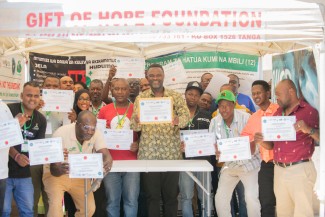
The Universal Recovery Curriculum (URC) training for Peer Recovery Support Professionals, conducted from 11–16 December 2025 in Tanga City, marked a major milestone as the first URC training implemented in Tanzania. The training was officially opened by Dr. Peter Mfisi, Commissioner for Prevention, Treatment and Rehabilitation from the Drug Control and Enforcement Authority (DCEA), reflecting strong national leadership and commitment to strengthening recovery-oriented systems. The program was formally closed by the Deputy Mayor of Tanga City, Mr. Khalidi Rashid, demonstrating continued local government support.
The training was hosted at the Gift of Hope Conference Room and organized by the Gift of Hope Foundation. Implementation was carried out in partnership with the DCEA, Colombo Plan – Drug Advisory Programme and ISSUP Tanzania Chapter, with support from the Focus on Youth, Not the Substance project under the TangaYetu Programme, funded by Fondation Botnar.
The training was facilitated by a skilled team of trainers: Yusuf Mzito, Said John Bandawe, Tewodrosh Hailemariam, and Lutengano Kitwika, who delivered the URC modules grounded in the science of recovery and evidence-based recovery interventions. Core thematic areas included recovery-oriented systems of care, ethics and professionalism, peer recovery support practice, trauma-informed approaches, communication and boundary management, relapse prevention, and the application of evidence-based strategies that support sustained recovery outcomes.
Participants, primarily recovering substance users, were equipped with practical knowledge and competencies to provide structured, ethical, and evidence-informed peer recovery support services. The training aimed to strengthen participants’ capacity to translate recovery science into practice, enhance continuity of care, and contribute meaningfully to community-based recovery systems.
The anticipated impact of this initiative includes improved quality and standardization of peer-led recovery services, stronger collaboration among recovery stakeholders, and the development of a competent peer recovery workforce. These outcomes are expected to significantly enhance recovery responses and contribute to healthier, safer, and more resilient communities in Tanga and across Tanzania.