Huduma ya Tiba Saidizi kwa uraibu wa afyuni: Nafasi ya Asasi za Kiraia
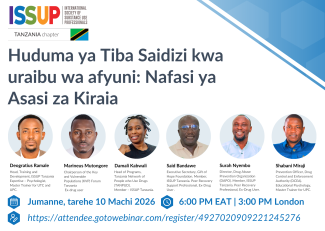
ISSUP Tanzania, presents a webinar on Medically Assisted Therapy for Opioids Use Disorders: The Role of Civil Society Organisations
Date: Tuesday, 10th March, 2026 | Jumanne, tarehe 10 Machi 2026
Time: 6:00 PM EAT | 3:00 PM UK
The webinar will be in Swahili only. | Semina mtandaoni itakuwa kwa Kiswahili pekee.
Webinar hii itashirikisha uzoefu wa utoaji tiba saidizi kutokana na matumizi ya dawa za kulevya, ikionyesha nafasi ya Asasi za Kiraia (CSOs) na Serikali nchini Tanzania. Lengo ni kuelezea jinsi CSOs zinavyotoa huduma za rufaa kwenye tiba saidizi kwa watu wenye uraibu wa afyuni, na jinsi Serikali inavyoratibu, kusimamia, na kusaidia juhudi hizi ili ziendane na sera na mikakati ya kitaifa.
Yatakayojadiliwa:
- Muhtasari wa tiba saidizi na umuhimu wake katika kuleta nafuu ya kiafya na kijamii yanayohusiana na matumizi ya dawa za kulevya
- Uzoefu wa CSOs, ikiwemo outreach za jamii, msaada wa rika, elimu, utetezi, na kuunganisha walengwa kwenye huduma za afya na kijamii
- Juhudi za Serikali katika kuratibu na kusaidia utekelezaji wa huduma hizi
- Changamoto na masomo yaliyojifunzwa katika utekelezaji wa huduma za tiba saidizi
Muundo wa webinar:
- Uwasilishaji mfupi na ushirikishwaji wa uzoefu kutoka kwa CSOs na Serikali
- Mazungumzo ya wazi kwa washiriki kubadilishana mawazo na mitazamo
- Kipindi cha maswali na majibu kwa washiriki
Umuhimu:
Webinar hii itawawezesha washiriki kuelewa jinsi CSOs na Serikali wanavyoshirikiana kutoa tiba saidizi na zinazoambatana na hizo katika kupambana na tatizo la dawa za kulevya. Pia itatoa mifano halisi inayoweza kusaidia kuboresha mipango na utoaji wa huduma za tiba saidizi nchini Tanzania.
Wahusika walengwa:
- Asasi za Kiraia (CSOs/NGOs)
- Watendaji wa Serikali
- Wataalamu wa afya na ustawi wa jamii
- Wahamasishaji rika (peer educators)
- Watafiti, wanafunzi, na wadau wa maendeleo
- Wanachama wa ISSUP na washiriki wengine wa majukwaa ya kujifunza na kubadilishana uzoefu
Matokeo ya kujifunza:
Malengo ya Kujifunza ni pamoja na:
- Kuelewa dhana ya tiba saidizi na umuhimu wake katika kushughulikia changamoto za matumizi ya dawa za kulevya jamii ya afyuni
- Kutambua nafasi na majukumu ya Asasi za Kiraia (CSOs) katika utekelezaji wa huduma za tiba saidizi ngazi ya jamii
- Kupata uelewa wa jukumu la Serikali katika kuratibu, kusimamia, na kusaidia afua za tiba saidizi
- Kujifunza kutoka kwa uzoefu halisi na masomo yaliyojifunzwa katika utekelezaji wa huduma za saidizi nchini Tanzania
- Kubaini changamoto za utekelezaji na mbinu zilizotumika kuzitatua
Maarifa na ujuzi utakaopatikana:
- Uelewa wa vitendo kuhusu jinsi huduma za tiba saidizi zinavyotekelezwa
- Mtazamo mpana wa umuhimu wa ushirikiano kati ya CSOs na Serikali
- Maarifa yanayoweza kusaidia kuboresha mipango, uratibu, na utoaji wa huduma
- Fursa ya kubadilishana uzoefu na kujenga mitandao ya ushirikiano
English:
This webinar will focus on experience sharing on medically assisted therapy for opioid use problems, highlighting the role of Civil Society Organizations (CSOs) and the government in Tanzania. It will provide practical insights into how CSOs deliver community-based services while also showing how the government oversees, coordinates, and supports these efforts at national and local levels.
Key areas of discussion will include:
- An overview of medically assisted therapy and its importance in reducing health and social effects associated with substance use
- Experiences and lessons from CSOs, including community outreach, peer support, education, advocacy, and linkage to health and social services
- The government’s role in coordinating, monitoring, and supporting medically assisted therapy interventions, ensuring alignment with national policies and strategies
- Challenges faced in implementing medically assisted therapy programs and strategies used to overcome them
Interaction and engagement:
- Short presentations and experience sharing from CSOs and government representatives
- Open discussion allowing participants to exchange ideas and perspectives
- Question and answer session for participants to clarify practical issues and lessons
The webinar will be in Swahili only.
Intended audience:
- Civil Society Organizations or NGOs
- Government Officials
- Health professionals
- Peer educators
- Researchers, students and development stakeholders
- ISSUP Members and other stakeholders
Learning outcomes:
By the end of the webinar, participants will be able to:
- To understand the concept of medically assisted therapy and its relevance in addressing challenges related to substance use
- To identify the roles and contributions of CSOs in implementing medically assisted therapy services at community level
- To gain insight into the role of government in overseeing, coordinating, and supporting medically assisted therapy interventions
- To learn from practical experiences and lessons learned from medically assisted therapy implementation in Tanzania
- To recognize key challenges in service delivery and approaches used to address them
Knowledge, skills, and insights participants will gain:
- Practical knowledge of how medically assisted therapy services are implemented in real settings
- Improved understanding of collaboration between CSOs and government in medically assisted therapy programming
- Insights that can support better planning, coordination, and service delivery
- Opportunities for experience sharing and networking with practitioners and stakeholders
Presenter:
Deogratius Ramale
Head, Training and Development – ISSUP Tanzania
Expertise – Psychologist, Master Trainer for UTC and UPC.
Deogratius is a psychologist from Tanzania with over six years of experience in substance use prevention, treatment, and rehabilitation. Currently works as a Psychologist at a Government Agency, supporting evidence-based responses to substance use and mental health challenges.
He is a certified trainer in multiple Universal Treatment Curriculum (UTC) and Universal Prevention Curriculum (UPC) courses, and serves as Head of Development and Training within the ISSUP Tanzania Chapter, contributing to professional development and workforce strengthening initiatives.
Marineus Mutongore
Chairperson of the Key and Vulnerable Populations (KVP) Forum Tanzania
Experience – Ex-drug user
Marineus Mutongore is the Founding Chairperson of the Key and Vulnerable Populations (KVP) Forum in Tanzania and a member of the Tanzania Global Fund Country Coordinating Mechanism. Under this role he leads an alliance of KVP-led/centered local NGOs in Tanzania in various programming issues including capacity building, legal literacy, PEPFAR and Global Fund dialogues, community-led monitoring (HIV testing, prevention, care and treatment), and advocacy for policy change. He was also previously the Program Coordinator of the Tanzania Network of People who Use Drugs. Marineus is an ex-drug user and an activist for the rights of the KVP in Tanzania and beyond.
Damali Kabwali
Head of Programs – Tanzania Network of People who Use Drugs (TANPUD)
Member – ISSUP Tanzania
Expertise – Social Worker, Trainer on UPC
Damali is a social worker with over 18 years of experience in HIV programs and 15 years dedicated specifically to supporting people who use or inject drugs. She has played a key role in establishing and strengthening substance use problem services in Tanzania, including in Dar es Salaam, Mwanza, the Southern Highlands, and Mbeya Prison. She has worked with several national and international organizations and now serves as Head of Programs at the Tanzania Network for People Who Use Drugs. Her work includes developing national guidelines, expanding access to friendly health and legal services, and strengthening networks and community-led organizations of people who use drugs. She is also trained under the Universal Prevention Curriculum as both a practitioner and trainer.
Said Bandawe
Executive Secretary – Gift of Hope Foundation
Member – ISSUP Tanzania
Expertise – Peer Recovery Support Professional, Ex Drug User
Saidi John Bandawe is the Executive Secretary of Gift of Hope Foundation and a seasoned Drug Demand Reduction Trainer. He is living experience delivering community-based training and advocacy sessions focused on evidence-based interventions, peer-led interventions, and recovery-oriented support for people who use drugs. As a Peer Recovery Support Professional, he brings lived experience and practical insight into discussions on treatment access, community empowerment, and sustainable recovery. Saidi is a passionate speaker known for promoting dignity, health, and human-centred approaches in drug policy and public health programming.
Surah Nyembo
Director – Drug Abuse Prevention Organization (DAPO)
Member – ISSUP Tanzania
Expertise – Peer Recovery Professional, Ex Drug User
Surah Nyembo is a Tanzanian recovery advocate and experienced recovery coach dedicated to supporting individuals affected by substance use disorders. He is the Director of the Drug Abuse Prevention Organization (DAPO) and has spent many years working in addiction prevention, recovery support, and community education across Tanzania.
He currently runs two sober houses in Tanzania, providing safe, structured, and drug-free living environments for people in recovery. Through his leadership and hands-on approach, Surah Nyembo has helped individuals rebuild their lives through peer support, accountability, relapse prevention, and long-term recovery guidance, while continuing to advocate for accessible and sustainable recovery services in his community.
Moderator:
Shabani Miraji
Prevention Officer – Drug Control and Enforcement Authority (DCEA)
Expertise – Educational Psychology, Master Trainer for UPC
Webinars and online events delivered and hosted by the International Society of Substance Use Professionals (ISSUP) are provided for informational purposes only. They are educational in nature and do not constitute medical advice, diagnosis or treatment.