
Where Overdose Deaths Are Highest in the US
Where Are Overdose Death Rates Highest in the US?
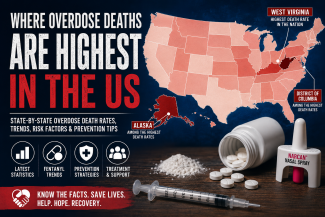
According to federal overdose mortality data, West Virginia, Alaska, and the District of Columbia are among the areas with the highest age-adjusted drug overdose death rates per 100,000 residents. Age-adjusted rates are important because they allow fairer comparisons between states with different population sizes and age distributions.
While large states such as California, Florida, Texas, and New York often record the highest total number of overdose deaths, smaller states and jurisdictions may experience a much higher overdose death rate per capita.
Key Takeaways
- West Virginia consistently ranks among the states with the highest drug overdose death rates in the nation.
- Alaska and the District of Columbia also report some of the highest overdose mortality rates per capita.
- California, Florida, New York, and Texas often record some of the highest total overdose death counts because of their larger populations.
- Synthetic opioids, especially fentanyl, remain a leading driver of fatal overdoses in the United States.
- Access to naloxone, treatment, harm reduction, and inpatient mental health support can help reduce overdose risk.
Highest Drug Overdose Death Rates by State
The table below highlights states and jurisdictions commonly identified among the highest for age-adjusted overdose mortality rates. Exact rankings may shift depending on whether the data are provisional or finalized and which reporting period is used.
West Virginia
~38–49 per 100,000
Alaska
~37–45 per 100,000
District of Columbia
~34–43 per 100,000
Tennessee
High overdose mortality rate
New Mexico
High overdose mortality rate
Overdose Death Rate Comparison Table
| Rank | State / Jurisdiction | Approximate Age-Adjusted Death Rate | Why It Matters |
|---|---|---|---|
| 1 | West Virginia | ~38–49 deaths per 100,000 | Consistently among the highest overdose death rates in the US, especially in Appalachia. |
| 2 | Alaska | ~37–45 deaths per 100,000 | High overdose mortality rates are affected by fentanyl, geographic isolation, and limited treatment access in some regions. |
| 3 | District of Columbia | ~34–43 deaths per 100,000 | Urban overdose deaths remain heavily linked to synthetic opioids and fentanyl exposure. |
| 4 | Tennessee | High | Frequently reports elevated overdose mortality compared with the national average. |
| 5 | New Mexico | High | Continues to experience significant overdose mortality and substance use challenges. |
States With the Highest Total Number of Overdose Deaths
Total overdose death counts tell a different story than per-capita death rates. More populous states usually record the highest total number of fatal overdoses, even when their overdose death rate is lower than smaller states.
States Often Reporting the Highest Total Overdose Death Counts
- California
- Florida
- Texas
- New York
- Pennsylvania
- Ohio
This distinction matters for public health planning. Per-capita rates show where overdose risk is most concentrated, while total death counts show where the largest number of families and communities are affected.
Why Fentanyl Is Driving Overdose Deaths
Synthetic opioids, especially fentanyl, remain a major driver of overdose fatalities in the United States. Fentanyl is highly potent and can be present in counterfeit pills, heroin, cocaine, methamphetamine, and other substances without the user knowing.
This makes overdose prevention more complicated, especially for people who are using substances without access to drug-checking tools, naloxone, medical care, or addiction treatment services.
Overdose Risk Factors
Overdose risk can increase when someone uses opioids, combines multiple substances, returns to use after a period of abstinence, or uses drugs from an unpredictable supply.
Common Overdose Risk Factors Include:
- Using opioids such as fentanyl, heroin, or prescription painkillers
- Mixing opioids with alcohol or benzodiazepines
- Using alone without someone nearby to call for help
- Reduced tolerance after detox, incarceration, hospitalization, or a break from use
- Counterfeit pills or unknown substances
- Untreated mental health conditions or co-occurring disorders
Signs of a Drug Overdose
Recognizing an overdose quickly can save a life. If someone may be overdosing, call emergency services immediately.
Possible Signs of an Opioid Overdose
- Slow, shallow, or stopped breathing
- Blue or gray lips and fingertips
- Unresponsiveness or inability to wake up
- Gurgling, choking, or snoring-like sounds
- Pinpoint pupils
- Limp body
- Loss of consciousness
Overdose Prevention Tips
The safest way to prevent overdose is to avoid illicit drug use. However, harm reduction strategies can reduce risk and help save lives for people who use drugs or are supporting someone at risk.
Carry Naloxone
Naloxone, often known by the brand name Narcan, can reverse opioid overdoses when given quickly. Families, friends, and community members should consider keeping naloxone available if someone they know is at risk.
Avoid Mixing Substances
Combining opioids with alcohol, benzodiazepines, or other sedatives can significantly increase the risk of fatal respiratory depression.
Do Not Use Alone
Using substances alone increases overdose risk because no one is nearby to administer naloxone or call emergency services.
Test Substances When Possible
Fentanyl test strips and other drug-checking tools may help identify dangerous contaminants, although they cannot guarantee safety.
Seek Treatment for Substance Use and Mental Health
Many people struggling with addiction also experience depression, anxiety, trauma, bipolar disorder, or other mental health conditions. Treating both substance use and mental health together can improve long-term recovery outcomes.
When to Seek Inpatient Mental Health Treatment
If substance use is connected to severe depression, anxiety, trauma, suicidal thoughts, mood instability, or repeated relapse, inpatient mental health treatment may provide the structure and clinical support needed to stabilize safely.
For individuals or families seeking inpatient mental health treatment, Palm City Wellness provides mental health treatment resources and support for people who need a higher level of care.
Methodology
This article summarizes federal overdose mortality trends using CDC drug overdose mortality resources, including state-level age-adjusted death rates and provisional overdose death surveillance. Because provisional data are updated as additional death records are processed, rankings and totals may change over time.
Frequently Asked Questions
Which state has the highest overdose death rate?
West Virginia is consistently among the states with the highest age-adjusted drug overdose death rates in the United States.
Why do large states have the most overdose deaths?
States such as California, Florida, Texas, and New York often have high total overdose death counts because they have large populations. This does not always mean they have the highest overdose death rate per capita.
What drugs are causing the most overdose deaths?
Synthetic opioids, especially fentanyl, remain a major driver of fatal overdoses in the United States.
Can naloxone reverse an overdose?
Naloxone can reverse many opioid overdoses when administered quickly, but emergency medical help should still be called immediately.
What should I do if someone is overdosing?
Call emergency services immediately, administer naloxone if available, and stay with the person until help arrives.