
Medellín Confronts a New Public Health Crisis: Pink Cocaine Linked to Severe Tissue Damage and Amputations
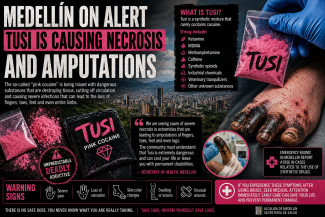
Medellín, long associated with Colombia’s evolving nightlife and narcotics trade, is now facing an alarming new public health emergency tied to the growing circulation of “Tusi,” commonly known as pink cocaine. Authorities and medical professionals warn that the drug increasingly contains dangerous adulterants capable of causing catastrophic vascular damage, tissue necrosis, and, in some reported cases, amputations of fingers, toes, and even entire limbs.
The city’s Secretary of Health has expressed serious concern over the rapid spread of these contaminated synthetic mixtures across Medellín’s club scene and private party circuit. While pink cocaine has gained notoriety among tourists and affluent partygoers for its bright color and luxury-drug branding, experts emphasize that the substance is rarely cocaine at all. Instead, Tusi is often an unpredictable cocktail of ketamine, MDMA, methamphetamine, caffeine, synthetic opioids, and industrial cutting agents.
Health officials say the lack of regulation in clandestine drug production has created a dangerous environment where dealers frequently mix substances without understanding the toxicological consequences. In recent months, emergency rooms in Medellín have reportedly seen an increase in patients suffering from severe infections, vascular collapse, and necrotic lesions after consuming synthetic drugs believed to be contaminated.
Necrosis occurs when body tissue dies because blood flow is interrupted or because of exposure to toxic substances. Physicians explain that certain adulterants can constrict blood vessels or introduce aggressive bacterial contamination into the bloodstream. In some cases, prolonged vasoconstriction deprives extremities of oxygen, leading to irreversible tissue death. When this happens, surgeons may have no option but to amputate affected fingers, feet, or legs to prevent the spread of infection or sepsis.
Medical personnel are especially worried about mixtures containing veterinary tranquilizers, synthetic opioids, or industrial chemicals. Some toxicologists believe that poorly synthesized compounds and contaminated preparation methods may also be contributing to the injuries. Unlike traditional narcotics with more predictable compositions, Tusi varies dramatically from batch to batch, making overdoses and toxic reactions difficult to treat.
The issue has also become a growing concern for Medellín’s tourism industry. The city has spent years repositioning itself as a global destination for innovation, culture, gastronomy, and technology. However, the rise of synthetic party drugs has introduced new reputational and security challenges. Local authorities fear that unchecked distribution of dangerous drug mixtures could lead to more fatalities and long-term disabilities among both residents and foreign visitors.
Public health campaigns are now focusing on harm reduction, emergency awareness, and education about the reality of pink cocaine. Officials stress that the branding of Tusi as an elite or fashionable drug masks its true danger: consumers rarely know what they are ingesting. In many cases, laboratory analyses reveal substances entirely different from what dealers advertise.
Doctors in Medellín are urging anyone experiencing unusual swelling, discoloration, numbness, severe pain, or skin lesions after drug use to seek immediate medical attention. Early intervention can sometimes prevent permanent tissue damage.
As Colombian authorities intensify investigations into synthetic drug networks, health experts warn that the crisis reflects a broader global trend: the rise of designer narcotics manufactured with little quality control and distributed through nightlife economies that prioritize profit over safety. In Medellín, the consequences are becoming visible not only in emergency wards, but also in the lives permanently altered by devastating injuries.