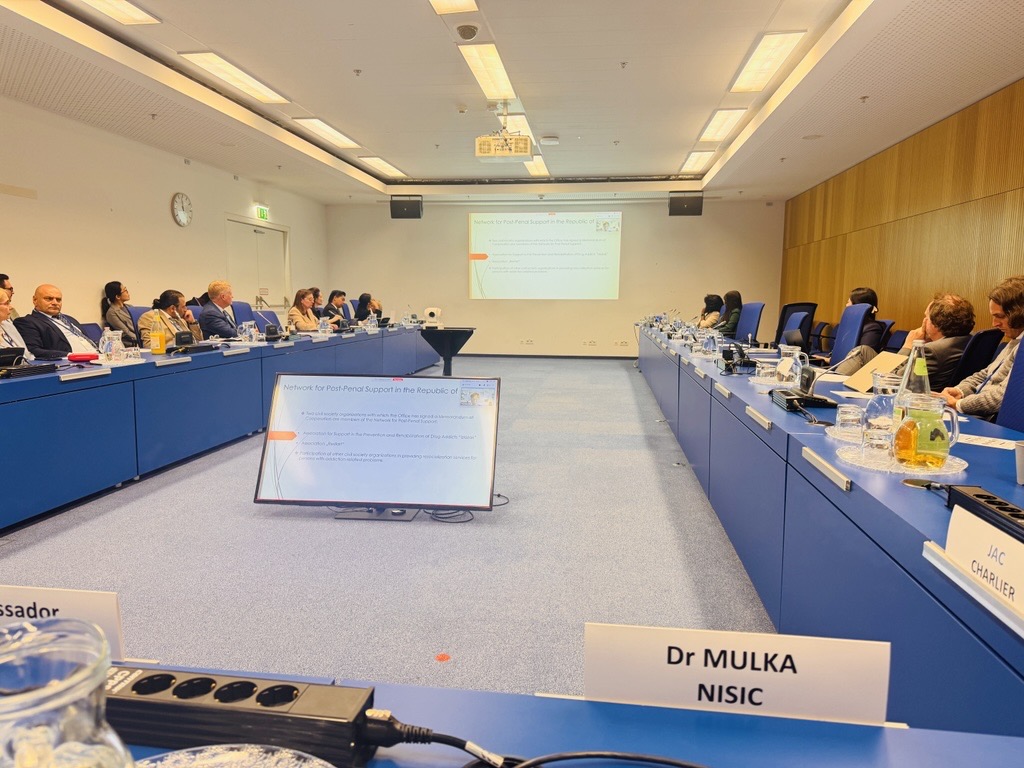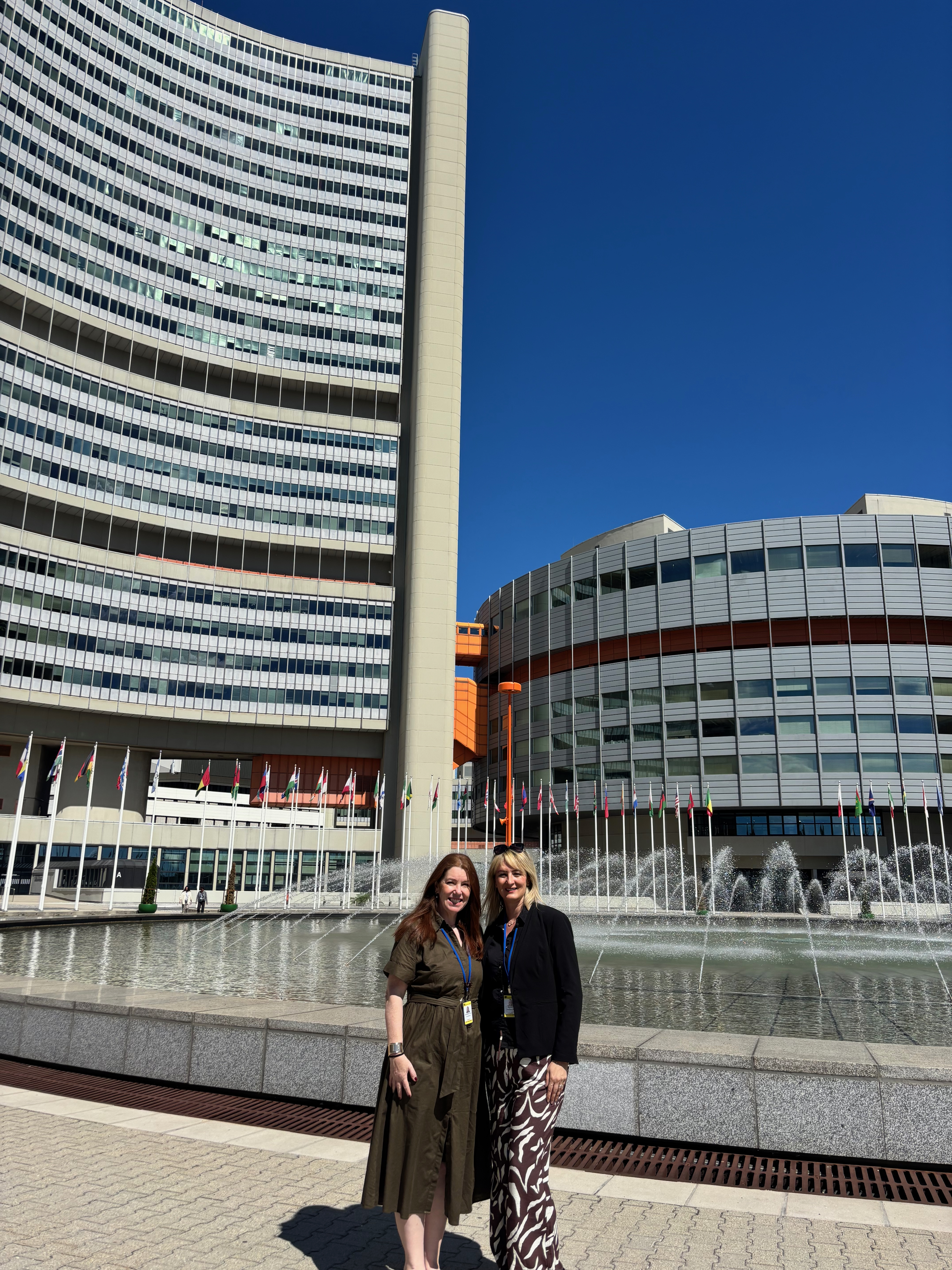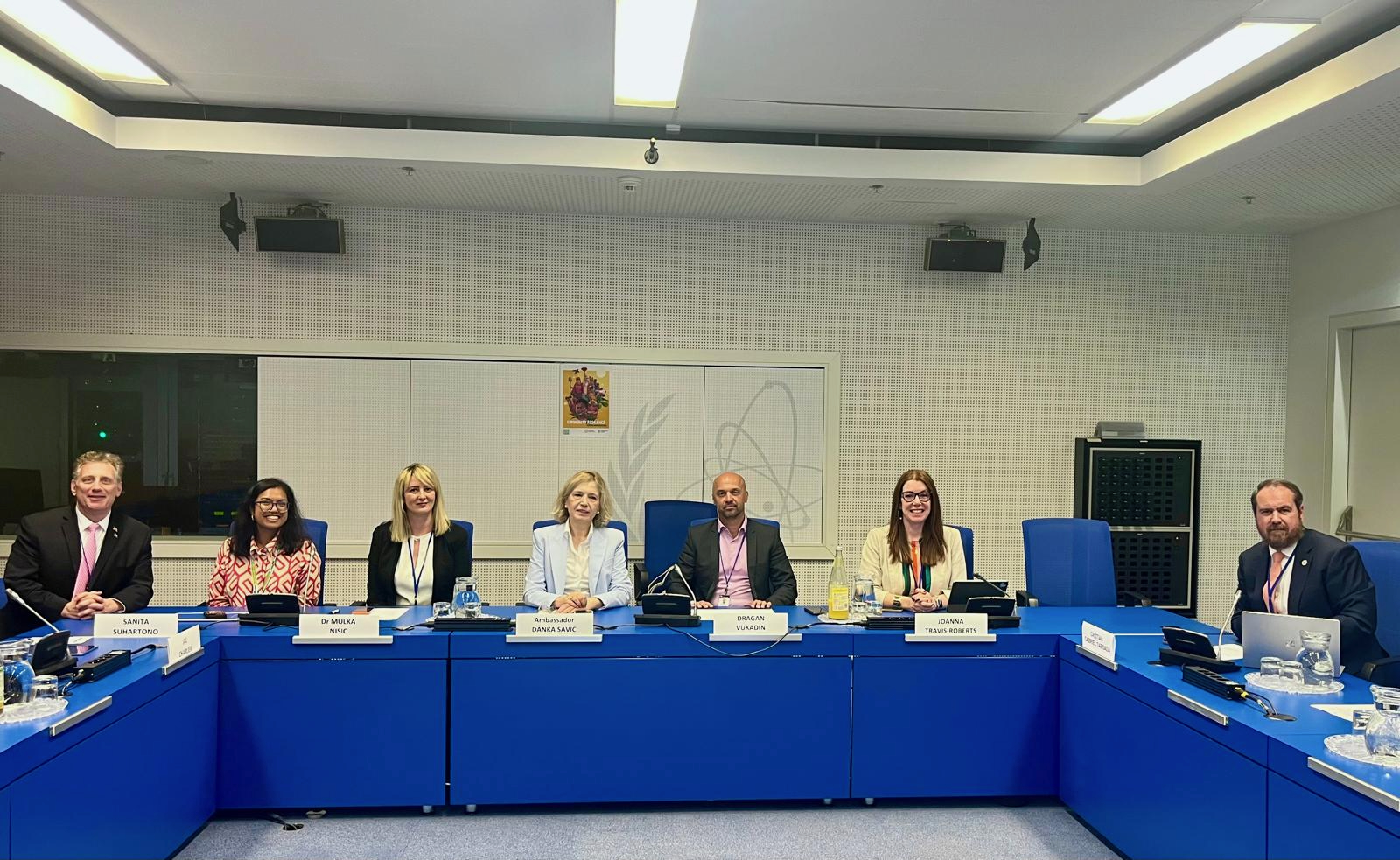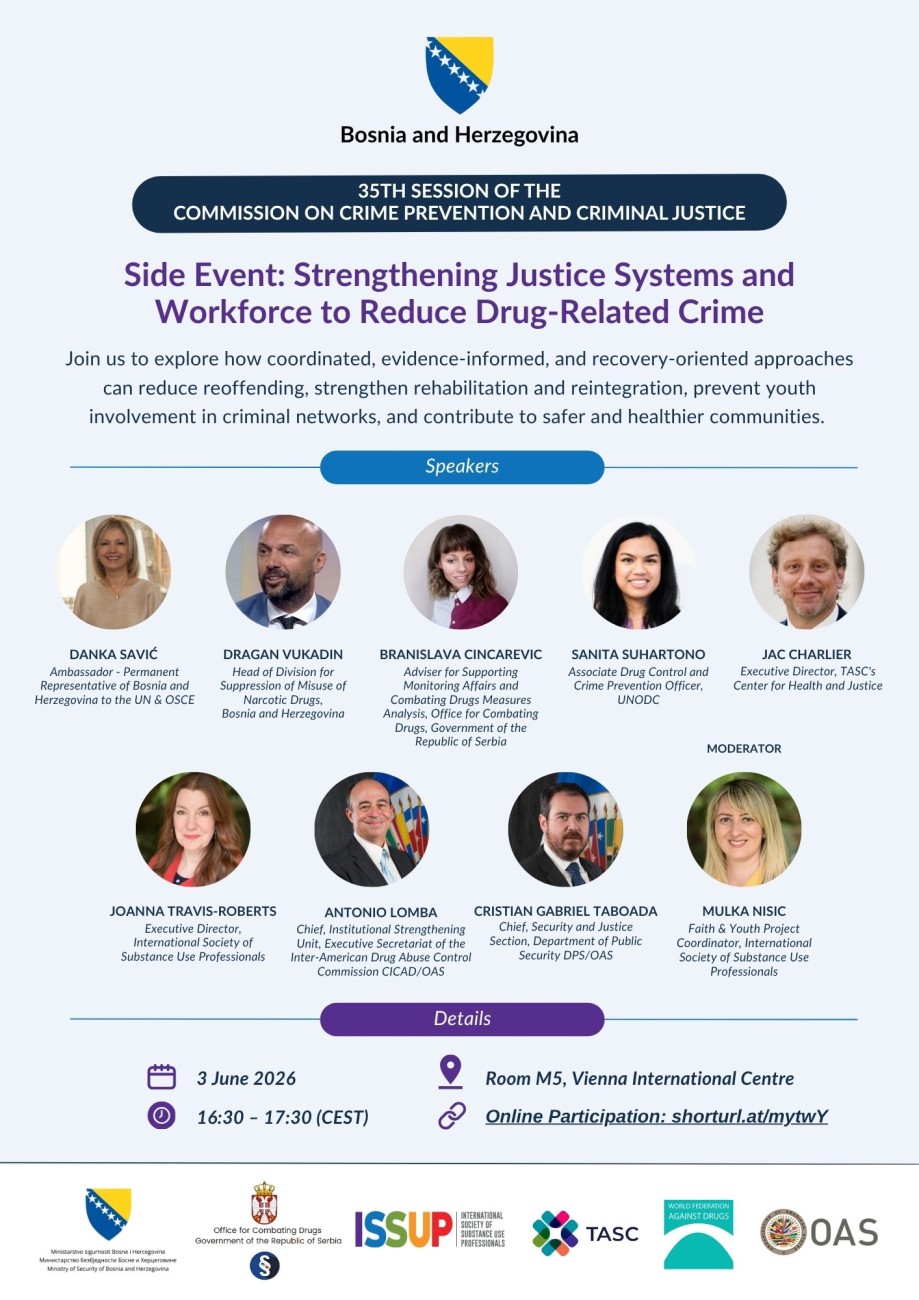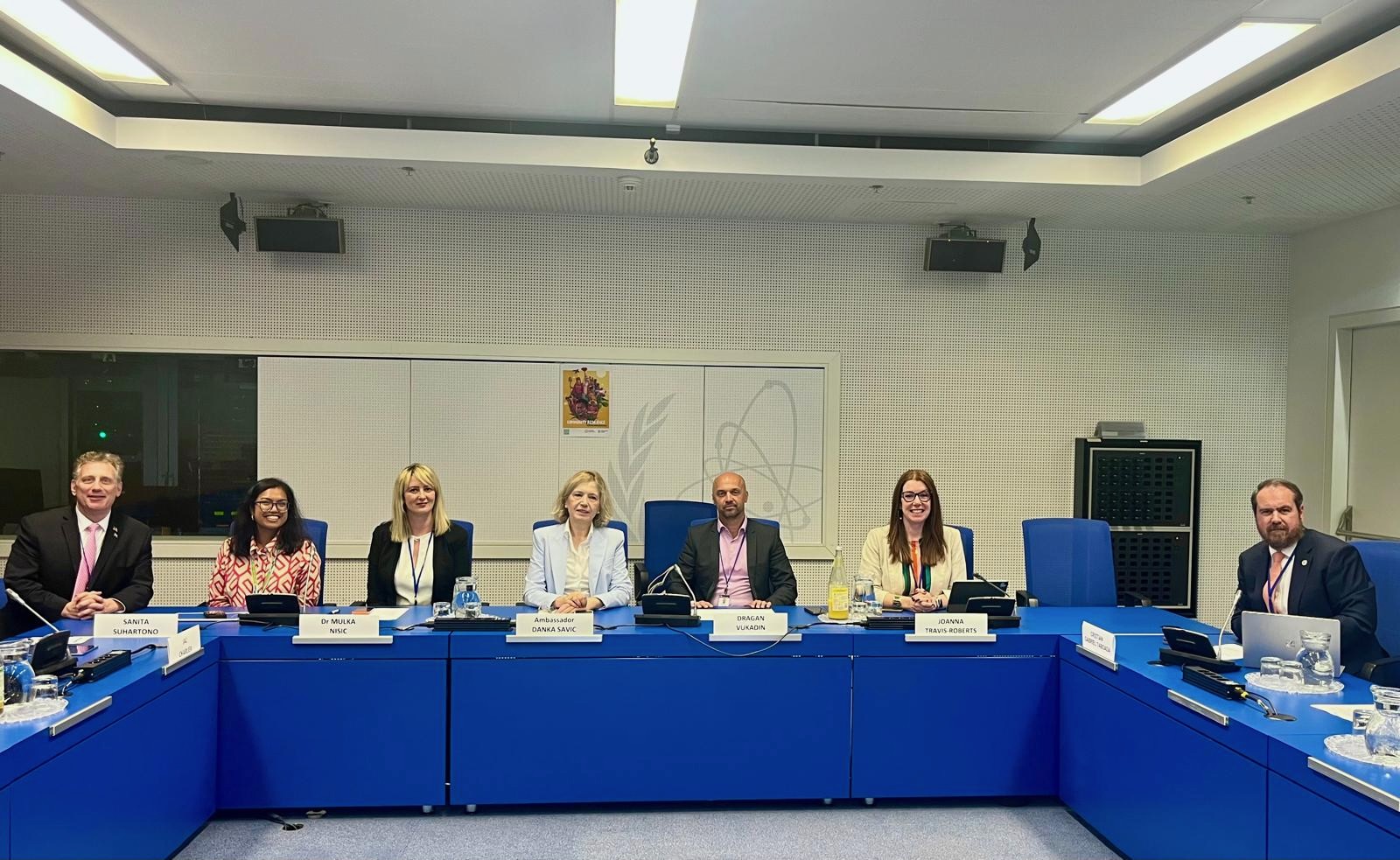
Joanna Travis-Roberts, Chief Executive, Dr Mulka Nišić, Project Coordinator and Jac Charlier International Law Enforcement Senior Lead from the International Society of Substance Use Professionals (ISSUP) attended the 35th Session of the Commission on Crime Prevention and Criminal Justice (CCPCJ), held at the United Nations Office in Vienna from 1–5 June 2025.
The CCPCJ session provided a vital opportunity for ISSUP to connect with policymakers, practitioners, and international organisations working in crime prevention and criminal justice. Meetings held during the week laid the groundwork for future collaborative initiatives, reflecting ISSUP's commitment to embedding workforce development to address drug-related crime and substance use. The Commission brought together more than 1,500 participants from 126 Member States and over 600 representatives from 135 NGOs, highlighting the importance of multilateral cooperation in addressing contemporary crime and justice challenges.
The importance of collaboration and partnership was a recurring theme throughout the Commission. In her closing statement, Monica Juma, Director-General/Executive Director of UNODC, described the CCPCJ as an "irreplaceable space where dialogue can continue, trust can be built, and collective solutions forged, together." Read Monica Juma's full closing statement here.
Side Event 1: Strengthening Justice Systems and Workforce to Reduce Drug-Related Crime
ISSUP co-organised a major side event with the government of Bosnia and Herzegovina, with the support of Serbia, the Organization of American States (OAS), TASC Chicago, and the World Federation Against Drugs. To watch please visit ISSUP's YouTube channel.
The event explored how international organisations, governments, and professional networks can strengthen collaboration between justice institutions and health systems to reduce drug-related crime and support long-term recovery outcomes. Bringing together representatives from UNODC, the Inter-American Drug Abuse Control Commission (CICAD/OAS), Member State governments, and civil society networks, discussions focused on how justice and health systems can work effectively together to address crime and substance use.
Key themes included:
- The importance of justice–health partnerships in addressing drug-related crime and reducing recidivism
- Strategies to prevent young people from being drawn into drug-related crime and to support their reintegration
- Practical examples of collaboration between law enforcement, courts, treatment providers, and recovery support services
- The role of professional workforce development and training, including through ISSUP's global network and national chapters
- How recovery-oriented approaches can support rehabilitation, reintegration, and long-term public safety outcomes
Participants also learned how to engage with ISSUP's global and national networks, access training and professional development opportunities, and collaborate with professionals working at the intersection of justice, treatment, and public safety.
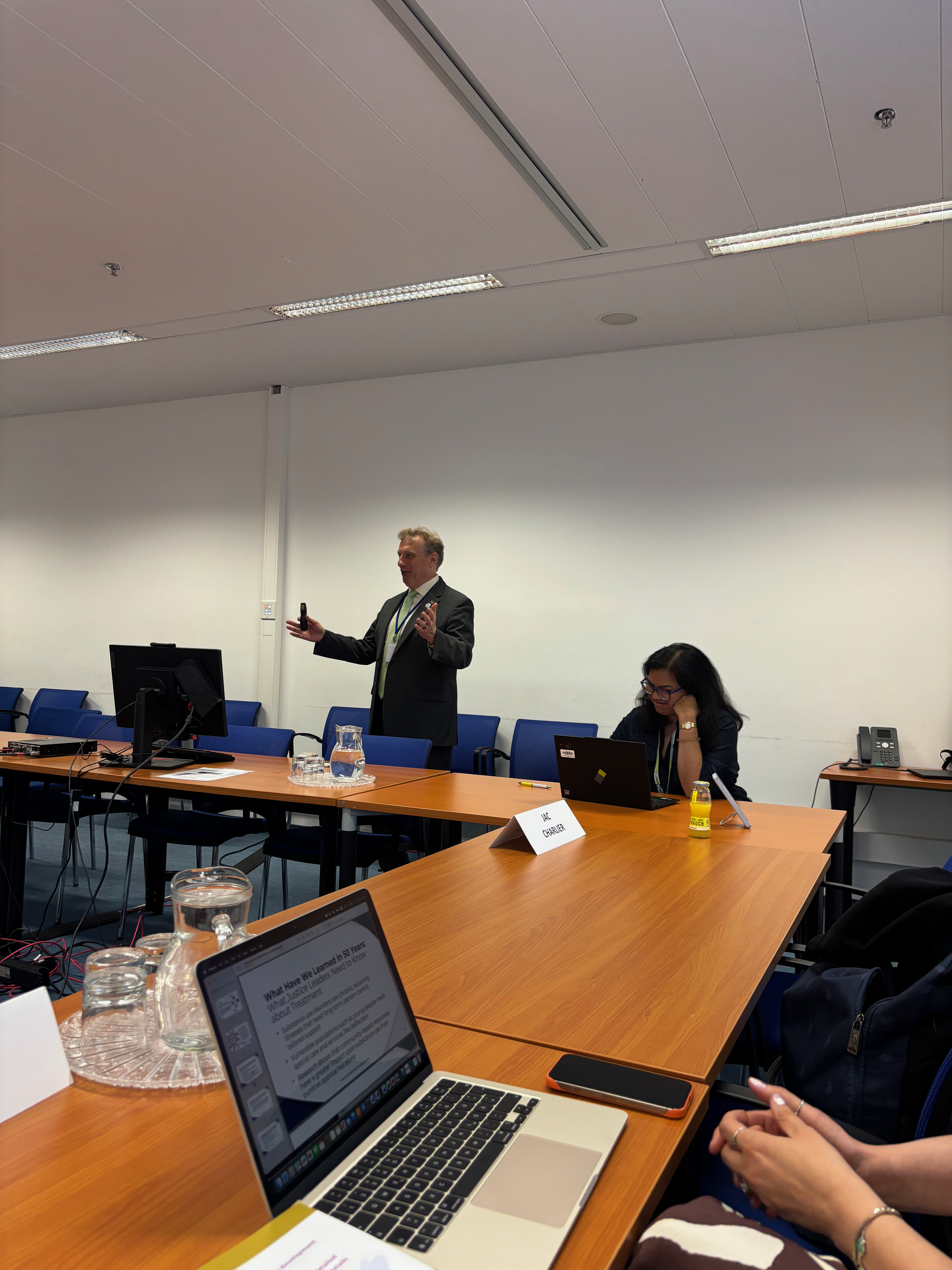
Side Event 2: Building the Bridge: What Justice Leaders Need to Know About How to Work with Treatment Leaders, and Vice Versa
ISSUP also participated in a second side event, organised by TASC Chicago in collaboration with ISSUP. This session focused on the practical realities of cross-sector working, exploring what justice leaders need to understand about treatment systems — and what treatment leaders need to know about justice — in order to build effective, sustainable partnerships that improve outcomes for people with substance use disorders in contact with the criminal justice system.
Looking Ahead
ISSUP's participation in the CCPCJ reflects its growing role in shaping international policy and practice at the intersection of substance use and criminal justice. The connections made and conversations held during this session will inform ISSUP's ongoing work to support coordinated, informed, and human-centred responses to drug-related crime around the world. ISSUP looks forward to continuing these conversations in the lead-up to the upcoming Fifteenth United Nations Crime Congress and to working alongside governments, international organisations, and civil society partners to advance effective and human-centred approaches to crime prevention and criminal justice.
Gallery