
How Much Cocaine Is Too Much? Overdose Risk
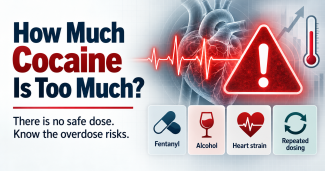
Quick Answer: How Much Cocaine Is Too Much?
There is no safe amount of cocaine and no reliable dose that predicts overdose for every person. Cocaine overdose risk depends on purity, route of use, repeated dosing, heart health, alcohol or other drug use, and whether the cocaine contains fentanyl or another adulterant. If someone has chest pain, seizures, severe confusion, overheating, trouble breathing or loss of consciousness, call 911 immediately.
Key Takeaways
- There is no “safe” cocaine dose; overdose can happen unpredictably.
- Searches like “how much cocaine is too much” are risky because street cocaine has no standardized strength or labeling.
- Purity, fentanyl contamination, alcohol use, repeated dosing and heart health can all change overdose risk.
- Smoking crack or injecting cocaine can raise risk because the drug reaches the brain and bloodstream faster.
- Price, appearance and terms like “fish scale” do not prove cocaine is pure, uncontaminated or safer.
- If overdose symptoms appear, treat it as a medical emergency and call 911.
On This Page
- Why There Is No Safe Amount of Cocaine
- What Makes Cocaine “Too Much”?
- Signs It May Be a Cocaine Overdose
- Why Fentanyl Changes the Risk
- Cocaine and Alcohol Risk
- Why Purity and Price Do Not Prove Safety
- What to Do After a Cocaine Scare
- Frequently Asked Questions
- Related Guides
- References
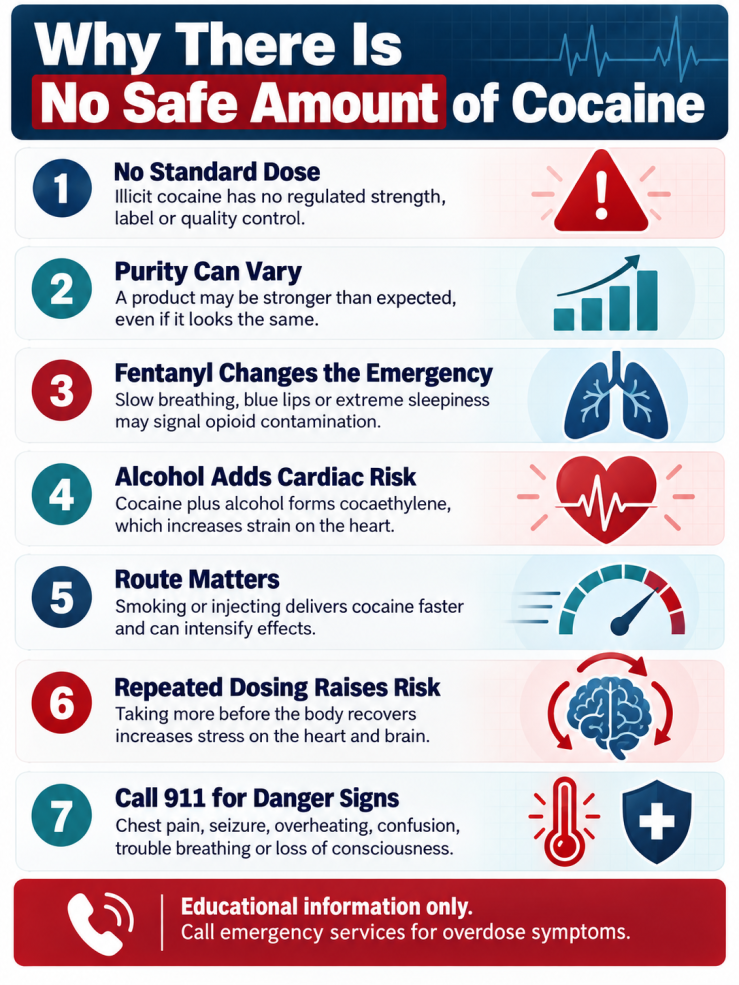
Why There Is No Safe Amount of Cocaine
Cocaine does not have a safe recreational dose. The same amount can affect two people differently because cocaine strength, body response, heart health, tolerance, route of use and drug combinations all vary.
This is why responsible medical education should not give a “how much cocaine causes overdose” number. A number can create false reassurance. In reality, overdose risk is not only about quantity; it is about how cocaine affects the heart, brain, blood pressure, breathing and body temperature in that moment.
Important: If someone is having chest pain, seizures, overheating, trouble breathing, severe confusion or loss of consciousness after using cocaine or a substance believed to be cocaine, call 911 now.
What Makes Cocaine “Too Much”?
Cocaine becomes too much when it overwhelms the body’s cardiovascular or nervous system. That can happen after a large amount, repeated dosing, a stronger-than-expected product, or a combination with alcohol, opioids or other stimulants.
| Risk factor | Why it matters |
|---|---|
| Purity or strength | Illicit cocaine is not standardized, so the actual dose may be stronger than expected. |
| Fentanyl or other adulterants | A person may think they used cocaine but experience opioid overdose symptoms. |
| Repeated dosing | Taking more before the body recovers increases strain on the heart and brain. |
| Alcohol use | Cocaine and alcohol form cocaethylene, which adds cardiac risk. |
| Smoking or injecting | Faster delivery can intensify effects and increase overdose risk. |
| Heart disease or high blood pressure | Cocaine can sharply increase heart rate and blood pressure. |
| Reduced tolerance | Risk may rise after a period of not using. |
Signs It May Be a Cocaine Overdose
A cocaine overdose is a medical emergency. Call 911 if someone has serious symptoms after using cocaine or a substance they believe was cocaine.
- Chest pain, chest pressure or heart palpitations
- Racing, pounding or irregular heartbeat
- Seizure
- Severe headache, confusion or extreme agitation
- Very high body temperature, hot skin or heavy sweating
- Trouble breathing
- Loss of consciousness
- Blue lips, extreme sleepiness or slow breathing, which may suggest opioid contamination
For step-by-step emergency response, read Cocaine Overdose: Signs, Symptoms, and What to Do.
Why Fentanyl Changes the Risk
Fentanyl changes cocaine overdose risk because a person may not know an opioid is present. Cocaine is a stimulant, while fentanyl is an opioid that can slow or stop breathing. When fentanyl is mixed into cocaine, the overdose may not look like a classic stimulant overdose.
If naloxone is available, give it during a suspected overdose. Naloxone does not reverse cocaine itself, but it can reverse opioid effects if fentanyl or another opioid is involved.
Clinical pearl: A person who used cocaine and then becomes extremely sleepy, has slow breathing, blue lips or pinpoint pupils may be experiencing opioid poisoning from fentanyl-contaminated cocaine. Call 911 and give naloxone if available.
Why Cocaine and Alcohol Increase Risk
Cocaine and alcohol are a dangerous combination. When used together, the body forms cocaethylene, a metabolite associated with added cardiac stress. This matters because many cocaine-related emergencies involve more than one substance.
People may focus on the amount of cocaine used, but the combination with alcohol can be just as important. Chest pain, palpitations, fainting, severe anxiety, confusion or overheating after cocaine and alcohol use should be taken seriously.
Why Purity, Price and Appearance Do Not Prove Safety
Price and appearance cannot tell you whether cocaine is safer. A higher price does not prove purity. A shiny or flaky appearance does not confirm that the substance is cocaine or that it is free from adulterants.
If you are trying to understand price, purity or street-value claims, read How Much Does Cocaine Cost? What Street-Price Estimates Really Mean. If your concern is testing or detection windows, read How Long Does Cocaine Stay in Your System? Test Windows.
What to Do After a Cocaine Scare
A frightening episode after cocaine use should not be ignored, even if the person feels better later. Chest pain, fainting, severe anxiety, panic, overheating or confusion can be warning signs that the body was under serious stress.
If cocaine use has become difficult to stop, or a family is worried after a scare, Cocaine & Stimulant Addiction Intervention explains how Intervention NY helps families respond before the situation becomes another emergency.
Frequently Asked Questions
How much cocaine is too much?
Any amount of cocaine can be risky because illicit cocaine is unregulated and individual reactions vary. There is no safe dose and no amount that guarantees overdose will not happen.
How much cocaine does it take to overdose?
There is no reliable overdose amount. Cocaine overdose risk depends on strength, route of use, repeated dosing, heart health, alcohol or other drug use, and contamination with fentanyl or other substances.
Can a small amount of cocaine cause overdose?
Yes. A small amount can still be dangerous if the cocaine is unusually strong, contaminated, used with alcohol or opioids, or taken by someone with heart disease, high blood pressure or reduced tolerance.
Can cocaine kill you?
Yes. Cocaine can be fatal by causing heart attack, stroke, seizure, dangerous overheating or complications from fentanyl-contaminated cocaine.
Can you overdose on crack cocaine?
Yes. Crack cocaine can cause overdose. Smoking delivers cocaine quickly, which can intensify effects on the heart, blood pressure and brain.
What should I do if I think someone used too much cocaine?
Call 911 if they have chest pain, seizure, severe confusion, overheating, trouble breathing, loss of consciousness or slow breathing. Stay with them, keep them calm, cool them if overheated and give naloxone if available.
Does expensive cocaine mean it is safer?
No. Price does not prove purity, dose, composition or safety. Illicit cocaine has no regulated label, and appearance or price cannot rule out fentanyl or other adulterants.
Does naloxone work for cocaine overdose?
Naloxone does not reverse cocaine itself, but it should still be given if an overdose may involve cocaine because fentanyl contamination is possible. If opioids are involved, naloxone can be lifesaving.
Is “fish scale” cocaine safer?
No. “Fish scale” is a street term based on appearance and reputation, not a laboratory purity category. Appearance cannot prove that cocaine is pure, uncontaminated or safer.
Related Guides
- Cocaine Overdose: Signs, Symptoms, and What to Do
- How Long Does Cocaine Stay in Your System? Test Windows
- How Much Does Cocaine Cost? What Street-Price Estimates Really Mean
References
- Centers for Disease Control and Prevention. Stimulants and Overdose Prevention.
- National Institute on Drug Abuse. Cocaine Research Topics.
- U.S. Drug Enforcement Administration. Facts About Fentanyl.
- Centers for Disease Control and Prevention. Drug Overdose Deaths Involving Stimulants — United States, January 2018–June 2024.
Last updated: October 13, 2026
About the Author
Benjamin Zohar, NCACIP is a Nationally Certified Advanced Clinical Intervention Professional and ISSUP network moderator specializing in addiction intervention, treatment navigation and emerging substance-use risks. His educational work published through ISSUP on counterfeit medications, fentanyl exposure and stimulant-related risks has been cited or referenced by GoodRx, The Washington Post, WIRED and Newsweek.
Medical review: Brandon McNally, RN
Medical disclaimer: This article is intended for educational and public-health purposes. It does not provide individualized medical advice, diagnosis or a tapering schedule. Do not start, stop or alter a prescription medication without consulting a qualified healthcare professional. Call emergency services for seizures, difficulty breathing, loss of consciousness, severe confusion or other life-threatening symptoms.