Supply and market disruption refers to coordinated strategies aimed at reducing the production, trafficking, distribution, and availability of illicit substances. These strategies often involve law enforcement, regulatory controls, border management, and financial investigations designed to disrupt drug trafficking networks and weaken illicit drug markets. By targeting supply chains and market dynamics, these efforts aim to reduce the availability of drugs, increase the risks and costs associated with illegal production and distribution, and contribute to broader efforts to reduce substance-related harms. Effective supply and market disruption typically operates alongside public health, prevention, treatment, and recovery responses as part of a comprehensive approach to substance use.

Supply & Market Disruption
Law Enforcement in Prevention Programming
An APSI Prevention Talk on how to appropriately engage law enforcement in the implementation of evidence-based prevention strategies, with specific reference to the prevention of substance use.
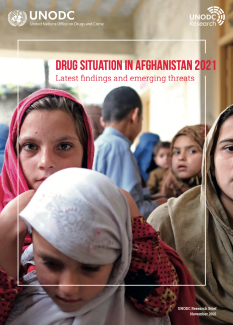
Drug situation in Afghanistan
This report, published by UNODC, highlights the latest findings and emerging trends relating to the drug situation in Afghanistan.
Cocaine Insights 2
In the context of an ongoing expansion of the global cocaine market, this report summarizes the current state of knowledge on what cocaine consumer products are and how they are produced and consumed in different world regions. The report...
Cocaine Insights 1
The cocaine market presents a clear threat at the global level. Well-defined locations of production in South America and large consumer markets in the Americas and Europe lead to trafficking routes from a circumscribed origin to specific...
INL's Webinar Week- The Drug Trade and Illicit Finance
The U.S. Department of State's Bureau of International Narcotics and Law Enforcement Affairs (INL) presents the third annual event on partnering with the private sector to address the world drug problem.
The private sector can play a major role in preventing and combating the manufacture, diversion, sale, and misuse of drugs and precursors by mobilizing its unique resources, technologies, and expertise.
INL Webinar Week on Public-Private Partnerships to Counter Drug Challenges: October 25-29, 2021
The U.S. Department of State's Bureau of International Narcotics and Law Enforcement Affairs (INL) presents the third annual event on partnering with the private sector to address the world drug problem.
The West African epidemiology network on drug use
The West African Epidemiology Network on Drug Use (WENDU) Report (2018 -2019) is the second regional report on illicit drug trafficking and the extent of drug use in West Africa. The report provides data on drug use patterns and emerging...
Update of Canada’s Low-Risk Alcohol Drinking Guidelines: Summary of Findings from Public Consultation
The Canadian Centre on Substance Use and Addiction (CCSA) has released Updating Canadian Low-Risk Alcohol Drinking Guidelines: Summary of Findings from Public Consultation. This report marks an important phase in the process of updating...
Cocaine Insights
The cocaine market presents a clear threat at the global level. Well-defined locations of production in South America and large consumer markets in the Americas and Europe lead to trafficking routes from a circumscribed origin to specific...
Perspectives of illicit marijuana growers and traders on commercial legalization of marijuana in South Africa: considerations for policy formulation
Over the past era, there has been a call for legalizing marijuana cultivation and trading for commercial purposes in South Africa. Advocates of the call argue that the criminalization of commercial marijuana cultivation and trading has...