Pharmacological Interventions

The use of medication to manage withdrawal symptoms, reduce cravings, or treat co-occurring mental health disorders e.g., methadone, buprenorphine, naltrexone. 

Quality Standards in Drug Use Disorder Treatment – Reading List

Reading List
 - 
In this reading list, we provide resources to help engage our members with the latest knowledge, tools, and case studies on quality standards in substance use disorder treatment. These materials highlight international frameworks, research...

Best Practice

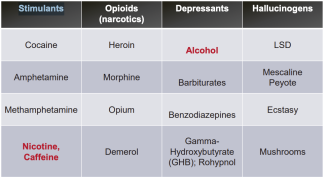
Classification of Psychoactive Substances

Leaflet, Infographic, Fact sheet, Poster
 - 
This section from the UPC 2 Physiology and Pharmacology for Prevention Professionals (p130-133) introduces the main types of psychoactive substances, explains their effects on the brain and body, and clarifies that some commonly used legal...

The Psychology of Addiction and Obesity: New Treatments

Website
Addiction and obesity share similar neurological pathways, both linked to compulsive behaviors and the brain's reward system. Research has highlighted the potential of GLP-1 receptor agonists, originally developed for diabetes, to help...

Alcohol Use Disorder Treatment: Problems and Solutions

Scientific article
 - 
This review outlines challenges that face the alcohol field in closing this treatment gap and offers solutions, including broadening end points for the approval of medications for the treatment of AUD
Alcohol Use Disorder Treatment: Problems and Solutions.

The anomalous pharmacology of fentanyl

Scientific article
 - 
Fentanyl is a key therapeutic, used in anaesthesia and pain management. It is alsoincreasingly used illicitly and is responsible for a large and growing number of opioidoverdose deaths, especially in North America. A number of factors have...