The activities of authorised agencies such as police, customs, border services, and investigative bodies to enforce drug control laws and address criminal activities related to the production, trafficking, and distribution of illicit substances. These activities may include investigations, intelligence gathering, interdiction, and collaboration with national and international partners to disrupt organised crime networks. Law enforcement plays an important role in protecting public safety and maintaining the rule of law, and is most effective when coordinated with broader public health, prevention, treatment, and recovery efforts as part of a balanced and comprehensive response to substance use.

Law Enforcement
Interventions to reduce harms related to drug use among people who experience incarceration: systematic review and meta-analysis
Abstract Background: Mortality, suicide, self-harm, and substance use are elevated among people who are incarcerated. There is a wide range of heterogeneous interventions aimed at reducing these harms in this population. Previous reviews...
Preventing Opioid Overdose for 6 Months Post-Prison Release: An Evidence Based Program
Inadequate substance use disorder (SUD) treatment resources for incarcerated women and men with substance use problems leads to a pressing need for services when they are released. Those leaving incarceration were almost 11 times more likely to die of an opioid overdose in the first year following release than the general population.
Community-Based Drug Treatment in the Justice System: What Works in Reducing Crime?
Every year, over 6 million persons globally are in contact with the criminal justice system for drug-related offences. Significant increases in prison populations worldwide are largely caused by the arrest and incarceration of persons whose crimes are related to drug use. Many countries are exploring different options to reduce crime and incarceration through the use of community-based drug treatment.
Reducing Drug-Related Crime: A Comprehensive Approach from The Indonesian Directorate Generale of Corrections, Ministry of Immigration and Corrections, Republic of Indonesia
Indonesia confronts significant challenges from widespread drug abuse, impacting public health and leading to high incarceration rates. As of July 2025, the National Narcotics Board (BNN) reports 3.3 million narcotics addicts, with over 147,000 drug offenders constituting 53% of the Indonesian prison population.
Analyzing 10 Years of Drug Use Trends and Transforming Addiction Care Beyond Rehabilitation
Indonesia maintains one of the world's most stringent narcotics legal frameworks, codified in Law 35/2009, which imposes severe sanctions ranging from lengthy mandatory minimum prison sentences to capital punishment. This punitive stance has precipitated a crisis of hyper-incarceration, with national prison overcrowding averaging 108% with some facilities operating at 198% capacity, and detention centers exceeding 210%.
New Psychoactive Substances: Studies from Central Asia and China
Recommended Reading: New Psychoactive Substances: Studies from Central Asia and China We are pleased to present the book "New Psychoactive Substances: Studies from Central Asia and China", prepared by an international team of experts and...
25th Annual Conference of the European Society of Criminology
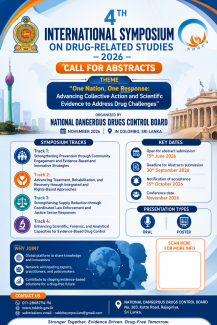
The Annual Conference of the European Society of Criminology (ESC) is one of Europe's most significant gatherings of criminologists and professionals in related fields. It provides a platform for researchers, practitioners, and policymakers from all over the world to discuss and share their work on various aspects of criminology, criminal justice, and related social sciences.
Attitudes and views regarding law enforcement activity at large outdoor raves in Israel: a cross-sectional survey
ABSTRACT Harm reduction services, such as drug testing kiosks and ‘safe zones’ are often advocated for reducing the harms of drug use among rave and festival attendees. However, interaction with law enforcement can undermine efforts at...
Impact of opioid maintenance therapy in the community on re-incarceration in individuals with opioid use disorder—A linked cohort study
Abstract Introduction Studies have found associations between Opioid Agonist Maintenance Treatment during incarceration and reduced recidivism among recently released formerly incarcerated persons. However, the role of community-based...
A Call for Trauma-Informed Justice Reform in Nigeria: Breaking the Cycle of Substance Use, Mental Illness, and Incarceration
By Seye Omiyefa Across Nigeria and many parts of the world, thousands of individuals, particularly youth and economically marginalized people, are trapped in a revolving door of arrest, incarceration, and reentry. Much of this cycle is...