The activities of authorised agencies such as police, customs, border services, and investigative bodies to enforce drug control laws and address criminal activities related to the production, trafficking, and distribution of illicit substances. These activities may include investigations, intelligence gathering, interdiction, and collaboration with national and international partners to disrupt organised crime networks. Law enforcement plays an important role in protecting public safety and maintaining the rule of law, and is most effective when coordinated with broader public health, prevention, treatment, and recovery efforts as part of a balanced and comprehensive response to substance use.

Law Enforcement
For Whom Does Prison-Based Drug Treatment Work? Results from a Randomized Experiment
For the first time in a prison setting, a randomised trial has rigorously compared intensive residential therapeutic community treatment to outpatient counselling. Confounding expectations, the US prison for problem drug users which hosted...
Effectiveness Bank Matrix Bite: What If the Therapist ... Is Also the Jailer?
A cell in the Alcohol Treatment Matrix. In an extreme form, the title poses the dilemma for alcohol treatment staff who may also be (seen as) working for authorities whose main role is to control or punish the ‘client’ or who may be...
Effectiveness Bank Matrix Bite: Treatment not for the Patient but for the Community
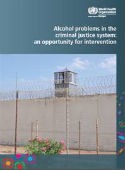
The final row of the Alcohol Treatment Matrix enters the domain of treatment organised not primarily for the patient, but to safeguard the wider community, encountering what seems a core contradiction depicted on the cover of WHO guidance...
Adult Substance Misuse Statistics from the National Drug Treatment Monitoring System (NDTMS)
This report brings together information on people receiving specialist interventions for drug problems and for problem drinking in England, other than patients receiving this treatment in prison. Analysed textually and pictorially through...
Training of Peer Educators at Tihar Central Jail
SPYM has started a prison intervention program among drug abusing youth who are inmates of the Central Jail, Tihar in New Delhi. Peer educators have been identified and a training program was conducted by Dr. Rajesh Kumar, Executive...
2017 International Narcotics Control Strategy Report
This week the Bureau of International Narcotics and Law Enforcement Affairs (INL) publicly rolled out the 2017 International Narcotics Control Strategy Report (INCSR), an annual report by the Department of State to Congress prepared in...
Crime and Social Impacts of Alcohol
Alcohol-related crime and social disorder is estimated to cost UK taxpayers £11bn per year, at 2010/11 prices. [1] Alcohol-related crime makes up a substantial portion of violent offences across the UK (47% in England and Wales in 2014/15,...
New Online Training for Practitioners, Peer Mentors and Service Managers
This new platform allows substance misuse, probation and prison services to upskill their workforces in a scalable and consistent way, and optimise their use of the digital behaviour change programme Breaking Free. Service providers can now...
2016 National Drug Threat Assessment
The purpose of the DEA's 2016 National Drug Threat Assessment is to provide timely and relevant strategic drug-related intelligence for policymakers in the United States to formulate counterdrug policies. Further, it helps law enforcement...