The activities of authorised agencies such as police, customs, border services, and investigative bodies to enforce drug control laws and address criminal activities related to the production, trafficking, and distribution of illicit substances. These activities may include investigations, intelligence gathering, interdiction, and collaboration with national and international partners to disrupt organised crime networks. Law enforcement plays an important role in protecting public safety and maintaining the rule of law, and is most effective when coordinated with broader public health, prevention, treatment, and recovery efforts as part of a balanced and comprehensive response to substance use.
Law Enforcement
Reducing the harm from alcohol by regulating cross-border alcohol marketing, advertising and promotion
This comprehensive report details the full extent of the way that alcohol is being marketed across national borders – often by digital means – and often regardless of the social, economic or cultural environment in receiving countries. It...
Structural violence and the need for compassionate use of methadone in Mexico
Abstract Background Epidemiological data from Mexico have documented an increase in heroin use in the last decade. However, there is no comprehensive care strategy for heroin users, especially those who have been accused of a crime. The...
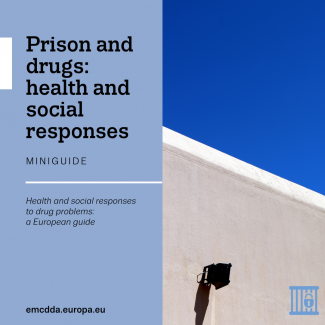
Prisons and drugs: health and social responses
This miniguide is one of a larger set, which together comprise Health and social responses to drug problems: a European guide. It provides an overview of what to consider when planning or delivering health and social responses to drug...
Training on Universal Prevention Core Course (UPC - Core Course) for Prevention Professionals
In order to appropriately address the concerning global levels of substance Abuse Management and substance Prevention, it is vital that staffs are trained to deliver evidence-based Prevention intervention. At the start of March 2022, the...
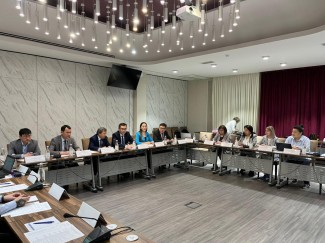
Introduction of new methods and tools for drug use disorders diagnostics and treatment discussed in Kazakhstan
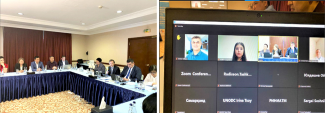
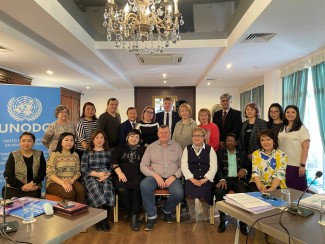
On April 15, 2022, the UNODC Regional Office for Central Asia in collaboration with the Republican Scientific and Practical Center for Mental Health held a “National Round Table Discussion on the application of new methods and tools of drug...
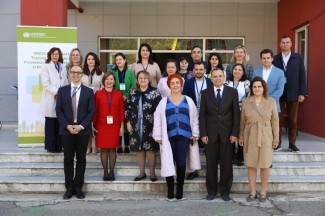
UNODC Training for Albanian Policymakers on the Nature, Prevention, Treatment and Care of Drug Use Disorders
UNODC organized a training for 19 Albanian policymakers on the Nature, Prevention, and Treatment of Drug Use Disorders from 12-14 April 2022 in Tirana, Albania. Participants from the Ministries of Health and Social Protection, Education...
Introduction of new methods and tools for drug use disorders diagnostics and treatment discussed in Tajikistan
On 8 April 2022 UNODC conducted a national round table meeting on the introduction of new methods and tools for drug use disorders diagnostics and treatment in Dushanbe, Tajikistan. The event brought together some 20 experts from the...
National Round Table Discussion on application of new methods and tools of drug use disorders diagnostics and treatment in Uzbekistan
On 25 March 2022 the UNODC Regional Office for Central Asia held a National Round Table Discussion on application of new methods and tools of drug use disorders’ diagnostics and treatment in Tashkent, Uzbekistan. The meeting was attended by...
New European mini guides on responding to drug use in specific settings by EMCDDA
Focusing treatments on specific settings where problems may develop is an important approach to implementing health and social responses to drug problems. As a result, the EMCDDA's Health and social solutions to drug problems: a European...
UNODC Trains Team of National Trainers from Central Asia within the Advanced Level of the Universal Treatment Curriculum for Substance Use Disorders
The UNODC Regional Office for Central Asia supported a training of trainers (ToT) on Course 13 – “Contingency Management: A Reinforcement Based Treatment” and “Course 18 – “Clinical Supervision” which took place in person in Bishkek...