


Search


Alcohol and Drugs Prevention, Treatment and Recovery: Why Invest?
Estimates show that in the UK the social and economic costs of alcohol related harm amount to £21.5bn, while harm from illicit drug use costs £10.7bn. These include costs associated with deaths, the NHS, crime and, in the case of alcohol...
Reasons for E-Cigarette Use among US Middle and High School Students
Summary
What is already known about this topic?
Electronic cigarettes (e-cigarettes) were the most commonly used tobacco product among U.S. middle school and high school students in 2016. The Surgeon General concluded that e-cigarettes...
Drug Use Prevention Projects in Schools in Brazil: Quality Analysis and Improvement Proposals
Abstract
Adolescents living in vulnerable regions are more exposed to risk factors for drug use. The prevention of such use in school is a public policy that needs evaluation. Based on technical criteria and derived from a mixed research...
Family check-up: positive parenting prevents the abuse of drugs
Recommendation for parents, with tips on parenting positive to prevent substance abuse. The material includes links to videos of examples.
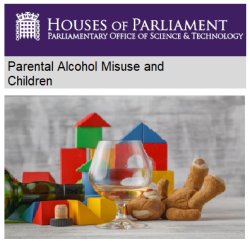
Parental Alcohol Misuse and Children
Parental Alcohol Misuse (PAM) can negatively affect children’s physical and mental health, and other outcomes including educational attainment and behaviour. Effects can be acute when experienced in conjunction with other adverse...
Price elasticity of demand for cigarettes and alcohol, in Ecuador, with household data
OVERVIEW
Aim: To estimate the price elasticity of demand for cigarettes and alcohol in Ecuador, using cross-sectional data from the national survey of income and expenditure of urban and rural families (ENIGHUR) 2011-2012.
Methods: 2011...
Alcohol: no ordinary consumer product
From a public health perspective, alcohol consumption plays an important role in the causation of disability, illness and death on a global scale. It also contributes substantially to the family dysfunction, violence and psychiatric...
Childhood Emotional Maltreatment and Mental Disorders
Abstract
Child maltreatment is a public health concern with well-established sequelae. However, compared to research on physical and sexual abuse, far less is known about the long-term impact of emotional maltreatment on mental health. The...
Trends in Adolescent Alcohol Use in the Netherlands
ABSTRACT
Background: From an international perspective, studying trends in adolescent alcohol use in the Netherlands is an important case study. Whereas Dutch adolescents topped the international rankings of alcohol consumption in the...
FREE Opioid Training Course from Harvard
Harvard University has launched a free online training course via edX.org. Suitable for those looking for an introduction to understanding opioids and the current "crisis" facing many nations through high rates of drug related deaths. The...

Preventive guidelines for children, teenagers, parents and teachers (Mexico)
In the context of strategies to respond to this problem, the National Commission against Addictions in Mexico, developed a complete package of psychoeducational strategies, specifically intended to prevent the use of tobacco, alcohol and...
Association of Parental Supply of Alcohol with Adolescent Drinking, Alcohol-Related Harms, and Alcohol Use Disorder Symptoms
Summary
Background
Some parents supply alcohol to their children, reportedly to reduce harm, yet longitudinal research on risks associated with such supply is compromised by short periods of observation and potential confounding. We aimed...
The Role of Adenosine Receptors in Psychostimulant Addiction
Adenosine receptors (AR) are a family of G-protein coupled receptors, comprised of four members, named A1, A2A, A2B, and A3 receptors, found widely distributed in almost all human body tissues and organs. To date, they are known to...
Can Health Care Efforts to Reduce Child Behavior Problems Also Reduce Social Risk? Unintended Collateral Benefits in Parent Training
Introduction: Lack of family resources, social risk, has been found to negatively impact development of child behavior problems. Thus, improving families’ access to resources, and thereby reducing social risk, would certainly benefit...
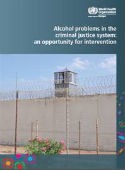
Alcohol Problems in the Criminal Justice System: An Opportunity for Intervention
Alcohol is linked with crime, especially violent crime. Many people are incarcerated because of alcohol-related crime. Alcohol is not permitted in prisons except in a very few cases, and illicit use of alcohol in prison is not a major...
Family History of Alcoholism and the Human Brain Response to Oral Sucrose
Abstract
A heightened hedonic response to sweet tastes has been associated with increased alcohol preference and alcohol consumption in both humans and animals. The principal goal of this study was to examine blood oxygenation level...
Feasibility of Implementing a Culturally Adapted Parenting Intervention for Karen Refugee Caretakers in the U.S.
Elizabeth A Wieling, Jaime Ballard, Christopher Mehus, Damir Utrzan
Introduction: Increasing numbers of children are fleeing to the United States after exposure to war and conflict. Children exposed to war have high rates of negative...
Supportive Parenting Moderates the Effect of Racial Discrimination on Delinquency among Ethiopian-Israeli Youth
Steven M. Kogan, Sophie Walsh, Megan Hicks
The Ethiopian families who are the focus of the present study emigrated from Ethiopia to Israel in the 1980s-1990s. Escaping civil war, famine, and religious persecution, these families have...
Meeting the Challenges of Recruiting and Retaining Families in a Pragmatic Randomised Controlled Trial of the Strengthening Families Programme 10-14 UK
Jeremy Segrott, Jo Holliday, Jonathan Scourfield, David Foxcroft, Simon Murphy
Introduction: Trials of family-based prevention interventions often face challenges in recruitment and retention, leading to methodological issues. However...
Lessons Learnt from Scaling-up a Parenting Programme during Its Research Phase
Jenny Doubt
Background: There is an increasing demand for effective ways of preventing and reducing violence in our societies. Children in developing countries experience higher levels of abuse, and less than 12% of abused children receive...