
Search
 Treatment
The range of medical, psychological, and social services designed to help individuals reduce or stop substance use and manage substance use disorders. Treatment may include assessment, counselling and behavioural therapies, medication-assisted treatment, withdrawal management, and support for co-occurring mental or physical health conditions. Effective treatment is typically person-centred and evidence-informed, and may be provided in outpatient, community, or residential settings. Treatment aims to improve health and functioning, reduce substance-related harms, and support individuals in moving toward recovery and long-term wellbeing.


E-Collection: Alcohol Consumption and Harmful Use of Alcohol
E-collection, put together by the European Journal of Public Health, analysing alcohol consumption and related harm.

Webinar: Compassionate Pragmatism an Integrative Approach to Treating Problematic Substance Use
Andrew Tatarsky, Ph.D., Founder and Director The Center for Optimal Living will take us through a harm reduction approach which has compassion at its centre. This webinar looks at harm reduction across the range of risk behaviours...

The Substance Use Intervention Team: A Preliminary Analysis of a Population-level Strategy to Address the Opioid Crisis at an Academic Health Center
Objective: In 2017, an academic health center in Chicago launched the multidisciplinary Substance Use Intervention Team (SUIT) to address opioid misuse across 18 inpatient units and in a new outpatient addiction medicine clinic. This report...
Prevalence of Undiagnosed PTSD among In-Patients in an SUD Treatment Centre
Post traumatic stress disorder (PTSD) is a common co-ocuring disorder among patients with substance use disorders. Treatment of PTSD improves SUD treatment outcome. Many studies show that a large number of patients with co-morbid PTSD do...
Psychoactive Substance Dependence in Females: A Three Year Review
Psychoactive substance use was regarded as a male affair in the past. However, recent findings show an increasing number of females are getting involved. We conducted a three year retrospective review of patients admitted to the Centre for...
Inside Health Podcast- E-cigarettes, Prehabilitation before surgery, Hospital safety
This Inside Health podcast discusses why vaping is dividing public health experts causing a polarised split; prehabilitation before cancer surgery and the benefits of preparing for an operation; plus can hospital safety be compared to...
Training Workshop on "Screening, Brief Intervention and Referral for Treatment"
The objective of this two day training workshop "Screening, Brief Intervention, and Referral to Treatment (SBIRT)" was to train mental health professionals so that they could identify substance use problems, help their clients if they are...
A Cross-Journal Call for Papers- Substance Use, Misuse and Dependence: Prevention and Treatment
Substance use and misuse affect people worldwide, of all ages and from all walks of life, resulting in a substantial burden of ill health and mortality, and presenting big challenges in prevention and treatment.
PLOS Medicine is planning...

Relevancia clínica de los receptores GABA-b en el tratamiento de la adicción a las drogas
Resumen
El ácido γ-aminobutírico (GABA) es el principal neurotransmisor inhibitorio del sistema nervioso central (SNC) de los mamíferos y ejerce su acción a partir de la activación de tres receptores distintos. El receptor GABAB es una...
The Effects of Oxytocin on Withdrawal, Craving and Stress Response in Heroin-Dependent Patients
According to the World Drug Report opioids are the most harmful drug type, accounting for 70% of the adverse health impacts associated with drug use disorders worldwide. Treatment typically focusses on controlling withdrawal, preventing...
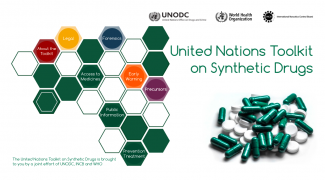
United Nations Toolkit on Synthetic Drugs
The UN Synthetic Drugs Toolkit is a group of electronic resources carefully put together by organisations such as UNODC, WHO and INCB.
The International Guidelines on Human Rights and Drug Policy
The International Guidelines on Human Rights and Drug Policy, developed by WHO UNAids UNDP and the International Centre for Human Rights Policy, are a reference tool for policy-makers, lawyers and civil society organisations working to ensure human rights compliance in drug policy.
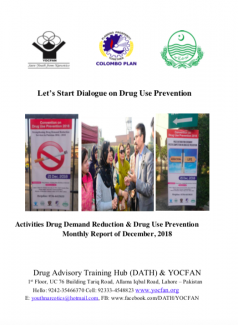
The Drug Advisory Training Hub (DATH) & YOCFAN Drug Demand Reduction Activities in Educational Institutions
Drug Advisory Training Hub (DATH) & YOCFAN have published their latest progress report outlining the work that has been carried out as part of their prevention programme in Lahore Punjab.
As well as providing the key figures and progress...
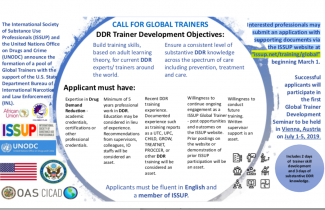
Call for Global Trainers
ISSUP and UNODC announce the formation of a pool of Global Trainers with the support of the U.S. State Department Bureau of International Narcotics and Law Enforcement Affairs (INL).
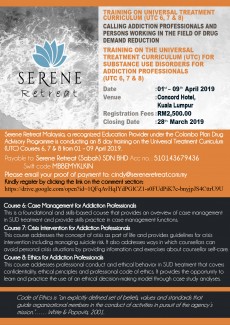
TRAINING ON UNIVERSAL TREATMENT CURRICULUM (UTC 6, 7 & 8)
Course 6: Case Management for Addiction Professionals
This is a foundational and skills-based course that provides an overview of case management in SUD treatment and provide skills practice in case management functions.
Course 7: Crisis...
Informal Meeting of Newly Elected Board Members, ISSUP Pakistan Chapter
An informal meeting of newly elected Board of Directors ISSUP Pakistan Chapter has held at Masjide Nabwi, Madina, Saudi Arabia. Mr. Bashir Ahmad Naz President Elect, Chair the meeting. Mr. Sana Ullah Rathore, Director Elect, Ms. Saima...

Effectiveness Bank Analysis: Emotions Thought to Drive Effective Therapy
Research findings amalgamated for the American Psychological Association show that the outcomes of psychotherapy are substantially and significantly better the more the therapist or especially the client display emotional arousal during...
Hazardous Alcohol Use among Patients with Schizophrenia and Depression
Harmful alcohol use is known to increase the risk of alcohol dependence as well as physical conditions such as hypertension, cardiovascular disease, and cirrhosis.
Alcohol use disorder (AUD) is a common co-occurring disorder in people with...
Integration Centers addictions Virtual Library
The Virtual Library in Addictions, developed by centers of youth integration, allows access to resources and information services specialized in Addictions and related topics, serving users of different levels.
The aim of the library is to...

Utilization of Addiction Treatment among U.S. Adults with History of Incarceration and Substance Use Disorders
Abstract
Background
The high prevalence of substance use disorders (SUDs) among incarcerated adults in the U.S. is well-known, but there has been less examination of SUD treatment and rates of incarceration among the population of adults...