

Search
 Treatment
The range of medical, psychological, and social services designed to help individuals reduce or stop substance use and manage substance use disorders. Treatment may include assessment, counselling and behavioural therapies, medication-assisted treatment, withdrawal management, and support for co-occurring mental or physical health conditions. Effective treatment is typically person-centred and evidence-informed, and may be provided in outpatient, community, or residential settings. Treatment aims to improve health and functioning, reduce substance-related harms, and support individuals in moving toward recovery and long-term wellbeing.


Prevention Programs for Eating Disorders and Obesity in Germany
Luise Adametz, Felicitas Richter, Julia Mühleck, Katharina Wick, Bernhard Strauß, Uwe Berger
Disordered eating and partial eating disorder (ED) syndromes are widespread in childhood and adolescence. They are associated with decreased...
Predictors of Treatment Response Following Parent Management Training: Child, Context, and Therapy Factors
Terje Gunnar Ogden, Kristine Amlund Hagen
Parent Management Training- the Oregon model (PMTO) was introduced as a treatment alternative to families in both child welfare services and child psychiatric out-patient clinics in Norway, in 2001...
Antiretroviral Therapy (ART) Is the Most Essential Intervention among People Who Inject Drugs (PWID) to Achieve Reduction HIV Transmission through Pwid to Others in Myanmar
Rosie Myint, Wah Wah Lwin
Background: There is a sustained downward trend in HIV prevalence among the sentinel groups which include People Who Inject Drugs (PWID) reflecting the effectiveness of programme for safer sexual behaviors and...
Psychiatric Symptoms in Individuals Who Use Ketamine Versus Methamphetamine
Yanhui Liao
Introduction: Chronic use of both Ketamine (“K powder”) and methamphetamine (MA, “ice”) can induce psychiatric symptoms. This study aimed at exploring drug-induced psychiatric symptoms in chronic ketamine users and MA users.
...NIDA Humphrey Fellows Participate in ISSUP's Third Workshop
NIDA Hubert H. Humphrey Fellows from Virginia Commonwealth University participated in the Third Annual Meeting of the International Society of Substance Use Professionals. More than 3,000 participants attended the meeting for drug treatment...

The American Psychiatric Association Practice Guideline for the Pharmacological Treatment of Patients with Alcohol Use Disorder
Rationale
The goal of this guideline is to improve the quality of care and treatment outcomes for patients with alcohol use disorder (AUD), as defined by DSM-5 (American Psychiatric Association 2013). The guideline focuses specifically on...
Universal School-Based Implementation of Screening Brief Intervention and Referral to Treatment to Reduce and Prevent Alcohol, Marijuana, Tobacco, and Other Drug Use
Abstract
Screening, Brief Intervention, and Referral to Treatment (SBIRT) is an evidence-based approach to reducing substance use in adolescents. An emerging literature shows the promise of school-based SBIRT. However, most school-based...
Effectiveness Bank Matrix Cell: Managing Transformation
Key studies on the role of management and supervision in the treatment of problem drug use. Commentary asks, “Is there anything more instructive than *being* the patient?”, explores the role of patient choice and preferences in treatment...
Substance Use, Sleep and Intervention Design
Abstract
Background: Alcohol and other drug use is associated with poor sleep quality and quantity, but there is limited qualitative research exploring substance users’ experiences of sleep and few psychosocial sleep interventions for them...
Ibero-American Initiative for Dual Disorders to Improve Public Treatment Programmes
Abstract:
Introduction: Dual disorders (DD) are defined as the co-occurrence of substance use disorders with other psychiatric disorders across the lifespan. DD represent a diagnostic dimension with clinical peculiarities and specific...
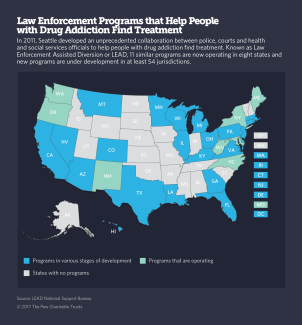
Overburdened Mental Health Providers Thwart Police Push for Drug Treatment
This article highlights the overburdened health system in West Virginia, including a shortage of behavioral treatment professionals.
Sex Differences in Cannabis Use Disorder Diagnosis Involved Hospitalizations in the United States
ABSTRACT
Objectives: The study examined sex differences in trend and clinical characteristics of cannabis use disorder (CUD) diagnosis involved hospitalizations among adult patients.
Methods: We analyzed hospitalization data from the 2007...
Appropriate Use of Drug Testing in Clinical Addiction Medicine
Purpose
The purpose of the Appropriate Use of Drug Testing in Clinical Addiction Medicine is to provide guidance about the effective use of drug testing in the identification, diagnosis, treatment, and promotion of recovery for patients...
Quality Measurers of Therapeutic Communities for Substance Dependence
Abstract
Background
In Latin America, substance related disorders are highly prevalent and one of the treatment strategies is the Therapeutic Communities (TCs), however, in Latin America there is scarce data about this treatment...
Drug-Treatment Systems in Prisons in Eastern and South-East Europe
This research project on drug-treatment systems in prisons in Eastern and South-East Europe looks in detail into the situation of drug users among criminal justice populations and the corresponding health-care responses in nine countries in...
Effectiveness Bank Hot Topic: The ‘Forgotten’ Carers
One of our selection of hot topics on important issues which sometimes generate heated debate. Both as a treatment resource for the patient and a group needing support in their own right, families affected by substance use are, claimed a UK...
Identifying and Treating Patients Who Use Tobacco
'Million Hearts' is an initiative launched by the U.S. Department of Health and Human Services that aims to prevent 1 million heart attacks and strokes by promoting evidence-based intervention through communities, health systems, non-profit...
Reviewing Inclusion Health: An Intervention Programme for At-Risk Populations
Inclusion Health is a framework for action that helps find ways of improving the health and well-being for socially excluded groups. These populations, who have in common adverse life experiences and risk factors, such as poverty and...
Keeping Youth Drug Free
Keeping Youth Drug Free is a new publication from the Substance Abuse and Mental Health Services Administration (SAMHSA). Aimed at parents, the guide offers advice for keeping children substance-free. It includes a review of the latest...

Effectiveness Bank Hot Topic: Does It Matter If Addiction Is a Brain Disease?
Seizing on the theory’s propaganda value, in 1997 the head of the US National Institute on Drug Abuse proclaimed, “Addiction Is a Brain Disease, and It Matters.” His contention has been hailed as a breakthrough or condemned as a...