
Search
 Treatment
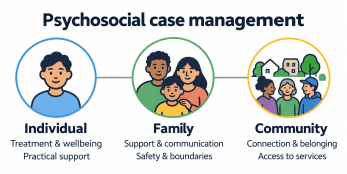
The range of medical, psychological, and social services designed to help individuals reduce or stop substance use and manage substance use disorders. Treatment may include assessment, counselling and behavioural therapies, medication-assisted treatment, withdrawal management, and support for co-occurring mental or physical health conditions. Effective treatment is typically person-centred and evidence-informed, and may be provided in outpatient, community, or residential settings. Treatment aims to improve health and functioning, reduce substance-related harms, and support individuals in moving toward recovery and long-term wellbeing.



Addictions in Potential Sperm Donors: What is Possible to Control?
INTRODUCTION: Third-party sperm donation represents the sole viable option for conception for a considerable number of infertile couples. The donation process is predicated on ensuring the high quality and safety of the donated cells. While...
AddictologyIssue 3/2024
Effectiveness of Mental Health Courts in Reducing Recidivism: A Meta-Analysis
Abstract
Objective:
Mental health courts (MHCs) were developed to address the overrepresentation of adults with mental illnesses in the U.S. criminal justice system through diversion into community-based treatment. Research on MHCs has...
Augmenting substance use treatment in the drug court: A pilot randomized trial of peer recovery support
Abstract
Introduction
Peer recovery specialist (PRS) support has been used to varying degrees in community substance use and mental health treatment for a number of years. Although there has been some evidence of positive PRS impacts on...
NIJ’s Multisite Evaluation of Prosecutor‑Led Diversion Programs: Strategies, Impacts, and Cost‑Effectiveness
Executive Summary
In recent years, a growing number of prosecutors have established pretrial diversion programs, either pre-filing—before charges are filed with the court—or post-filing—after the court process begins but before a...
Use of the Sequential Intercept Model as an Approach to Decriminalization of People With Serious Mental Illness
The Sequential Intercept Model provides a conceptual framework forc ommunities to use when considering the interface between the criminal justice and mental health systems as they address concerns about criminalization of people with mental...
A Multisite Study of the Prevalence of Serious Mental Illness, PTSD, and Substance Use Disorders of Women in Jail
Abstract
Objectives
This multisite study aimed to answer the following research questions about women in urban and rural jails. First, what is the current and lifetime prevalence of serious mental illness (major depressive disorder...
Global Estimates of the Prevalence of Depression among Prisoners: A Systematic Review and Meta‐analysis
Background. Prison populations tend to be marginalized and disadvantaged of the rights and freedoms that other people in the community benefit from. Their separation from families, a narrow room and lack of privacy in the prison, violence...
Indicators of Mental Health Problems Reported by Prisoners and Jail Inmates, 2011–12
About 1 in 7 state and federal prisoners (14%) and 1 in 4 jail inmates (26%) reported experiences that met the threshold for serious psychological distress (SPD) in the 30 days prior to a survey conducted between February 2011 and May 2012...
The prevalence of comorbid serious mental illnesses and substance use disorders in prison populations: a systematic review and meta-analysis
Summary
Background
Comorbid mental illnesses and substance use disorders are associated with adverse criminal, social, and health outcomes. Yet, their burden is not reliably known among prison populations. We therefore aimed to estimate...
Prevalence of severe mental illness among people in prison across 43 countries: a systematic review and meta-analysis
Summary
Background
Prison populations have been increasing worldwide. Previous studies suggest that there is a high burden of psychiatric morbidity in people in prison, but, to our knowledge, the last published meta-analysis of prevalence...
Webinar on Students Response to SUD
Over 2000 students from 10 Universities and colleges participated in a webinar on "Students' Response to Substance Use Disorder", hosted by Ecolink Institute on June 26 in connection with the International Day Against Drug Abuse. Dr...

Webinar reflection: Exploring Multiple Pathways of Recovery
ISSUP, in collaboration with Faces & Voices of Recovery, has launched a new Global Recovery Network webinar series to spotlight diverse perspectives on recovery. The first webinar featured Dr. Haner Hernández, a respected expert in the...
Global status report on alcohol and health and treatment of substance use disorders
The WHO Global Status Report on Alcohol and Health and Treatment of Substance Use Disorders provides a comprehensive snapshot of global trends in alcohol consumption, related harms, and national policy responses, alongside the availability...
UNODC World Drug Report 2025: Global instability compounding social, economic and security costs of the world drug problem
A new era of global instability has intensified challenges in addressing the world drug problem, empowering organized crime groups and pushing drug use to historically high levels, says the UN Office on Drugs and Crime (UNODC) in the World Drug Report 2025 launched today.
Alcohol Use Among Adults in Greece and Kazakhstan: Results from an Online Research
ISSUP Greece and ISSUP Kazakhstan present a presentation of the results from an online study on alcohol use among adults in Greece and Kazakhstan.
Transforming Primary Care in Lagos: How SBIRT Training is Addressing Nigeria's Substance Use Crisis
Breaking barriers and building capacity in Africa's most populous city.

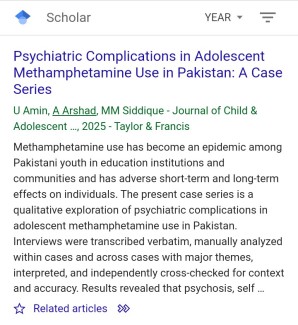
Article titled "Psychiatric complications in adolescent methamphetamine use in Pakistan: A case series" is scientific article highlighting the need of our to raise awareness about the ripple effects of methamphetamine in youth
Methamphetamine use has become an epidemic among Pakistani youth in education institutions and communities and has adverse short-term and long-term effects on individuals. The present case series is a qualitative exploration of psychiatric...
Guiding Principles of Recovery
ISSUP Global, in collaboration with Faces & Voices of Recovery, presents its webinar titled Guiding Principles of Recovery.
Educating medical and nursing students to provide mental health, neurological and substance use care: A practical guide for pre-service education
Pre-service education sets the foundation for preparing health professionals to provide services within health systems. Educating medical and nursing students to provide mental health, neurological and substance use care: A practical guide...

MI in Action: Turning Conversations into Change Pt. 2
What does it really mean to “step back” in a helping conversation? And how can practitioners cultivate genuine curiosity and empathy while still focusing on change?
In this second episode of our four-part ISSUP Exchange series, Dr. Goodman...