

Search
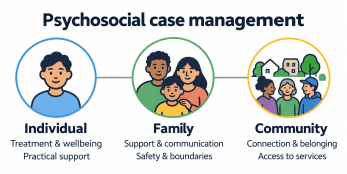
 Treatment
The range of medical, psychological, and social services designed to help individuals reduce or stop substance use and manage substance use disorders. Treatment may include assessment, counselling and behavioural therapies, medication-assisted treatment, withdrawal management, and support for co-occurring mental or physical health conditions. Effective treatment is typically person-centred and evidence-informed, and may be provided in outpatient, community, or residential settings. Treatment aims to improve health and functioning, reduce substance-related harms, and support individuals in moving toward recovery and long-term wellbeing.


Unravelling Risk-Taking in Youth: Pathways to Positive Change
ISSUP India presents its webinar, "Unravelling Risk-Taking in Youth: Pathways to Positive Change," which focuses on understanding risk-taking behaviours in adolescents and youth.
Youth Voices in SUD Management: Challenges and Opportunities
ISSUP Uganda, ISSUP Kazakhstan, and ISSUP Colombia present their webinar on Youth Voices in SUD Management.
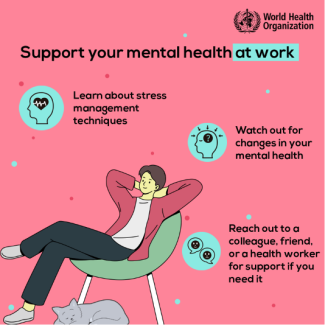
Reflections on Mental Health Day 2024
I outline some thoughts in reflection of Mental Health Day 2024, and share some resources to help us think through what mental health means for us and our workplaces and some of the factors that may have an impact on our well-being.
Strengthening Substance Use Prevention in Tanzania through Evidence-Based Interventions
ISSUP Tanzania presents its webinar titled, "Strengthening Substance Use Prevention in Tanzania through Evidence-Based Interventions"
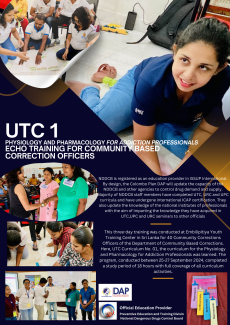
Universal Treatment Curriculum UTC 1 Echo Training
NDDCB is registered as an education provider in ISSUP International. By design, the Colombo Plan DAP will update the capacity of the NDDCB and other agencies to control drug demand and supply. Majority of NDDCB staff members have completed...
SHE RECOVERS: A CELEBRATION OF RESILIENCE, HOPE AND SISTERHOOD
When women gather, emotions tend to swell. But on this particular day at the Empower Her Recovery Centre- Nueva Annex, the tears that flowed were not of pain or struggle. They were tears of triumph. It was September 27th September 2024, and...

Africa and Asia Drug Use Prevention Influencers 2024
September 2024 was not just any month; it was a remarkable chapter in the field of drug demand reduction. Picture this: from 8th to 13th September 2024, drug use prevention influencers from Africa and Asia converged in Kerala, India for a...

GISA raises alarm over danger of synthetic drug abuse
Nigeria is facing a growing crisis with synthetic drugs, with stakeholders warning of devastating consequences if urgent actions are not taken.

Purging to Cleanse: A Qualitative Study of Ayahuasca Healing at a Drug Treatment Center in Peru
Objective: Ayahuasca, a plant-based substance from the Amazon, is gaining attention for its potential in treating addiction. However, there is little research on the role of purging (mainly vomiting), which is a key part of the healing...
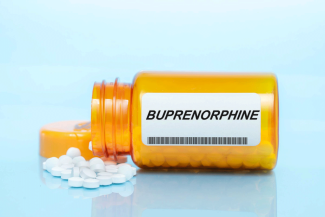
Higher doses of buprenorphine may improve treatment outcomes for people with opioid use disorder
A study funded by the NIH found that adults with opioid use disorder (OUD) who take higher doses of buprenorphine, an opioid addiction treatment medication, have a lower risk of emergency department or inpatient visits related to behavioral...
Annual ISAM Global Congress 2025: Abstract Submission
Abstract submission now open until November 15, 2024
Useful information: How to submit an abstract in ConfTool
Submission Guidelines:
- Lead author must be attending ISAM 2025.
- Abstracts must be written in English.
- The study presented...
56th ASAM Annual Conference: Call for Abstracts & Proposals
Open September 4 - October 11, 2024
Goals & Objectives
ASAM members and non-members are invited to submit abstracts for poster presentations, focus sessions, and workshop sessions. ASAM encourages investigators, researchers, clinicians...
IntNSA Annual Conference 2025: Call for Abstracts
Submission Deadline: Extended to October 31, 2024 at 11:59pm Central Time
The International Nurses Society on Addictions (IntNSA) invites you to submit an abstract for oral and/or poster session at the Annual Educational Conference!
The...
Hospital Readmissions Among Infants With Neonatal Opioid Withdrawal Syndrome
Abstract
Importance Although cases of neonatal opioid withdrawal syndrome (NOWS) increased 5-fold in recent years, no study has examined national hospital readmission rates for these infants.
Objective To examine hospital readmissions...
Clinician Willingness to Prescribe Medications for Opioid Use Disorder to Adolescents in Indiana
Abstract
Importance Prescribing medications for opioid use disorders (MOUD), including buprenorphine, naltrexone, and methadone, to adolescents remains an underused evidence-based strategy for reducing harms associated with opioid use.
O...
Factors Associated With the Availability of Medications for Opioid Use Disorder in US Jails
Abstract
Importance In 2023, more than 80 000 individuals died from an overdose involving opioids. With almost two-thirds of the US jail population experiencing a substance use disorder, jails present a key opportunity for providing...
Submit Your Plenary Session Proposal for the 2025 NIDA International Forum
Submit Your Plenary Session Proposal for the 2025 NIDA International Forum in New Orleans, Louisiana
Deadline: October 31, 2024
Save the date! The 2025 NIDA International Forum will take place as an in-person meeting in New Orleans...
Building Bridges: Enhancing Global Recovery Systems for International Recovery Day
ISSUP Global, in collaboration with the Recovered Users Network (RUN), presents a joint webinar titled "Building Bridges: Enhancing Global Recovery Systems for International Recovery Day " to celebrate International Recovery Day.
ATI Basics: Models of Alternatives to Incarceration (ATI)
ISSUP, in collaboration with ICATI, presents the final episode of its ATI Basics webinar series, titled 'Models of Alternatives to Incarceration (ATI).
Rompiendo el cristal: percepciones de los usuarios de metanfetamina sobre los desafíos para acceder y permanecer en un tratamiento
Resumen
Introducción. La demanda de oferta terapéutica por consumo de metanfetamina (cristal) en el estado de Aguasca- lientes, México se ha incrementado en los últimos años. El cristal se ha convertido en la principal droga de impacto en...