

Search
 Psychoactive Substances
Psychoactive substances are natural or synthetic substances that act on the central nervous system and alter mental processes such as mood, perception, cognition, consciousness, and behaviour. These substances may be legally prescribed medications (e.g., pain medications or sedatives), legally available substances such as alcohol or caffeine, or controlled or illicit drugs. Psychoactive substances can be used for medical, social, cultural, or recreational purposes, but some carry risks of misuse, dependence, and health or social harms when used in harmful ways.
The Relationship between Trauma and Addiction
ISSUP Kenya are pleased to present their Webinar on the cyclic relationship between trauma and addiction and the implication in treatment.
Guide to Indispensable Criteria for Starting-up and Operating Treatment Centers for People with Psychoactive Substance Use Disorders
The WHO Expert Committee on Drug Dependence defines treatment as the process that begins when psychoactive substance users contact a health provider or other community service and may continue through a succession of specific interventions...
Academic Session "The discount of the subjective value of the reinforcer with people who consume psychoactive substances"
Speaker: Dr. Silvia Morales Chainé
Academic session held on Monday, November 8, 2021.
The slides used by Dr. Morales Chainé are available at ISSUP: https://www.issup.net/node/15736
For more publications, presentations, videos...
Synthetic drugs and new psychoactive substances in Latin America and the Caribbean- 2021
The report provides a regional analysis of the key trends and emerging developments of the synthetic drugs and NPS market as well as options for response in Latin America and the Caribbean.
Over the past years, the synthetics drug market...
A Conversation About Corruption in Substance Use Disorder Treatment
Elizabeth Saenz, UNODC, presents on the issue of patient abuse and corruption in treatment and provides a call to action on the need to address this problem that spans across countries.
Lifelong consequences of prenatal drug exposure
This webinar explored the issues of infants withdrawing from maternal drugs of addiction, and problems beyond the newborn period.
Newborn drug withdrawal is often attributed to maternal opioids, but many other drugs can cause serious...
Smoking and drinking- Selected articles from the journal of alcohol and alcoholism
The featured articles investigate the association of smoking products and alcohol consumption, identify causes and influences, and explore therapeutic avenues and cessation interventions.
Free to access until 31 January!
Articles
- Tar...
Considerations for Virtual Services and Supports for Substance Use and Concurrent Disorders [Policy Brief]
The Canadian Centre for Substance Use and Addiction (CCSA) in partnership with the Royal Ottawa Mental Health Centre, the Canadian Psychological Association and Canada Health Infoway, collected national data on the experience and...
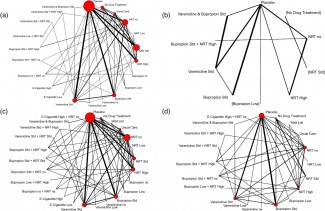
Study: Combined treatments are the most effective to stop smoking
This is a study, led by the University of Bristol, and published in Addiction Journal. It was funded by the National Institute for Health Research (NIHR), the research partner of the NHS, public health and social care.
The most effective...
Addiction treatment in India: Legal, ethical and professional concerns reported in the media
This study is a content analysis of newspaper reports from January 1, 2016 to December 31, 2019 looking into legal, ethical and professional concerns regarding the treatment of substance use disorders in India.
2021 NDARC Annual Research Symposium Recordings
The National Drug and Alcohol Research Centre (NDARC) held the 2021 Annual Research Symposium on the 20 - 22 October 2021.
Here you can see recordings of all of the sessions from the three days.
Session One
Topic: Emerging pharmaceutical...
NIDA Frontiers in Addiction Research Mini-Convention
Mark your calendars for the annual Frontiers in Addiction Research Mini-Convention, November 1-2, 2021. Open to the public, the event provides a forum for the latest topics in neuroscience and addiction research. Register online: loom.ly...
Mental Health in Substance Use and Youth: Youth Substance Use - Trends, Considerations, and Evidence-Based Approaches
ISSUP Ukraine is pleased to present the Final Webinar in their Three-Part Series on 'Mental Health of Youth and Substance'. This Webinar will focus on Youth Substance Use: Trends, Considerations, and Evidence-Based Approaches.
The origin, development and current status of the health profession of an addictologist in the Czech Republic in the broader context of the development of the addictology field
In the 1990s, new addiction services began to emerge that had a shortage of appropriately qualified and trained practitioners. This impulse led to the establishment of the health profession of an ADDICTOLOGIST in the Czech Republic. In the...
The SSA guide to academic posters
The Society for the Study of Addiction have developed a guide for creating academic posters.
The resource contains information on:
- Tailoring your poster to your audience
- Presentation
- Telling a story
- Topic
- Accessibility
- Inclusivity ...
Trends in healthcare expenditures and resource utilization among a nationally representative population with opioids in the United States: a serial cross-sectional study, 2008 to 2017
One of the most serious public health concerns in recent decades has been the opioid epidemic in the United States (US). Over 9.9 million Americans aged 12 and up abused prescription pain drugs in 2018, and roughly 2 million Americans were...
Identifying NGOs working on drug treatment in humanitarian settings
The United Nations Office on Drugs and Crime (UNODC) and specifically the Prevention Treatment and Rehabilitation Section (PTRS) are working on addressing substance use and substance use disorders in humanitarian settings.
In this context...
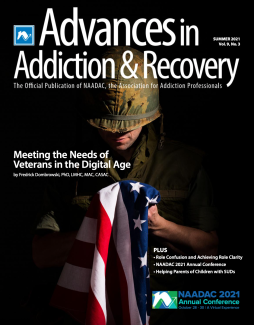
Advances in Addiction and Recovery
Advances in Addiction & Recovery, the official publication of NAADAC, is a quarterly digital magazine focused on providing useful, innovative and timely information on trends and best practices in the profession that are beneficial for...
A series of videos on HIV prevention among people who use stimulant drugs
The UNODC Regional Programme Office for Eastern Europe (Kiev, Ukraine) and Charitable Fund "Humanitarian Action" (Russia) are launching a series of 8 animated videos on the provision of HIV prevention services for people who use stimulants...
Prof. Thomas Babor received an honorary degree from Charles University
Thomas F. Babor is a renowned researcher and professor of Public Health Studies at the University of Connecticut and author of more than 15 books and the editor of Publishing Addiction Science. In the late 1980s, Prof. Babor was one of the...