


Search
 Psychoactive Substances
Psychoactive substances are natural or synthetic substances that act on the central nervous system and alter mental processes such as mood, perception, cognition, consciousness, and behaviour. These substances may be legally prescribed medications (e.g., pain medications or sedatives), legally available substances such as alcohol or caffeine, or controlled or illicit drugs. Psychoactive substances can be used for medical, social, cultural, or recreational purposes, but some carry risks of misuse, dependence, and health or social harms when used in harmful ways.
Food and Addiction
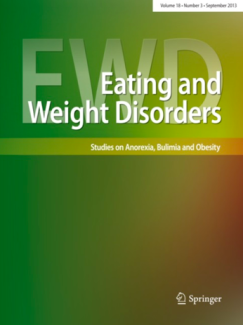
The Journal of Eating and Weight Disorders has put together a topical collection on Food and Addiction.
The collection examines the mechanisms of addiction in relation to eating, gaming and substance use. It also covers research on...
Addiction News
The Addiction Journal has put together a news section highlighting noteworthy updates in the field of substance use prevention treatment and recovery from countries around the world.
Have a browse through the past 6 months of headlines...

Psychostimulant Use and the Brain
Over the past decade there has been an increase in the manufacture and use of psychostimulants in countries around the world. Around two-thirds of illicit psychostimulant users are male with average age of use for methamphetamine and...

Youth Substance Abuse and Co-Occurring Disorders
70%–80% of adolescents with a substance use disorder also manifest comorbid psychopathology, known also as co-occurring disorders or dual diagnosis. Co-occurring disorders are the presence of one or more comorbid psychiatric disorders in...

Eating Disorders and Drug Use in Adolescents
The aim of the study was to show whether there was a connection
between drug use and eating disorders, as well as to identify the type
of drugs most widely used and to ascertain whether they are used to
suppress appetite. An “ad hoc” scale...
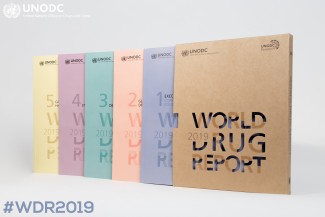
World Drug Report 2019
The World Drug Report aims at improving the understanding of the world drug problem and contributing towards fostering greater international cooperation for countering its impact on health, governance and security.
The World Drug Report...
Medications for Opioid Use Disorder Save Lives
This publication assesses various evidence-based treatments for Opioid Use Disorder and specifically highlights the effectiveness of medication-based treatment when done correctly.
Medication-Assisted Treatment of Opioid Use Disorder: Review of the Evidence and Future Directions
This article is a review and analysis of past research that finds substantial evidence for the positive results of Medication-assisted treatment (MAT) in treating Opioid Use Disorder.

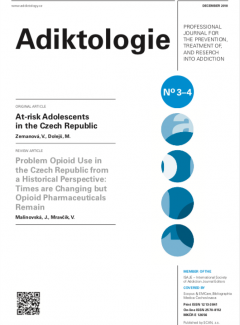
ADIKTOLOGIE Journal
ADIKTOLOGIE is an international journal devoted to publishing peer-reviewed interdisciplinary and transdisciplinary scientific reports on psychoactive substance use, other behavioural addictions and related issues.
Applications open: 2019 Neuroscience, Mental Health and Addiction Collaborative Research Seed Funding
Applications are now open for the 2019 round of UNSW Medicine Neuroscience, Mental Health and Addiction Theme and SPHERE Clinical Academic Group (CAG) Collaborative Research Seed Funding.
The UNSW Medicine Neuroscience, Mental Health and...

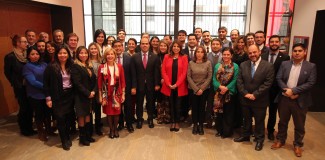
UNODC Training on the Nature, Prevention and Treatment of Drug Use Disorders Organized jointly with SENDA in Chile
30 policy makers attended the training event in Chile which was organized from 28-30 May 2019 in coordination with the National Service for the Prevention and Rehabilitation of Drug and Alcohol Consumption (SENDA) and with the support of...
Impact of a Brief Intervention Program in Clinical Practice: Barriers and Adaptations
Introduction:
The present study analyzes the main barriers and adaptations to brief interventions that focus on addictive behavior treatments carried out in clinical settings by 756 health professionals during their adoption...
Canadian Centre on Substance Use and Addiction New Website
Take a browse through CCSA's new and improved website!

Global Research Mapping of Substance Use Disorder and Treatment 1971–2017: Implications for Priority Setting
Abstract
Background
Globally, substance use disorders are prevalent and remain an intractable public health problem for health care systems. This study aims to provide a global picture of substance use disorders research.
Methods
The...
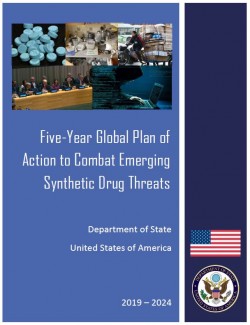
Five-Year Global Plan of Action to Combat Emerging Synthetic Drug Threats
To deter and disrupt production and trafficking of illicit synthetic drugs into the United States, the Department of State has developed a new strategy that will attack this new business model of illicit international drug supply chains at...
Enfermería en adicciones: El modelo teórico de H. Peplau a través de los patrones funcionales de M. Gordon. A propósito de un caso práctico.
Resumen
Objetivo
Estudio de un caso práctico de un usuario de un centro ambulatorio de atención a drogodependencias a través de los patrones funcionales de salud de M. Gordon desde el modelo de H. Peplau.
Material y métodos
Se describe...
The Society for the Study of Addiction Professorship
The Society’s key goals are to promote effective policy and practice and to support the development of stronger addiction science.
Through its Academic Fellowship scheme, launched in 2012, the Society is enabling high-calibre early and mid...

Socioeconomic Inequalities in the Delivery of Brief Interventions for Smoking and Excessive Drinking: Findings from a Cross-Sectional Household Survey in England
Abstract
Objectives: Brief interventions (BI) for smoking and risky drinking are effective and cost-effective policy approaches to reducing alcohol harm currently used in primary care in England; however, little is known about their...
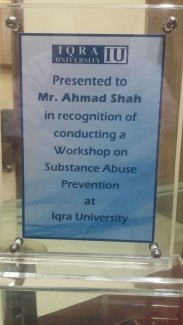
Workshop on Psychoactive Substance Use Prevention at Iqra University Karachi, Pakistan
On 3rd May 2019 the Drug Free Pakistan Foundation (DFPF) in collaboration with the Iqra University organized a one day Workshop on Substance Psychoactive Use Prevention at Iqra University in Karachi, Pakistan. The main objective of this...
Rethinking Addiction
Abstract
Addiction is a complex and challenging condition with many contributing factors. Although addictive behaviors appear to be individual choices, behavior alterations cannot be addressed successfully without considering...