Search
 Psychoactive Substances
Psychoactive substances are natural or synthetic substances that act on the central nervous system and alter mental processes such as mood, perception, cognition, consciousness, and behaviour. These substances may be legally prescribed medications (e.g., pain medications or sedatives), legally available substances such as alcohol or caffeine, or controlled or illicit drugs. Psychoactive substances can be used for medical, social, cultural, or recreational purposes, but some carry risks of misuse, dependence, and health or social harms when used in harmful ways.

Addiction, 12-Step Programs, and Evidentiary Standards for Ethically and Clinically Sound Treatment Recommendations: What Should Clinicians Do?
Abstract
Addiction is a complex phenomenon characterized by a loss of control and compulsive, habitual behavior. Since there is no single, specific cause for addiction, there is no single, standard treatment for it. A variety of approaches...
Effectiveness Bank Matrix Cell: Medical Care in Drug Treatment Systems
Key studies relating to the roles of medical interventions and treatment in medical settings in local, regional and national drug treatment systems. Highlights a simple innovation which transformed detoxification recyclers into typical...

Overview of European University-Based Study Programmes in the Addictions Field
In 2015, the team from the Department of Addictology (First Faculty of Medicine of Charles University and General University Hospital in Prague) in cooperation with our colleague from the Department of Community Medicine & Health Care...

SAMHSA Tobacco-Free Recovery Grant 2018
The Substance Abuse and Mental Health Services Administration (SAMHSA) National Center of Excellence for Tobacco-Free Recovery Grant is now open for applications. Offering up to 5 million USD the grant can be used for a range of projects...
The health and social effects of the medicinal use of cannabis
Resumen
Cannabis is the psychoactive substance under international control used in the world. In 2013, about 181.8 million of people from 15 to 64 years worldwide have used cannabis without medical purpose (estimate of uncertainty of 128.5...
Social and effects to the health of non-medical cannabis use
Overview
Cannabis is the substance psychoactive under international control most widely used around the world. It is estimated that, in 2013, 181.8 million people aged 15 to 64 consumed cannabis without medical purposes around the world...
A Review of Workplace Substance Use Policies in Canada: Strengths, Gaps and Key Considerations
Suggested citation: Meister, S.R. (2018). A Review of Workplace Substance Use Policies in Canada: Strengths, Gaps and Key Considerations. Ottawa, Ont.: Canadian Centre on Substance Use and Addiction.
A review of workplace substance use...

National report on drugs and activities related 2016
OVERVIEW
Treatment of consumption
Government institutions:
The year 2016 showed a decrease in the number of patients except those included in the range of 19 to 25 years although total attention increased over the previous year given the...
Study on patterns of psychoactive substances consumption in indigenous and groups originating from the city of Mexico 2014
This interesting text is the product of collaboration between the Institute of care and prevention of addictions (IAPA) and the National Institute of Psychiatry Ramón de la Fuente Muñiz (INFRDM), institutions that share the commitment to...
2017 annual bulletin, National Observatory on drugs of Guatemala
INTRODUCTION
The National Observatory on drugs (OND) of the SECCATID works in the Constitution of a network of information on drugs (RID) in Guatemala, with the members of the Commission against addiction and illicit drugs - CCATID - and...
Evaluating Clinical Stop‐Smoking Services Globally: Towards a Minimum Data Set
Abstract
Background and aims
Behavioural and pharmacological support for smoking cessation improves the chances of success and represents a highly cost‐effective way of preventing chronic disease and premature death. There is a large...
Acute and Chronic Modulation of Striatal Endocannabinoid‐Mediated Plasticity by Nicotine
Abstract
The endocannabinoid (eCB) system modulates several phenomena related to addictive behaviors, and drug‐induced changes in eCB signaling have been postulated to be important mediators of physiological and pathological reward‐related...
Mindfulness-Based Treatment of Addiction: Current State of the Field and Envisioning the Next Wave of Research
Abstract
Contemporary advances in addiction neuroscience have paralleled increasing interest in the ancient mental training practice of mindfulness meditation as a potential therapy for addiction. In the past decade, mindfulness-based...
Guidelines on the Management of Co-Occurring Alcohol and Other Drug and Mental Health Conditions in Alcohol and Other Drug Treatment Settings
First published in 2009 and updated in 2014 the Guidelines on the Management of Co-Occurring Alcohol and Other Drug and Mental Health Conditions in Alcohol and Other Drug Treatment Settings are offered in tandem with an online training...
Glossary of Terms Used in Drug Policy
A glossary of drug policy terminology produced by the Drug Policy Network South East Europe is now available in English and Spanish.
The Drug Policy Network South East Europe (DPNSEE) is an initiative of NGOs from the countries of South...
The European Health Award 2018
Applications are now open for the European Health Awards. Coordinated by the European Health Forum Gastein (EHFG), the awards are offered to public health and healthcare initiatives in Europe.
The award focuses on projects disparities in...

Assessing Standards of Care for the Treatment and Rehabilitation for Substance Abuse
The purpose of this publication is to develop and provide basic guidelines and criteria for the development of programmes to assess standards of care in the treatment of substance abusers in the CARICOM region. This handbook is adapted from...

Fatal and Non-Fatal Overdose among Opiate Users in South Wales
A study published in the International Journal of Drug Policy, Fatal and Non-Fatal Overdose among Opiate Users in South Wales: A Qualitative Study of Peer Responses, explores the behaviour of witnesses to opiate overdoses.
The research...
Annual Surveillance Report of Drug-Related Risks and Outcomes
This report presents information on four types of outcomes from the four different data sources:
- Opioid prescribing, 2006-2016, from QuintilesIMS Health®
- Drug use, misuse, and substance use disorder, 2014-2015, from the National Survey...

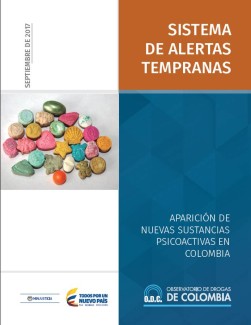
Appearance of new substances psychoactive (NSP) in Colombia
The Ministry of Justice and the law created the system of early alerts (SAT) of Colombia, in order to monitor and alert promptly the emergence of NPS and changes in patterns of drug use, as part of the functions of the Observatory of drugs...