


Search
 Psychoactive Substances
Psychoactive substances are natural or synthetic substances that act on the central nervous system and alter mental processes such as mood, perception, cognition, consciousness, and behaviour. These substances may be legally prescribed medications (e.g., pain medications or sedatives), legally available substances such as alcohol or caffeine, or controlled or illicit drugs. Psychoactive substances can be used for medical, social, cultural, or recreational purposes, but some carry risks of misuse, dependence, and health or social harms when used in harmful ways.
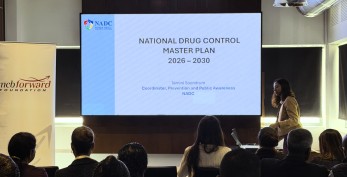

Drug Facts from the Australian Alcohol and Drug Foundation
Digital health information about the risks of drugs is available through the Australian Alcohol and Drug Foundation (ADF) website. The searchable online database, Drug Facts, features information about a range of substances which may pose...

Childhood Predictors of Lung Function and Future COPD Risk
A study published in the Lancet details the discovery of a link between the respiratory disease Chronic Obstructive Pulmonary Disease (COPD) and childhood exposure to parental smoking or childhood illnesses, such as asthma, bronchitis...
Rise in Glutamate Levels Can Be Used to Predict Drug High
A study funded by the National Institute on Drug Abuse (NIDA) explores the action of psychostimulant drugs on glutamate, one of the most abundant neurotransmitters in the human body.
Drugs with a stimulant effect are commonly prescribed...

Association between Receptivity to Tobacco Advertising and Progression to Tobacco Use in Youth and Young Adults
A study funded by the National Institute on Drug Abuse (NIDA) has found an association with young people being exposed to adverts for electronic cigarettes (e-cigarettes) and taking up smoking later in life.
The study followed 10 989...
Medication for the Treatment of Alcohol Use Disorder
The National Institute on Alcohol Abuse and Alcoholism (NIAAA), the Health and Human Services US Government Department (HSS) and the Substance Abuse and Mental Health Services Administration (SAMHSA) have collaborated to create a manual on...

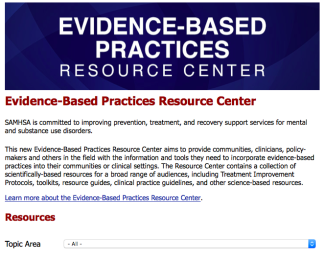
New Resource Centre from SAMHSA
SAMHSA has launched the new Evidence Based Resource Center which will allow practitioners to find tools, manuals, clinical practice guidelines and science based-resources.
Available directly through the SAMHSA website, the digital...
Drug Misuse Prevention Quality Standards
This quality standard covers the prevention or delay of harmful use of drugs by children, young people and adults most likely to start using drugs, or already experimenting or using drugs occasionally. This includes illegal psychoactive...
Impact of Alcohol and Illicit Drug Use on the Burden of Disease and Injury in Australia
This report quantifies the health impact that alcohol and illicit drug use place on Australia, including as risk factors for other diseases and injuries. It estimates that alcohol and illicit drugs were collectively responsible for 6.7% of...
Methamphetamine-Type Stimulant Use in Lao PDR
Abstract
Background
Methamphetamine is one of the most widely used illicit drugs in several Southeast Asian countries, including the Lao People’s Democratic Republic (PDR). The purpose of this study was to examine the socio-cultural...
Incubation of Cue-Induced Craving in Adults Addicted to Cocaine Measured by Electroencephalography
Key Points
Question: Does cue-induced craving follow a parabolic trajectory as a function of duration of abstinence in humans with cocaine use disorders, as previously shown in preclinical studies?
Findings: The results of this laboratory...
Vulnerability for Alcohol Use Disorder and Rate of Alcohol Consumption
"Binge drinking" may be more prevelent in individuals with an increased vulnerability to alcohol use disorder (AUD) and could act as an early warning indicator.
Acquiring a role opposite a forgotten social reality
Gaining a leading role opposite a forgotten social reality
Eduardo H. Loyola Arguello (ISSUP Member)
El Salvador is a geographically small country, with a history characterized by pain, conflict and great need, but where the Salvadoran...

April Student Membership Update
For anyone interested in pursuing further study, seeking funding for a research idea or connecting with other researchers.
Time‐Dependent Neuronal Changes Associated with Craving in Opioid Dependence: An fMRI study
Abstract
Relapse after initially successful treatment is a significant problem facing the treatment of opioid dependence. Evidence suggests craving elicited by re‐exposure to drug cues may precipitate relapse. Attempts to identify neural...
EU Drug Use Revealed through Wastewater Analysis
The European Monitoring Centre for Drugs and Drug Addiction (EMCDDA) has released the results of their largest wastewater analysis study. The EU project analysed the wastewater around 60 European cities and towns.
This has allowed...

Implementing a Mobile Health System to Integrate the Treatment of Addiction into Primary Care
A recent study carried out by a team of researchers from the University of Wisconsin School of Medicine and Public Health examined the use of mobile health technology in the United States’ health care system.
Published in the Journal of...
Health Effects of Exposure to Second- and Third-Hand Marijuana Smoke: A Systematic Review
Abstract
Background: Recreational marijuana has been legalized in 11 jurisdictions; Canada will legalize marijuana by July 2018. With this changing landscape, there is a need to understand the public health risks associated with marijuana...
New Dataset Made Available from Study of Adolescent Brain Development
In February of 2018 the US National Institute of Health (NIH) released the first dataset from an "unprecedented study of adolescent brain development", the Adolescent Brain Cognitive Development (ABCD) study.
The study has, to date...

Sexual Minority Youth Continue to Smoke Cigarettes Earlier and More Often Than Heterosexuals: Findings from Population-Based Data
Research carried out in North America has highlighted differences in youth smoking habits for individuals who identify as heterosexual and those who identify as Lesbian, Gay or Bisexual (LGB).
The study builds on historical evidence to...
A Randomized, Open Label Trial of Methadone Continuation versus Forced Withdrawal in a Combined US Prison and Jail: Findings at 12 Months Post-Release
Research carried out in in North America has found that offering continued methadone maintenance to those entering the prison system can have positive outcomes.