
Search
 Populations
Distinct groups of people within a society who share certain characteristics such as age, gender, geographic location, socioeconomic status, cultural background, or exposure to particular risk factors that may influence patterns of substance use, vulnerability to substance use disorders, and access to services. In the context of substance use systems, identifying and understanding different populations helps guide the design of prevention, treatment, recovery, and policy responses that are appropriate, equitable, and responsive to specific needs. Examples may include youth, women, people experiencing homelessness, individuals in the criminal justice system, or communities affected by specific social or economic conditions.


‘I Was Present but I Was Absent’: Perceptions and Experiences of the Non-Medical Use of Prescription or over the Counter Medication among Employed South African Women
Abstract: Background: The need for workplace substance use prevention programmes globally and in South Africa is driven by the growing problem of substance use and the associated burden on the health and welfare of employees, their families...
Adolescents with substance use problems in outpatient treatment: a one-year prospective follow-up study focusing on mental health and gender differences
Background
Although several studies have found a high incidence of coexisting mental health problems among adolescents with substance use problems, follow-up studies addressing how these conditions change over time are rare. The study will...
The UNODC/PTRS demand reduction mentor at the UNODC Programme Office in Indonesia provided technical assistance to the National Narcotics Board (BNN) in conducting a national hybrid training for Government Officials on the UNODC Treatnet Family programme
On July 19th, 2022, the Director of Strengthening Government Institution, Deputy of Rehabilitation, BNN officially launched a national hybrid training on the UNODC Treatnet Family programme with 34 representatives from all BNN provinces and...
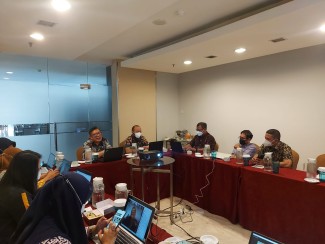
The UNODC Programme Office in Indonesia in collaboration with the National Narcotics Board (BNN) conducted a National Training for Government Officials and Practitioners on the UNODC Family United programme (Family-based prevention programme).
Family is a strategic institution to encourage fundamental changes in the process of child development. A family has risk or protective factors that influences the physical and psychosocial development of a child. This is proof of how...
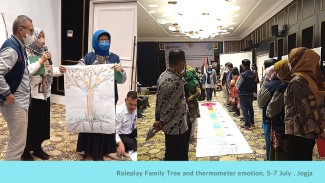
Knowledge, Attitudes and Practice towards Alcohol Use and its Related Factors among Regular Users
Knowledge, Attitudes, and Practice towards Alcohol Use and its Related Factors among Regular Users
Kashif Kamran Khan, Amber Shahzadi
EQUIP Research & Development Consultants
Corresponding Author’s Email: equip [dot] r [dot] d [dot] consultants [at] gmail [dot] com
Ab...
Seminar on “The International Day against Drug Abuse & Illicit Trafficking”
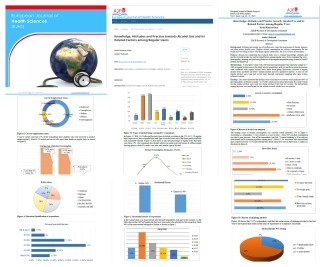
Seminar on “The International Day against Drug Abuse & Illicit Trafficking”
Walk, Poster Competition, Presentation, Discussion, Q&A, Way Forward
“Addressing drug challenges in health and humanitarian crises”
International Day...
Listen First - Supporting children and youth to grow healthy, happy, and safe!
Join us to celebrate International Youth Day 2022. Hear an update on the 'Listen First' initiative, with a contribution from a youth member on their experience of using Listen First resources.
Family skills development is the most influential factor in substance use prevention
Mr. Md. Azizul Islam, Director General (Additional Charge), Additional Secretary, Department of Narcotics Control has said, it would not be possible to achieve SDG if we fail to control substance use and has requested everyone to step ahead...
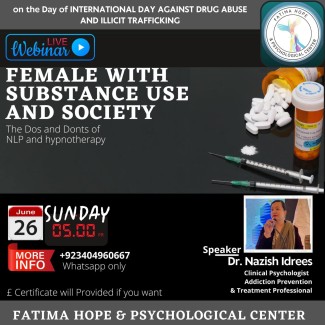
Webinar on “Females with Substance Use and Society: Do’s and Don’t’s of NLP and Hypnotherapy
On Sunday, June 26, 2022, an activity was planned online to honor the International Day Against Drug Abuse and Illicit Trafficking. Females are at high risk of substance use with lack of opportunities to reach treatment facilities as...
World Drug Report 2022
The 2022 World Drug Report provides a global overview of the supply and demand of opiates, cocaine, cannabis, amphetamine-type stimulants and new psychoactive substances (NPS), as well as their impact on health.
Association of Prenatal Exposure to Maternal Drinking and Smoking With the Risk of Stillbirth
Abstract
Importance Prenatal smoking is a known modifiable risk factor for stillbirth; however, the contribution of prenatal drinking or the combination of smoking and drinking is uncertain.
Objective To examine whether prenatal...
Trajectories of adolescent psychotic-like experiences and early cannabis exposure: Results from a Finnish Birth Cohort Study
Abstract
Background
Longitudinal studies examining the effect of cannabis exposure (CE) on the prognosis of adolescents with psychotic-like experiences (PLEs) are scarce. We examined trajectories of mental health in adolescents with PLEs...
Efficacy and Safety of Varenicline for Smoking Cessation in Patients With Type 2 Diabetes A Randomized Clinical Trial
Abstract
Importance Evidence of effective smoking cessation interventions in patients with diabetes is limited. The unique behavioral and metabolic characteristics of smokers with type 2 diabetes warrants a randomized clinical trial of...
New Psychoactive Substances (NPS) Webinar Series
Various NPS have significantly changed the picture of drug use in different countries. They are now very prominent in the drug market. Indeed, many of these substances are intended to circumvent drug laws and are sold as ‘legal’...
Introducing Training of Trainers (ToT) on Universal Treatment Curriculum (UTC) Advance course 9-15 in Pakistan
The country office Pakistan of “United Nation Office on Drug & Crime” (UNODC) is happy to offer the Training of Trainers (ToT) on Universal Treatment Curriculum (UTC) Advance course 9-15. We are inviting the application for ToT on following...
War - Psychological skills for surviving (coping with) traumatic events: Priority assistance to the military
ISSUP in collaboration with the University of California San Diego, Department of Psychiatry, International Technology Transfer Center - Ukraine, and ISSUP Ukraine National Chapter welcome you to a joint initiative dedicated to the...
Study on Relapse and Associated Factors among Drug Users in Bangladesh - Iqbal Masud , Day 5, 11:00-12:31
Presented as part of the Uniting the global community to face the challenge of addiction event, online on 16th May, 2022
A Case study of the treatment of methamphetamine use disorder amongst medical students in Abia State, Nigeria - Chiamaka R. Nwaoru, Day 5, 09:00-10:30
Presented as part of the Uniting the global community to face the challenge of addiction event, online on 16th May, 2022
Dual Pathology in Drug Users in Treatment at CIJ, Mexico - Dr Carmen Fernandez, Day 5, 09:00-10:30
Presented as part of the Uniting the global community to face the challenge of addiction event, online on 16th May, 2022.
Towards Indicated Prevention: Validation of the English Version of the Self- Administered Addiction Severity Index in a Co-occuring Treatment Facility - Olajumoke M. Koyejo, Day 5, 09:00-10:30
Presented as part of the Uniting the global community to face the challenge of addiction event, online on 16th May, 2022