


Search
 Populations
Distinct groups of people within a society who share certain characteristics such as age, gender, geographic location, socioeconomic status, cultural background, or exposure to particular risk factors that may influence patterns of substance use, vulnerability to substance use disorders, and access to services. In the context of substance use systems, identifying and understanding different populations helps guide the design of prevention, treatment, recovery, and policy responses that are appropriate, equitable, and responsive to specific needs. Examples may include youth, women, people experiencing homelessness, individuals in the criminal justice system, or communities affected by specific social or economic conditions.

The Intersectoriality in the Implementation of Public Policy for Drug Prevention
Lílian Patrícia Silva de Souza, Eliana Berger, Edileuza Monteiro, Francisco Bastos
The Public Ministry of the state of Rio Grande do Norte, has requested strategies in prevention actions for the use/misuse of drugs from the National...
Strengthening Families Program: Evaluation of Implementation Quality and Social Validity
Sheila Giardini Murta, Luis G. A. Vinha
The enhancement of positive parenting practices, family cohesion and family values has been shown to be one of the ways to prevent drug abuse among young people. The Strengthening Families Program...
Drug Use in Adolescence: Association with Gender, Parenting Practices, Self-Efficacy and Future Time Perspective
Luis G. A. Vinha, Nayara D M A A Khouri, Sheila Giardini Murta
The use of both illegal and legal drugs among adolescents poses a serious problem to societies worldwide. In this sense, it is fundamental to determine the risk and protective...
Cultural Adaptation of the Strengthening Families Program in Brazil
Clarisse Moreira Alo, Marina Pedralho, Juliana Seidl, Mariana Russo Voydeville Damasceno, Viviane de Paula Rocha, Camila de Aquino Morais
Introduction: The Strengthening Families Program (SFP) was originally developed at the University of...
The Co-Occurrence of Violence and Substance Use among Mexican Adolescents
Stephanie Ayers, Flavio F. Marsiglia, Stephen S. Kulis, Paul Smokowski, Anaid Gonzalvez
The rise and spread of violence in Mexico is an urgent concern given its unsettling, widespread and accelerating impact on communities. Experiencing...
Psychological Distress, Family Functioning and Use of Psychoactive Substances in Administrative Workers of an Institution of Higher Education in Nicaragua
Alinka Patricia Avendaño Balladares
Introduction: Professionals in the field of mental health and addictions try to identify situations that cause psychoactive substances use in the population, especially the working population, due to...
Influence of Cumulative Contextual Risk on Academic Performance and Substance Abuse
W. Alex Mason, Mary B. Chmelka, Stacy-Ann A. January, Jukka Savolainen
Introduction: Children exposed to cumulative contextual risk (CCR) are vulnerable to experiencing adverse outcomes, including academic failure as well as substance use...
The Effectiveness of CHOICE-F on Women Freshman College Students in Reducing Substance Use and Other Risk Behaviors
Valeriy V. Ryabukha
Introduction: The transition to college life is a key risk period for young women. The college years are the time many young people first experiment with alcohol, while others move from experimentation to frequent use...
Correlates of Substance Use in Male Pakistani Adolescents
Salman Shahzad, Wendy Leigh Kliewer, Muzafar Ali, Nasreen Begum
Substance use is a significant problem in Pakistan, particularly among male adolescents, yet there are few studies of the correlates of use in this population. As a first step...
The Role of Health Literacy in Quitting Tobacco in Indonesia
Nicole Johnson, Sri Handayani, John Parrish-Sprowl
Introduction: Within the past few years, Indonesia Ministry of Health and government have begun to push toward more anti-tobacco initiatives by sponsoring mass media campaigns and...
Gender and Regional Differences of Cigarette Smoking and Alcohol Consumption
Jinsong Tang, Yanhui Liao
Introduction: Generally, the prevalence of cigarette smoking and alcohol consumption in male Chinese is higher than that in female Chinese. However, little is known about the regional differences in prevalence of...
Risk and Resilience among Out-Of-School Youth in South Africa
Lisa Wegner, Joachim Jacobs, Renette J Blignaut, Innocent Karangwa, Elizabeth Weybright, Linda Lee Caldwell, Edward Allan Smith
South African youth experience many challenges including unemployment, poverty, disorganised families, health...
PROSPER Community-University Partnership Delivery System Effects on Substance Misuse
Evaluated prevention programmes are typically implemented by research teams, raising questions over real-world applicability, but a groundbreaking US trial is said to have produced a ‘robust’ demonstration of the potential of a system in...
Association of Occasional Smoking with Total Mortality in the Population-Based Tromsø Study
Abstract
Objectives: There is a shift in the smoking population from daily smokers to light or occasional smokers. The knowledge about possible adverse health effects of this new smoking pattern is limited. We investigated smoking habits...
Socioeconomic Disparities in Smoking Behavior and Early Smoking Initiation among Men in Malawi
Abstract
Background:
Tobacco smoking is a growing concern for health care systems as it is projected to become the leading cause of death in the developing world. Knowledge of how smoking behavior differs across socioeconomic groups is...
Quality Measurers of Therapeutic Communities for Substance Dependence
Abstract
Background
In Latin America, substance related disorders are highly prevalent and one of the treatment strategies is the Therapeutic Communities (TCs), however, in Latin America there is scarce data about this treatment...
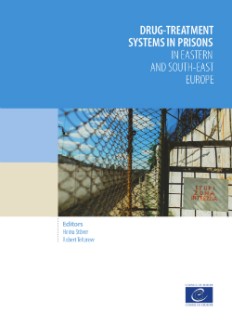
Drug-Treatment Systems in Prisons in Eastern and South-East Europe
This research project on drug-treatment systems in prisons in Eastern and South-East Europe looks in detail into the situation of drug users among criminal justice populations and the corresponding health-care responses in nine countries in...
Effectiveness Bank Hot Topic: The ‘Forgotten’ Carers
One of our selection of hot topics on important issues which sometimes generate heated debate. Both as a treatment resource for the patient and a group needing support in their own right, families affected by substance use are, claimed a UK...
Evaluation of a Federally Funded Mass Media Campaign and Smoking Cessation in Pregnant Women
Abstract
Objectives: In 2012, the Centers for Disease Control and Prevention initiated a national anti-smoking campaign, Tips from Former Smokers (Tips). As a result of the campaign, quit attempts among smokers increased in the general...
Reviewing Inclusion Health: An Intervention Programme for At-Risk Populations
Inclusion Health is a framework for action that helps find ways of improving the health and well-being for socially excluded groups. These populations, who have in common adverse life experiences and risk factors, such as poverty and...