

Search
Treatment Settings
Various treatment formats, either in a live-in facility or through regular visits to a clinic, are designed for ongoing support, to help maintain recovery, and to prevent relapse.

European responses to the needs of people who experience homelessness and use drugs
Summary:
This paper explores the evidence base for services designed to meet the needs of people who experience homelessness and use drugs. Through a delimited analysis of existing systematic and rapid evidence reviews, it considers the...
Provision of peer support at the intersection of homelessness and problem substance use services
People who experience homelessness are often described as hard to reach and face marginalisation and exclusion.Peer support, which refers to the support provided by people who have lived experiences of a particular situation, has been...
What treatment and services are effective for people who are homeless and use drugs?
People who experience homelessness experience disproportionately high rates of drug use and associated harms, yet barriers to services and support are common. This review explores the effects of interventions for this population on...
What constitutes effective problematic substance use treatment from the perspective of people who are homeless?
Despite people who are homeless experiencing higher rates of substance use, individuals face barriers when trying to access and engage with treatment services.
This systematic review and meta-ethnography explores the view of effective...
Estimation of the social cost of illegal drug use in Catalonia
Summary
Globally, as well as in Spain, illicit drug use is a major contributor to the global burden of disease. Quantifying the costs that illegal drugs impose on society is key to decision-making. The objective of this work is to estimate...
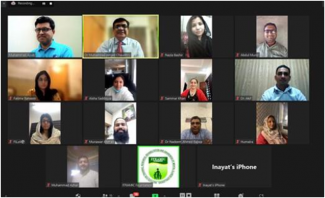
Training on Universal Treatment Curriculum 01: Physiology and Pharmacology for Addiction Professionals by ITRAMIC Foundation
In order to endorse the evidence-based practices in the field of addiction treatment in Pakistan, ITRAMIC Foundation Lahore organized virtual training for treatment staff and professionals from 22nd to 29th October 2021, in collaboration...
An estimation of the social cost of illicit drug consumption in Catalonia
Abstract
Worldwide, as well as in Spain, the use of illegal drugs is among the major contributors to the global burden of disease. Quantifying the costs that illegal drugs impose on society is key in terms of decision-making. The objective...
Alcohol related thiamine deficiency
Thiamine, also known as vitamin B1, is an essential nutrient used by the body to convert food into energy. Thiamine deficiency, although rare in most developed countries, is common in people who drink excessive amounts of alcohol.

Patterns of Cannabis and Alcohol Co-Use Substitution Versus Complementary Effects
ABSTRACT
PURPOSE: The purpose of this review is to discuss the literature regarding the concurrent use (co-use) of alcohol and cannabis and competing hypotheses as to whether cannabis acts as a substitute for (i.e., replacing the effects...
Outcomes After Implementation of a Benzodiazepine-Sparing Alcohol Withdrawal Order Set in an Integrated Health Care System
Abstract
Importance Alcohol withdrawal syndrome (AWS) is a common inpatient diagnosis managed primarily with benzodiazepines. Concerns about the adverse effects associated with benzodiazepines have spurred interest in using benzodiazepine...
Therapeutic community-oriented day treatment program for Korean women with alcohol use disorder: A non-randomised pilot feasibility trial
Abstract
Background
The prevalence of alcohol use disorder (AUD) among women in South Korea has been rising, causing public health problems. Yet women’s treatment needs are mostly unmet in South Korea due to the lack of women-focused...
Staff preferences towards electronic data collection from a national take-home naloxone program: a cross-sectional study
Abstract
Background
During the scaling-up of a national Norwegian take-home naloxone (THN) program, data collection methods shifted from paper-based to electronic. The aim of this study was to explore staff preferences towards the shift...
The prevalence and pattern of cannabis use among patients attending a methadone treatment clinic in Nairobi, Kenya
Abstract
Background
Cannabis use during methadone treatment may negatively impact treatment outcomes. The aim of this study was to determine the prevalence and pattern of cannabis use among patients attending a methadone treatment clinic...
Prevalence and associations of metabolic syndrome in patients with alcohol use disorder
Abstract
Excessive alcohol consumption has been associated with different components of the metabolic syndrome (MetS) such as arterial hypertension, dyslipidemia, type 2 diabetes or obesity. We aimed to analyze the prevalence and...
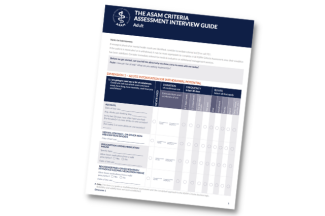
Free ASAM Criteria® Assessment Interview Guide
Source:
The ASAM Criteria® Assessment Interview Guide is the first...
Effectiveness of e-cigarettes as aids for smoking cessation: evidence from the PATH Study cohort, 2017–2019
Abstract
Objective To assess the effectiveness of e-cigarettes in smoking cessation in the USA from 2017 to 2019, given the 2017 increase in high nicotine e-cigarette sales.
Methods In 2017, the PATH Cohort Study included data on 3578...
The Synaptic Interactions of Alcohol and the Endogenous Cannabinoid System
ABSTRACT
PURPOSE: A growing body of evidence has implicated the endocannabinoid (eCB) system in the acute, chronic, and withdrawal effects of alcohol/ethanol on synaptic function. These eCB-mediated synaptic effects may contribute to the...
The Impact of Substance Use Disorder in Educational Institutions in Kenya: Possibilities for Mitigation
ISSUP Kenya are pleased to present their next Bi-Monthly Webinar on The Impact of Substance Use Disorder in Educational Institutions in Kenya.
This Webinar will discuss:
- Nature of Substance Use Disorder
- Epidemiology of SUD with...
Risk of psychosis in illicit amphetamine users: a 10 year retrospective cohort study
The illicit use of amphetamines, the stimulants commonly known as ‘speed’, is linked to a 5-fold heightened risk of psychosis, finds a 10 year study published online in the journal Evidence-Based Mental Health.

Mindfulness-Based Relapse Prevention: why make relapse prevention more mindful?
Traditionally, relapse prevention for addictive disorders has been based on cognitive-behavioural therapy (CBT). The development of mindfulness-based relapse prevention (MBRP) by the University of Washington, which integrates core aspects...