


Search
Justice and Diversion
Programmes that redirect individuals with substance use disorders away from the traditional criminal justice system into community-based treatment and support services, reducing incarceration rates. e.g., drug courts, deflection schemes.


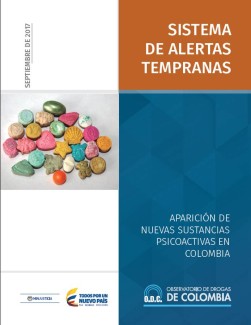
Appearance of new substances psychoactive (NSP) in Colombia
The Ministry of Justice and the law created the system of early alerts (SAT) of Colombia, in order to monitor and alert promptly the emergence of NPS and changes in patterns of drug use, as part of the functions of the Observatory of drugs...
Guidelines on the Management of Co-Occurring Alcohol and Other Drug and Mental Health Conditions in Alcohol and Other Drug Treatment Settings
In a nutshell...
These Guidelines aim to provide alcohol and other drug (AOD) workers with evidence-based information to assist with the management of co-occurring, or comorbid, AOD and mental health conditions. They represent an update...
United Kingdom Drug Situation: Focal Point Annual Report
The United Kingdom Focal Point on Drugs (UK Focal Point) 2017 report is available on the UK government's digital portal.
Based at Public Health England, the UK Focal Point is the national partner of the European Monitoring Centre for Drugs...
Risk Assessment Tools in Criminal Justice and Forensic Psychiatry: The Need for Better Data
Abstract
Violence risk assessment tools are increasingly used within criminal justice and forensic psychiatry, however there is little relevant, reliable and unbiased data regarding their predictive accuracy. We argue that such data are...
The Reciprocal Lagged Effects of Substance Use and Recidivism in a Prisoner Reentry Context
Abstract
Background
Much work has investigated the association between substance use, crime, and recidivism, yet little scholarship has examined these associations longitudinally among samples of recently released prisoners. We examine...
Fetal Alcohol Spectrum Disorder and Youth Justice
Abstract
Objectives: To estimate the prevalence of fetal alcohol spectrum disorder (FASD) among young people in youth detention in Australia. Neurodevelopmental impairments due to FASD can predispose young people to engagement with the law...
The Mexican model of Justice therapy for people with the use of psychoactive substances
Mexican model of therapeutic justice program. Since there are 3 years ago began the program with these abusive users or dependent on drugs who have committed an offence. Currently, the program takes in 6 States of the Mexican Republic.
Associations between Substance Use and Type of Crime in Prisoners with Substance Use Problems
Aim: The present study aimed to study the associations between substance use patterns and types of crimes in prisoners with substance use problems, and specifically whether substance use patterns were different in violent offenders.
Metho...
Promotion of Social-Emotional Learning: Building Teacher Capacity through Graduate Programs and Pre-Service Education
Lana Wells, Lianne Lee, Deinera Exner-Cortens, Lynn Corcoran
The promotion of social-emotional learning (SEL) represents a key prevention strategy for youth violence, including bullying and dating violence. As identified by CASEL, however...
Alcohol Problems in the Criminal Justice System: An Opportunity for Intervention
Alcohol is linked with crime, especially violent crime. Many people are incarcerated because of alcohol-related crime. Alcohol is not permitted in prisons except in a very few cases, and illicit use of alcohol in prison is not a major...
Feasibility and Fit of an Evidence-Based Universal Prevention Program Adapted for Youth Involved in the Justice System
Amanda Kerry, Claire V Crooks
Introduction: Over one-third of Canadian youth have engaged in some form of delinquent behavior by the age of 14 (Savoie, 2006). In the United States, approximately 31 million youth are under juvenile court...
Cultural Adaptations, Engagement and Outcomes of the Thailand Strengthening Families Program 12-16
Kannikar Nolrajsuwat
Introduction: The Thailand culturally adapted version of the Strengthening Families Program (12-16) was evaluated for high risk 12 to 17-year-olds. After the success of the SFP 6-11 in Thailand, the Thailand juvenile...
The Intersectoriality in the Implementation of Public Policy for Drug Prevention
Lílian Patrícia Silva de Souza, Eliana Berger, Edileuza Monteiro, Francisco Bastos
The Public Ministry of the state of Rio Grande do Norte, has requested strategies in prevention actions for the use/misuse of drugs from the National...
Drug-Treatment Systems in Prisons in Eastern and South-East Europe
This research project on drug-treatment systems in prisons in Eastern and South-East Europe looks in detail into the situation of drug users among criminal justice populations and the corresponding health-care responses in nine countries in...
"Effects of Drugs on Socio-Economic Conditions of Union Council Shoghore District Chitral, Pakistan"
Summary, Conclusion and Recommendations
Drug addiction is a pathological or abnormal condition which arises due to frequent or abnormal use of substances which affects human senses and decreased...
Ending the Opioid Crisis: A Practical Guide for State Policymakers
BACKGROUND
Although the opioid epidemic is a national issue, states shoulder the majority of the financial and social burden caused by addiction. Fortunately, there are many actions that states can take to effectively address the opioid...
Drug and Alcohol Treatment Statistics
Executive Summary
Data collected in drug treatment agencies play a prominent role in informing policy makers. Such data often represent the only information collected regularly and consistently over a certain period of time. What is even...
Preventing Marijuana Use among Youth and Young Adults
Preventing Marijuana Use among Youth and Young Adults is a new release from the US Department of Justice Drug Enforcement Administration (DEA).
It provides the latest facts about marijuana use in the United States and includes information...
Standards of Knowledge for the Science of Prevention
Published by the Society for Prevention Research in 2011, Standards of Knowledge for the Science of Prevention is an important document for those working within substance use prevention.
With the aim of professionalising the field, it...

Alcohol Treatment Matrix Row 5: Safeguarding the Community
Time to consolidate the lessons of the course’s last five instalments about treatment intended to safeguard the community, the final row of the Alcohol Treatment Matrix. A common theme is the contradiction between treatment centred on the...