

Search
Reorganisation of Substance Use Treatment and Harm Reduction Services During the COVID-19 Pandemic: A Global Survey
Background: The coronavirus disease 2019 (COVID-19) pandemic has impacted people with substance use disorders (SUDs) worldwide, and healthcare systems have reorganized their services in response to the pandemic.
Methods: One week after the...
Family skills development is the most influential factor in substance use prevention
Mr. Md. Azizul Islam, Director General (Additional Charge), Additional Secretary, Department of Narcotics Control has said, it would not be possible to achieve SDG if we fail to control substance use and has requested everyone to step ahead...
War - psychological skills for surviving and coping with traumatic events: Helping people who have become refugees or internally displaced
ISSUP Ukraine and ITTC-Ukraine welcome you to a joint initiative dedicated to the ongoing war and the events that resulted from Russian's attack on Ukraine.
Handbook for Emergencies
The third edition of UNHCR’s Emergency Handbook is a reference tool which serves to reinforce a common understanding among the many key actors in emergency situations. This edition includes a number of important revisions of the handbook...
Working with older persons in forced displacement
This document provides guidance for UNHCR staff and partners on protecting the rights of older persons in situations of forced displacement or statelessness.
When responding to the phases of forced displacement (flight, displacement...
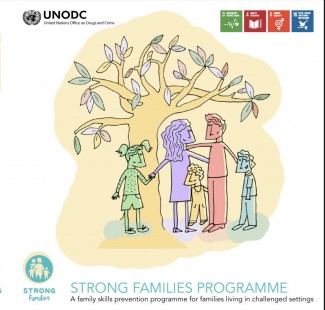
Bridging the Gap between the Pressing Need for Family Skills Programmes in Humanitarian Settings and Implementation
A supportive environment with nurturing caregivers is essential for the healthy development of children. For children who have been exposed to extreme stress, such as humanitarian contexts, the need for strong, healthy, nurturing caregiver relationships may assume even greater importance. The Strong Families programme, a UNODC family skills intervention, is presented as an example of an intervention that aims to bridge this gap of interventions that meet the need for humanitarian and contexts of extreme stress.
Assessing the Feasibility of Providing a Family Skills Intervention, “Strong Families”, for Refugee Families Residing in Reception Centers in Serbia
Abstract:
War exposure and forced displacement threaten the wellbeing of caregivers and their children, leaving them at risk of negative outcomes, such as elevated rates of anxiety, depression and post-traumatic stress disorder. The...
Exploring the Factors that Influence Harmful Alcohol Use Through the Refugee Journey: A Qualitative Study
This report from Scottish Health Action on Alcohol Problems (SHAAP) and the University of Edinburgh School of Health in Social Science explores the factors influencing harmful alcohol use through the refugee journey.
Drawing on interviews...
Webinar | Family Skills for Prevention of Substance Use, Mental Health and Violence and for Development, including under COVID-19
On November 11th 2020, ISSUP Lebanon presented their Webinar on Prevention through Family Skills.
UNODC PTRS Organized Informal Expert Consultation on Substance Use Disorders in Humanitarian Settings
According to the UN High Commissioner for Refugees (UNHCR) there are now close to 80 million forcibly displaced people worldwide, and with mental health among this segment of the world’s population already a neglected area, the treatment...
Report of the Pan-African Epidemiology Network on Drug Use (PAENDU) for the period 2016-2017
This is the first report of the Pan-African Epidemiology Network on Drug Use (PAENDU) and is based on available data for 2016 and 2017.
The report provides information on the methods used for data collection and presents data on drug...
Migrant Communities and the COVID-19 Response in Sub-Saharan Africa
Migrant communities and the COVID-19 response in sub-Saharan Africa
Ikenna Daniel Molobe1,&, Oluwakemi Ololade Odukoya1,2, Brenda Chukwufunanya Isikekpei3, Flavio Francisco Marsiglia4
1Non-Communicable Disease Research Group...
Parenting under COVID-19
Families across the globe are adapting to changes due to (COVID-19).
While isolation can represent an opportunity for families to spend time together, many caregivers will be experiencing conflicting feelings and priorities, as well as...
World Refugee Week
Last week was World Refugee Week and World Refugee Day was on June 20. UNODC showed solidarity on social media to mark that day.
UNODC has piloted family skills programmes in line with the International Standard on Drug Use Prevention to...
Mental Health and Associated Stress Factors in Accompanied and Unaccompanied Refugee Minors Resettled in Germany
Abstract
Background
Studies throughout Europe have shown that asylum-seeking children and adolescents (ASC) are at risk of developing mental disorders. The most common mental-health problems in ASC include posttraumatic stress symptoms...
Epidemiology of Substance Use among Forced Migrants: A Global Systematic Review
Abstract
Introduction
Forced migration is occurring at unprecedented levels. Forced migrants may be at risk for substance use for reasons including coping with traumatic experiences, co-morbid mental health disorders, acculturation...
Mental, Neurological, and Substance Use Problems among Refugees in Primary Health Care
Abstract
Background
Population-based epidemiological research has established that refugees in low- and middle-income countries (LMIC) are at increased risk for a range of mental, neurological and substance use (MNS) problems. Improved...
Role of Research-Practice-Policy Partnerships in Optimizing Prevention Science and the Use of Research Evidence: A Multi-Level Parenting Skills Package for Families Living in Challenging Settings
This abstract was presented at the 2018 Society for Prevention Research Annual Meeting which was held May 29 – June 1, 2018 in Washington, DC, US.
Wadih E. Maalouf United Nations Office on Drugs and Crime
Virginia Molgaard Iowa State...
Dissemination and Implementation Science: Promoting Resilience in Children in Europe – Developing, Implementing, Evaluating and Disseminating a Resilience Curriculum (RESCUR)
This abstract was presented at the 2018 Society for Prevention Research Annual Meeting which was held May 29 – June 1, 2018 in Washington, DC, US.
Birgitta Kimber Umeå university
Introduction: Europe is facing many challenges today –...
Application of Research Design and Methods for Optimizing Prevention Science: Cross-Cultural Adaptation of GenerationPMTO for Post-Conflict and Resettled Refugee Communities
This abstract was presented at the 2018 Society for Prevention Research Annual Meeting which was held May 29 – June 1, 2018 in Washington, DC, US.
Christopher Mehus University of Minnesota- Twin Cities
Elizabeth A Wieling University of...