


Search
 Law Enforcement
The activities of authorised agencies such as police, customs, border services, and investigative bodies to enforce drug control laws and address criminal activities related to the production, trafficking, and distribution of illicit substances. These activities may include investigations, intelligence gathering, interdiction, and collaboration with national and international partners to disrupt organised crime networks. Law enforcement plays an important role in protecting public safety and maintaining the rule of law, and is most effective when coordinated with broader public health, prevention, treatment, and recovery efforts as part of a balanced and comprehensive response to substance use.
Effectiveness Bank Matrix Cell: Coercion Tests Therapeutic Skills
Key studies on the contribution of the practitioner to reducing crime and safeguarding the community. Commentary risks formulating a general rule: The trickier the situation, the more the worker matters. Implication is that therapeutic...
More U.S. Stores Likely Sell Cigarettes to Minors than Reported
(Reuters Health) - More retailers may be selling cigarettes to minors than government estimates have suggested, a new study finds.
Researchers determined that more than half of retail stores may be inadvertently, and illegally, selling...
Effectiveness Bank Hot Topic. Naltrexone Treatment of Offenders: Ethics and Evidence
Opinion is sharply divided on the ethics and effectiveness of pressuring opioid-dependent offenders to take the opiate-blocker naltrexone. Especially sharp is the controversy over long-acting products not approved for medical use in the UK...
Effectiveness Bank Matrix Cell: Intervening to Safeguard the Community
Key studies on treatment’s contribution to safeguarding the community and preventing crime. Commentary addresses two highly controversial issues: whether it is ever safe to leave children with seriously problematic drug users, and the...
Drug Use on Both Sides of the US-Mexico Border
Abstract
Objective: To compare drug use for cities along the US-Mexico border.
Materials and methods: Data are from the US-Mexico Study on Alcohol and Related Conditions (UMSARC, 2011-2013), a survey of 4,796 randomly selected Mexican and...
Naloxone in Homelessness Services
With drug-related deaths at the highest number since comparable statistics began, why aren’t more homelessness services using naloxone to prevent overdose deaths?
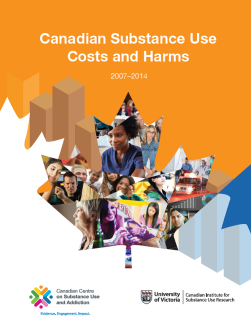
Canadian Substance Use Costs and Harms 2007–2014
In 2014, the cost of substance use (SU) in Canada was $38.4 billion— or approximately $1,100 spent for every Canadian regardless of age. This report presents the estimates of the costs of SU in Canada from 2007 to 2014 using the most...
Auditor General Slams 'Unacceptable' Lack of Treatment for Mentally Ill Inmates
New Brunswick jails aren't offering any addiction treatment or therapy for mentally ill inmates, according to the province's auditor general.
Kim MacPherson's investigation into treatment in jails revealed a patchwork system where no one...
Patrones de consumo de heroína en una cárcel de la frontera norte de México: barreras de acceso a tratamiento
RESUMEN
Objetivo: Describir la prevalencia del consumo de heroína, los patrones de inicio, el alto consumo y la dependencia a esta sustancia e identificar barreras que impidan a los adictos acudir a tratamiento. Material y métodos: El...
Guidance on the Implementation of Minimum Pricing for Alcohol
With legislation brought in on 1 May 2018 the Scottish Government has produced a resource offering Guidance on the Implementation of Minimum Pricing for Alcohol for sellers of alcohol and alcohol enforcement authorities in Scotland.
The...
Scotland Becomes the First Country to Enforce Minimum Pricing on Alcohol
Scotland has become the first country in the world to enforce a minimum price per unit of alcohol. As of 1 May 2018 all alcohol must cost no less than 0.5GPD or 50 pence.
The move is the result of a long process of research and...
Solution to Detect, Classify, and Report Illicit Online Marketing and Sales of Controlled Substances via Twitter
ABSTRACT
Background: On December 6 and 7, 2017, the US Department of Health and Human Services (HHS) hosted its first Code-a-Thon event aimed at leveraging technology and data-driven solutions to help combat the opioid epidemic. The...
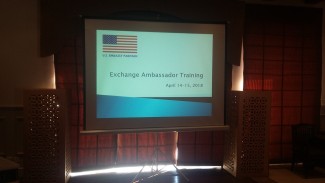
ISSUP Member Ahmad Shah has been selected Exchange Ambassador with the U.S. Embassy in Pakistan for one year
ISSUP member Ahmad Shah has been selected as an Exchange Ambassador with the U.S. Embassy in Pakistan for one year.
Here is a personal message from Ahmad describing his involvement and experience in the drug demand reduction field:
Greeti...
NRC, US Department of State to Enhance Cooperation in Drugs Control
The National Rehabilitation Centre of the UAE and the Bureau of International Narcotics and Law Enforcement Affairs of the U.S. signed an agreement to collaborate in the area of drug demand reduction.
National report on drugs and activities related 2016
OVERVIEW
Treatment of consumption
Government institutions:
The year 2016 showed a decrease in the number of patients except those included in the range of 19 to 25 years although total attention increased over the previous year given the...
Fatal and Non-Fatal Overdose among Opiate Users in South Wales
A study published in the International Journal of Drug Policy, Fatal and Non-Fatal Overdose among Opiate Users in South Wales: A Qualitative Study of Peer Responses, explores the behaviour of witnesses to opiate overdoses.
The research...
The Untold Story: Harms Experienced in the Irish Population Due to Others’ Drinking
Conclusion
The reach of alcohol’s harm to others (AH2O) across Irish society is evident within families, among friends, in the workplace, and is felt by strangers in public spaces. Health, social and law enforcement services become...
Acquiring a role opposite a forgotten social reality
Gaining a leading role opposite a forgotten social reality
Eduardo H. Loyola Arguello (ISSUP Member)
El Salvador is a geographically small country, with a history characterized by pain, conflict and great need, but where the Salvadoran...

A Randomized, Open Label Trial of Methadone Continuation versus Forced Withdrawal in a Combined US Prison and Jail: Findings at 12 Months Post-Release
Research carried out in in North America has found that offering continued methadone maintenance to those entering the prison system can have positive outcomes.
A Randomized, Open Label Trial of Methadone Continuation versus Forced Withdrawal in a Combined US Prison and Jail
Highlights
- MMT during incarceration leads to lower injection drug and heroin use.
- MMT during incarceration leads to fewer non-fatal overdoses.
- MMT during incarceration leads to higher rates of engagement in treatment.
Abstract
Recen...