

Search
 Law Enforcement
The activities of authorised agencies such as police, customs, border services, and investigative bodies to enforce drug control laws and address criminal activities related to the production, trafficking, and distribution of illicit substances. These activities may include investigations, intelligence gathering, interdiction, and collaboration with national and international partners to disrupt organised crime networks. Law enforcement plays an important role in protecting public safety and maintaining the rule of law, and is most effective when coordinated with broader public health, prevention, treatment, and recovery efforts as part of a balanced and comprehensive response to substance use.
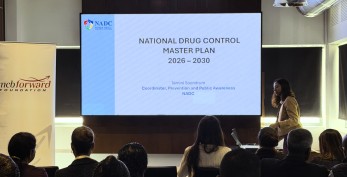

Day 3, 09:00 - 10:30, ICUDDR, State of Science Across the Spectrum of Substance Use
Presented at Thessaloniki 2024, on the 28th of June, 2024
LOOKING BACK: The 3rd ISSUP Philippine National Conference
The ISSUP Philippine Chapter, alongside our Partner Organizations the Quezon City Local Government Unit (QCLGU) and the Bureau of International Narcotics and Law Enforcement Affairs (INL), had sucessfully held the 3rd Philippine National...
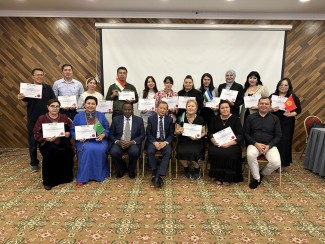
The Colombo Plan Trains Central Asian Prevention Practitioners on School-based Prevention
The Colombo Plan Drug Advisory Programme (DAP) launched a new prevention initiative to address the need for competent professionals involved in drug use prevention across Central Asia. The first training aimed at prevention practitioners...
GISA raises alarm over danger of synthetic drug abuse
Nigeria is facing a growing crisis with synthetic drugs, with stakeholders warning of devastating consequences if urgent actions are not taken.

Building Bridges: Enhancing Global Recovery Systems for International Recovery Day
ISSUP Global, in collaboration with the Recovered Users Network (RUN), presents a joint webinar titled "Building Bridges: Enhancing Global Recovery Systems for International Recovery Day " to celebrate International Recovery Day.
ATI Basics: Models of Alternatives to Incarceration (ATI)
ISSUP, in collaboration with ICATI, presents the final episode of its ATI Basics webinar series, titled 'Models of Alternatives to Incarceration (ATI).
Day 3, 14:00 - 15:30, ICUDDR, Multidisciplinary Approaches to Substance Use and Co-Occuring Disorders
Presented at Thessaloniki 2024, on the 28th of June, 2024.
Moderator: Mr. Stelios Gkiouzepas (⚑ Greece) - ARGO Alternative Therapeutic Program for Drug Dependend Individuals
Presentations:
Caroline Pereira - Interpersonal Theory for...
Day 2, 14:00 - 15.30, ICUDDR, Identifying, Assessing and Treating Children for Substance Use Disorders: Data and Experiences from Across the Globe
Presented at Thessaloniki 2024, on the 27th of June, 2024.
Description:
Identifying, Assessing and Treating Children for Substance Use Disorders: Dat and Experiences from Across the Globe Substance use among children less than 12 years of...
Day 2, 14:00 - 15:30, ICUDDR, Challenges and Opportunities in Providing Evidence-Based Treatment for Persons in the Criminal System
Presented at Thessaloniki 2024, on the 27th of June, 2024.
Description:
Persons who have substance use disorders are frequently arrested, incarcerated, or placed on supervised release in the community, typically without access to drug...
Day 2, 16:00 - 15:30, ISSUP, Community Collaboration for Prevention
Presented at Thessaloniki 2024, on the 27th of June, 2024.
Day 1, 11:00 - 12.30, ISSUP, Joining Together in Action with the Global Coalition to Address Synthetic Drug Threats
Panel presented at Thessaloniki 2024: Joining Together in Action with the Global Coalition to Address Synthetic Drug Threats, on the 26th of June, 2024.
Moderator: Ms. Margaret H. Nardi (⚑ United States) - Deputy Assistant Secretary...
Substance Abuse Prevention
Substance Abuse Prevention
Drug prevention is an evidence-based approach built on a scientific discipline. The natural course of drug prevention is discussed in epidemiology and the phenomenon of disease carrier (Etiological model) is...
Testing a culturally adapted youth substance use prevention program in a Mexican border city: Mantente REAL
Background: This article reports on a test of a youth substance use prevention program conducted in Nogales-Sonora, a Mexican city on the US border.
Objective: The study tested the efficacy of a version of the keepin’ it REAL curriculum...

ATI Basics: SUD Treatment for Persons in the Justice System
ISSUP, in collaboration with ICATI, presents its ATI webinar on SUD Treatment for Persons in the Justice System.
Seminar on invest in Prevention theme "International Day Against Drug Abuse"
On June 10, 2024, Freedom Drug Treatment & Rehabilitation Centre, Mian Afzal Trust Hospital (MATH), and Pakistan Youth Organization (PYO) collaborated to host a seminar at GIFT University, Gujranwala, Pakistan. The event, titled "Invest in...
Stanislavski Method:The emotion in mental addiction treatment.Adults with drugs addiction problems in prison
Presented at Thessaloniki 2024 – Panel: Multidisciplinary Approaches to Substance Use and Co-occurring Disorders, on the 28th of June, 2024.
Implementing low-barrier model of care to improving access to drug treatment services in Nigeria
Thessaloniki 2024 – Panel: Healing Pathways: Exploring Treatment Approaches in Substance Use Disorder. It will be presented on the 28th of June, 2024.
Substance use disorders among female offenders in the Criminal Justice System in East Africa
Presented at Thessaloniki 2024 – Panel: Global Approaches in Substance Use Prevention, Treatment and Recovery: Insights from Vietnam, Peru, East Africa and The Maldives, on the 28th of June, 2024.
Creating Capacity to Address War-time Trauma in Military Veterans in Ukraine
Presented at Thessaloniki 2024 – Panel: Sytems Change and the Role of the University through the Lens of the ITTC Network: Part 3 Sample ITTC Initiatives in Colombia, Ukraine and Indonesia, on the 28th of June, 2024.
Advancing Addiction Nursing: Linking past and future in the heart of Europe
Presented at Thessaloniki 2024 – Panel: Workforce Development: Global Perspectives and Future Directions, on the 28th of June, 2024.