User account menu

  • Log in
  • Join ISSUP

Languages

  • English
  • Français
  • Português
  • Español
  • العربية
  • Pусский

Main navigation

  • About ISSUP

    • 10 Years of ISSUP
    • ISSUP Rationale
    • Membership
      • Membership Criteria
      • Code of Ethics
      • Who is ISSUP for?
    • News
      • Newsletters
    • ISSUP Events
    • International Partners
    • Governance
    • ISSUP Scientific Council
    • Friends of ISSUP (USA)
    • ISSUP Awards
      • Evidence-Based Award
      • Local Initiative Award
      • Services Award
      • Excellence in Training Provision
      • Outstanding Contribution to ISSUP Award
    • In Memoriam
    • Acknowledgements
    • ISSUP Website Guides
    • Contact ISSUP
    • FAQs - Frequently Asked Questions
    • Donate to ISSUP
  • Professional Development

    • ISSUP Academy
      • What is ISSUP Academy?
    • Universal Curricula (UC)
      • Universal Prevention Curriculum
      • Universal Treatment Curriculum
      • Universal Recovery Curriculum
      • UTC Self Led Courses
    • Resources
      • Drug Data Hub
      • Your Professional Hub
      • The ISSUP Exchange
      • ISSUP Webinars
      • Glossary
      • IEP
      • INEP Plus
      • Prevention Insights Video Series
      • Prevention Lists
      • Recovery Support
      • Quality in Treatment
      • ICAP certification
      • HealthEKnowledge
    • Jobs and Opportunities
  • Knowledge Share

    • Search in the Knowledge Share
    • ADDICTOLOGY Journal
      • Latest Issue
  • National Chapters

    • Africa
      • ISSUP Botswana
      • ISSUP Côte d’Ivoire
      • ISSUP Egypt
      • ISSUP Ethiopia
      • ISSUP The Gambia
      • ISSUP Ghana
      • ISSUP Kenya
      • ISSUP Liberia
      • ISSUP Mauritius
      • ISSUP Morocco
      • ISSUP Namibia
      • ISSUP Nigeria
      • ISSUP South Africa
      • ISSUP Tanzania
      • ISSUP Togo
      • ISSUP Uganda
      • ISSUP Zambia
    • The Americas
      • ISSUP Argentina
      • ISSUP The Bahamas
      • ISSUP Barbados
      • ISSUP Brazil
      • ISSUP Chile
      • ISSUP Colombia
      • ISSUP Ecuador
      • ISSUP El Salvador
      • ISSUP Guatemala
      • ISSUP Mexico
      • ISSUP Panama
      • ISSUP Paraguay
      • ISSUP Peru
      • ISSUP United States
    • Asia
      • ISSUP Afghanistan
      • ISSUP Bangladesh
      • ISSUP India
      • ISSUP Indonesia
      • ISSUP Kazakhstan
      • ISSUP Korea
      • ISSUP Lebanon
      • ISSUP Malaysia
      • ISSUP in Pakistan
      • ISSUP Philippines
      • ISSUP Qatar
      • ISSUP Singapore
      • ISSUP Sri Lanka
      • ISSUP Thailand
      • ISSUP Türkiye
      • ISSUP United Arab Emirates
      • ISSUP Uzbekistan
      • ISSUP Vietnam
    • Europe
      • ISSUP Bosnia & Herzegovina
      • ISSUP Czech Republic
      • ISSUP Greece
      • ISSUP Italy
      • ISSUP Spain
      • ISSUP Ukraine
      • ISSUP United Kingdom
    • Oceania
      • ISSUP Australia
      • ISSUP Fiji
      • ISSUP New Zealand
    • How to Become a National Chapter
    • ISSUP National Chapters' Advisory Committee
    • ISSUP National Chapter Spotlight
  • Events

    • Search through all events
    • ISSUP Events
      • ISSUP 2026
      • Indonesia 2025
      • Thessaloniki 2024
      • Buenos Aires 2023
      • Manila 2022
      • Abu Dhabi 2022
      • Virtual 2021
      • Africa 2020
      • Vienna 2019
      • Nairobi 2018
      • Cancún 2017
      • Campinas 2016
      • Bangkok 2015
  • Networks

    • A–Z
  • My ISSUP

    • Member Directory
    • Apply for membership

Treatment Research

Treatment Research

Moderators

Profile picture for user livia.edegger
Livia
ISSUP
Profile picture for user MoralesBA
Brian Morales
U.S. Department of State
DiscussionsFilesImagesVideosLinksEventsKnowledge ShareAll
Rasha Abi Hana

Preventing Substance Use-Related Crime through Deflection

Shared by Rasha Abi Hana (ISSUP staff) - 24 November 2026
Format
Scientific article
Published by / Citation
Farina, G., Charlier, J. A., & Fiori, H. (2025). Preventing Substance Use-Related Crime through Deflection. Journal of Multidisciplinary Studies in Human Rights & Science (JMSHRS), 7(3), Special Issue on Deflection – II. https://doi.org/10.5281/zenodo.15222574

This article examines deflection as a crime prevention strategy aimed at addressing offending associated with substance use and co-occurring disorders through collaborative public health and public safety responses. Drawing on literature from crime prevention, community policing, public health and harm reduction, the authors explore how deflection can connect individuals with treatment and community-based services before they enter the criminal justice system. The literature reviewed identifies promising outcomes associated with deflection, including reductions in substance use-related...

  • Read more about Preventing Substance Use-Related Crime through Deflection
  • ISSUP members can join Networks to comment – Sign in or become a member
Rasha Abi Hana

Understanding Youth Deflection & Pre-Arrest Diversion

Shared by Rasha Abi Hana (ISSUP staff) - 24 November 2026
Format
Leaflet, Infographic, Fact sheet, Poster
Published by / Citation
Police, Treatment, and Community Collaborative (PTACC). (2025). Understanding Youth Deflection & Pre-Arrest Diversion. PTACC Youth Deflection Strategy Area.

This resource introduces youth deflection and pre-arrest diversion as early intervention strategies designed to support young people at risk of entering or progressing further into the criminal justice system. It explores challenges and risk factors that may contribute to youth offending, including substance use, mental health difficulties, peer pressure, bullying, family instability, trauma and adverse social environments. The publication highlights how law enforcement, schools, social services, families and community organisations can work together to connect young people with appropriate...

  • Read more about Understanding Youth Deflection & Pre-Arrest Diversion
  • ISSUP members can join Networks to comment – Sign in or become a member
Rasha Abi Hana

Success in Deflection Programs: A Policy Brief

Shared by Rasha Abi Hana (ISSUP staff) - 24 November 2026
Format
Report
Published by / Citation
Police, Treatment, and Community Collaborative (PTACC). (2025). Success in Deflection Programs: A Policy Brief. State LEaders’ Deflection (SLED) Policy Network.

This policy brief examines the available evidence on the effectiveness of deflection programmes and provides recommendations for their implementation, evaluation and sustainability. Drawing on a review of 12 quantitative programme evaluations, the publication identifies promising outcomes across four main areas: improved public safety, improved public health, cost benefits and stigma reduction. Reported outcomes include reductions in arrests, incarceration, substance use and overdose, alongside improved treatment engagement and quality of life. The brief acknowledges limitations in the...

  • Read more about Success in Deflection Programs: A Policy Brief
  • ISSUP members can join Networks to comment – Sign in or become a member
Rasha Abi Hana

National Survey of First Responder Deflection Programs: Key Findings

Shared by Rasha Abi Hana (ISSUP staff) - 24 November 2026
Format
Leaflet, Infographic, Fact sheet, Poster
Published by / Citation
Center for Health and Justice at TASC & NORC at the University of Chicago. (2021). Report of the National Survey to Assess First Responder Deflection Programs in Response to the Opioid Crisis. Bureau of Justice Assistance (BJA).

This infographic presents key findings from a national survey of more than 300 first responder agencies in the United States, examining the development and implementation of deflection programmes in response to the opioid crisis. Findings indicate that more than 85% of responding programmes were launched from 2016 onwards, approximately three-quarters were led by law enforcement agencies, and 90% offered connections to substance use disorder treatment. More than 95% had at least two collaborative service partners, while only around one in six had conducted an independent programme evaluation...

  • Read more about National Survey of First Responder Deflection Programs: Key Findings
  • ISSUP members can join Networks to comment – Sign in or become a member
Rasha Abi Hana

Deflection Turns 10: Lessons from a Decade of Police, Drug Treatment, and Community Partnerships

Shared by Rasha Abi Hana (ISSUP staff) - 24 November 2026
Format
Opinion piece, commentary
Published by / Citation
Charlier, J., & Kew, J. (2025). Deflection Turns 10: Lessons from a Decade of Police, Drug Treatment, and Community Partnerships. Police Chief Online, International Association of Chiefs of Police (IACP).

This article reflects on the development of deflection over the past decade, examining its evolution from local police-led initiatives into an international approach to addressing substance use and drug-related offending. The authors present ten lessons learned, highlighting the importance of partnerships between law enforcement, treatment providers, recovery services and communities. They discuss early intervention, community engagement, locally tailored approaches and supportive public policies. The article also explores the international expansion of deflection, drawing on developments in...

  • Read more about Deflection Turns 10: Lessons from a Decade of Police, Drug Treatment, and Community Partnerships
  • ISSUP members can join Networks to comment – Sign in or become a member
Rasha Abi Hana

Want to Reduce Drugs in Your Community? You Might Want to Deflect Instead of Arrest

Shared by Rasha Abi Hana (ISSUP staff) - 24 November 2026
Format
Opinion piece, commentary
Published by / Citation
Charlier, J. (2015). Want to reduce drugs in your community? You might want to deflect instead of arrest. The Police Chief, 82(9), 30–31.

In this foundational article, Jac Charlier introduces deflection as an alternative law enforcement response to individuals experiencing substance use disorders who repeatedly come into contact with the criminal justice system.

The article presents the Montgomery County Deflection Model, developed through collaboration between law enforcement, criminal justice and public health partners. The model seeks to address the underlying needs of individuals through community-based treatment and support rather than relying exclusively on arrest and incarceration.

The author distinguishes between two...

  • Read more about Want to Reduce Drugs in Your Community? You Might Want to Deflect Instead of Arrest
  • ISSUP members can join Networks to comment – Sign in or become a member
Rasha Abi Hana

Leveraging Arrest Data for Youth Deflection

Shared by Rasha Abi Hana (ISSUP staff) - 24 November 2026
Format
Leaflet, Infographic, Fact sheet, Poster
Published by / Citation
Center for Health and Justice at TASC

This resource from the Center for Health and Justice at TASC explores how youth arrest data can inform the development of deflection strategies that prevent unnecessary involvement in the criminal justice system.

Drawing on juvenile arrest data from the United States, with a particular focus on 2018–2020, the resource identifies opportunities for early intervention among young people experiencing substance use, behavioural health challenges, family conflict and other unmet social needs.

It highlights how alternatives to arrest can help young people remain connected to their families, schools...

  • Read more about Leveraging Arrest Data for Youth Deflection
  • ISSUP members can join Networks to comment – Sign in or become a member
Rasha Abi Hana

Emerging Best Practices in Law Enforcement Deflection and Community Supervision Programs

Shared by Rasha Abi Hana (ISSUP staff) - 24 November 2026
Format
Book
Published by / Citation
National Association of Drug Court Professionals (NADCP). (2020). Journal for Advancing Justice, Volume III.

The third volume of the Journal for Advancing Justice brings together researchers and practitioners to examine promising approaches for addressing substance use and mental health disorders among individuals who come into contact with law enforcement and criminal justice systems.

The special issue explores alternatives to arrest and incarceration, alongside approaches to improving community supervision practices.

The publication covers several key areas:

  • Police-led deflection and pre-arrest diversion initiatives.

  • Mobile crisis teams and engagement with mental health services.

  • I...

  • Read more about Emerging Best Practices in Law Enforcement Deflection and Community Supervision Programs
  • ISSUP members can join Networks to comment – Sign in or become a member
Rasha Abi Hana

Checklist for Obtaining Officer Support for Deflection or Pre-Arrest Diversion Programs

Shared by Rasha Abi Hana (ISSUP staff) - 24 November 2026
Format
Guide
Published by / Citation
International Association of Chiefs of Police (IACP)

Developed by the International Association of Chiefs of Police (IACP), this checklist presents evidence-based strategies for strengthening police officer engagement in deflection and pre-arrest diversion programmes.

The resource provides recommendations for both law enforcement-led programmes and initiatives led by other organisations, including community-based behavioural health providers.

Key areas addressed include:

  • Securing leadership commitment and involving officers in programme development.

  • Establishing clear policies, procedures and eligibility criteria.

  • Simplifying...

  • Read more about Checklist for Obtaining Officer Support for Deflection or Pre-Arrest Diversion Programs
  • ISSUP members can join Networks to comment – Sign in or become a member
Rasha Abi Hana

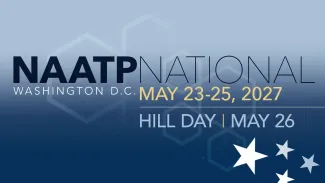
The National Association of Addiction Treatment Providers (NAATP) 2027

Shared by Rasha Abi Hana (ISSUP staff) - 20 November 2026
NAATP
Location:
Crystal Gateway Marriott, Arlington, Virginia, USA (Washington, D.C. area)
United States
Event Date
23 May 2027

The National Association of Addiction Treatment Providers (NAATP) will host NAATP National 2027 from 23 to 25 May 2027, bringing together leaders and professionals from across the addiction treatment field.

The annual conference provides...

  • Read more about The National Association of Addiction Treatment Providers (NAATP) 2027
  • ISSUP members can join Networks to comment – Sign in or become a member
Rasha Abi Hana

Using Police Data to Highlight Deflection Opportunities

Shared by Rasha Abi Hana (ISSUP staff) - 19 November 2026
Format
Leaflet, Infographic, Fact sheet, Poster
Published by / Citation
Center for Health and Justice at TASC. Using Police Data to Highlight Deflection Opportunities.

Using Police Data to Highlight Deflection Opportunities, developed by the Center for Health and Justice at TASC, explores how police data can inform the development of deflection initiatives that connect individuals with community-based services rather than relying on traditional criminal justice responses.

The resource highlights the potential of analysing police encounters to identify opportunities for early intervention and referrals to treatment, recovery support and other appropriate services.

It illustrates the relevance of data-informed decision-making in strengthening collaboration...

  • Read more about Using Police Data to Highlight Deflection Opportunities
  • ISSUP members can join Networks to comment – Sign in or become a member
Rasha Abi Hana

Law Enforcement Deflection Frameworks: A Decision Making Tool for Police Leaders

Shared by Rasha Abi Hana (ISSUP staff) - 17 November 2026
Format
Guide
Published by / Citation
Center for Health and Justice at TASC. (2017). Law Enforcement Deflection Frameworks: A Decision Making Tool for Police Leaders: Methods for Diverting People Away from Arrest and Into Services in the Community. TASC, Inc.

The Law Enforcement Deflection Frameworks: A Decision Making Tool for Police Leaders, developed by the Center for Health and Justice at TASC, provides practical guidance for law enforcement agencies seeking to develop alternatives to arrest for individuals experiencing substance use-related problems.

The resource introduces different deflection approaches that enable law enforcement officers to connect individuals with community-based treatment and support services instead of relying on traditional criminal justice responses.

Designed as a decision-making tool, it helps police leaders...

  • Read more about Law Enforcement Deflection Frameworks: A Decision Making Tool for Police Leaders
  • ISSUP members can join Networks to comment – Sign in or become a member
Rasha Abi Hana

Critical Elements of Successful First Responder Diversion Programs

Shared by Rasha Abi Hana (ISSUP staff) - 17 November 2026
Format
Guide
Published by / Citation
Bureau of Justice Assistance (BJA), Comprehensive Opioid, Stimulant, and Substance Abuse Program (COSSAP). (2020). Critical Elements of Successful First Responder Diversion Programs. Catching Up With COSSAP, December 2020.

Critical Elements of Successful First Responder Diversion Programs provides practical guidance on developing and implementing first responder diversion initiatives that connect individuals experiencing substance use and mental health disorders with community-based treatment and support services.

Published through the Comprehensive Opioid, Stimulant, and Substance Abuse Program (COSSAP), the resource identifies five essential elements for successful diversion programmes:

  • Partnership building: Establishing collaboration between law enforcement, treatment providers, justice agencies...

  • Read more about Critical Elements of Successful First Responder Diversion Programs
  • ISSUP members can join Networks to comment – Sign in or become a member
Rasha Abi Hana

Non-invasive vagus nerve stimulation for substance use disorder: A narrative review

Shared by Rasha Abi Hana (ISSUP staff) - 11 November 2026
Format
Scientific article
Published by / Citation
Thompson-Lake, D. G., Snetkov, G., Johnson, L., Ait-Daoud, N., & Mahoney III, J. J. (2026). Non-Invasive Vagus Nerve Stimulation for Substance Use Disorder: A Narrative Review. Drug and Alcohol Dependence, 113244.

Abstract

Background

Recent technological advances have led to increased experimentation in non-invasively modulating the brain to reduce craving and drug use in substance use disorder (SUD). However, many forms of neuromodulation remain costly and require administration in a medical setting, limiting scalability. Vagus nerve stimulation (VNS) circumvents these limitations. A substantial body of neurobiological and clinical evidence suggests that VNS may be well-suited to target core mechanisms underlying substance use, including craving, mood, and stress dysregulation.

Methods

Fifty-two...

  • Read more about Non-invasive vagus nerve stimulation for substance use disorder: A narrative review
  • ISSUP members can join Networks to comment – Sign in or become a member
Rasha Abi Hana

2027 AATOD Conference

Shared by Rasha Abi Hana (ISSUP staff) - 11 November 2026
Location:
Savannah Convention Center, Savannah, Georgia, United States
United States
Event Date
18 April 2027

The 2027 American Association for the Treatment of Opioid Dependence (AATOD) Conference will take place from 18 to 20 April 2027 in Savannah, Georgia, under the theme “Navigating the Waves of Opioid Use Disorder.”

The conference will bring...

  • Read more about 2027 AATOD Conference
  • ISSUP members can join Networks to comment – Sign in or become a member
Rasha Abi Hana

Family Intervention Models for Young Adults with Substance Abuse: A Systematic Review

Shared by Rasha Abi Hana (ISSUP staff) - 10 November 2026
Shutterstock
Format
Scientific article
Published by / Citation
Daryl Mahon. (2026) Building recovery capital through an integrated educational and fitness substance use programme: a patient and public involvement (PPI) approach. Journal of Integrated Care 34:4, pages 217-233.

Published in the Indian Journal of Psychological Medicine, this systematic review examines the effectiveness of family-based interventions for addressing substance use among adolescents and young adults.

The researchers reviewed 41 studies published between 2000 and 2023, including randomised controlled trials and quasi-experimental studies involving young people aged 10–25 years. The interventions included family therapy, counselling, psychoeducation and other approaches involving family members in treatment.

The findings suggest that family-based interventions can contribute to reductions...

Translations
Español
  • Read more about Family Intervention Models for Young Adults with Substance Abuse: A Systematic Review
  • ISSUP members can join Networks to comment – Sign in or become a member
Rasha Abi Hana

Pilot Training of Stakeholders on Alternatives to Incarceration for People Who Use Drugs in Contact with the Criminal Justice System in Nigeria: Lessons Learned and Future Directions

Shared by Rasha Abi Hana (ISSUP staff) - 28 October 2026
Format
Scientific article
Published by / Citation
Agwogie, M. O., Amankwaah, D., & Koomson, S. E. N. (2026). Pilot training of stakeholders on alternatives to incarceration for people who use drugs in contact with the criminal justice system in Nigeria: Lessons learned and future directions. Adiktologie, 26(2), 121–134.

BACKGROUND: Studies have reported a high prevalence of substance misuse among people who use drugs (PWUD) in contact with the Criminal Justice System (CJS) in Nigeria. Further, there is limited access to treatment resulting in high rates of relapse and recidivism. The development of Alternatives to Incarceration (ATI) is one effort to address these gaps. This paper report findings from the pilot training on ATI in Nigeria. AIMS: The aims of this study were to (1) consider the feasibility of implementing ATI in Nigeria; (2) determine whether the programme was delivered as designed; (3)...

AddictologyIssue 2/2026
  • Read more about Pilot Training of Stakeholders on Alternatives to Incarceration for People Who Use Drugs in Contact with the Criminal Justice System in Nigeria: Lessons Learned and Future Directions
  • ISSUP members can join Networks to comment – Sign in or become a member
Rasha Abi Hana

Adaptation of the Multidimensional Inventory of Recovery Capital (MIRC) to the Czech Environment

Shared by Rasha Abi Hana (ISSUP staff) - 28 October 2026
Format
Scientific article
Published by / Citation
Komrska, Š., Plíhal, D., & Bowen, E. (2026). Adaptation of the Multidimensional Inventory of Recovery Capital (MIRC) to the Czech environment. Adiktologie, 26(2), 109–120.

INTRODUCTION: While international attention toward addiction recovery research is growing, in the Czech environment there is still a lack of research data and tools for measuring this concept. The primary objective of the research project was therefore to adapt and validate the Multidimensional Inventory of Recovery Capital (MIRC) for the Czech population.


METHODS: The study included 111 respondents recovering from alcohol addiction who met the original inclusion criteria. An interactive web application was created for data collection, which continues to be used in practice by recovery...

AddictologyIssue 2/2026
  • Read more about Adaptation of the Multidimensional Inventory of Recovery Capital (MIRC) to the Czech Environment
  • ISSUP members can join Networks to comment – Sign in or become a member
Rasha Abi Hana

Connecting Evidence, Prevention, Law Enforcement and Community Action: Key Insights from ISSUP 2026

Shared by Rasha Abi Hana (ISSUP staff) - 14 October 2026
Format
Reading List

How do we go about translating evidence into effective action, strengthen prevention, address drug-related crime, improve access to treatment and recovery support, and build safer, healthier communities?

This age-old question was explored during ISSUP's 2026 Virtual Conference, held on 22–23 September 2026 under the theme Connecting Sectors, Creating Impact: A United Response on Drugs.

Bringing together researchers, practitioners, policymakers, law enforcement professionals and community representatives from different regions, the conference provided an opportunity to exchange evidence...

  • Read more about Connecting Evidence, Prevention, Law Enforcement and Community Action: Key Insights from ISSUP 2026
  • ISSUP members can join Networks to comment – Sign in or become a member
Rasha Abi Hana

Faith-Based Approaches: The Role of Faith and Religious Institutions in Addressing Substance Use 

Shared by Rasha Abi Hana (ISSUP staff) - 12 October 2026
Format
Report

Faith, spirituality and faith-based organisations can play an important role in addressing substance use, supporting recovery and responding to related vulnerabilities as well as crime. Across different cultural and community settings, they can provide identity, belonging, hope and sustained relationships, while often reaching individuals and families in ways that formal services cannot. 

But recognising this potential also raises important questions. How can faith communities ensure that the support they provide is informed by evidence? How can faith leaders be equipped with the knowledge...

  • Read more about Faith-Based Approaches: The Role of Faith and Religious Institutions in Addressing Substance Use 
  • ISSUP members can join Networks to comment – Sign in or become a member

Pagination

  • Current page 1
  • Page 2
  • Page 3
  • Page 4
  • Page 5
  • Page 6
  • Page 7
  • Page 8
  • Page 9
  • …
  • Next page Next ›
  • Last page Last »

Upcoming Events

There aren't any upcoming events
All Events
Contact Us

Stay Connected

ISSUP Newsletter

Subscribe

Support ISSUP

Donate

ISSUP is funded by the U.S. Department of State via the Bureau of International Narcotics and Law Enforcement Affairs (INL). INL works to keep Americans safe by countering crime, illegal drugs, and instability abroad.

Copyright © International Society of Substance Use Professionals Privacy Policy