
How Much Does a Professional Interventionist Cost?
Families facing substance use disorders often reach a point where the situation becomes overwhelming—repeated relapse, escalating consequences, denial, health risks, or family instability. At that stage, many families begin considering hiring a professional interventionist.
One of the most common and important questions is: How much does an intervention cost?
While intervention pricing varies depending on the level of complexity, most professional intervention services in the United States fall into a predictable range. This article explains typical intervention pricing, what is usually included, and what factors may increase cost—so families and professionals can make informed decisions.
Summary
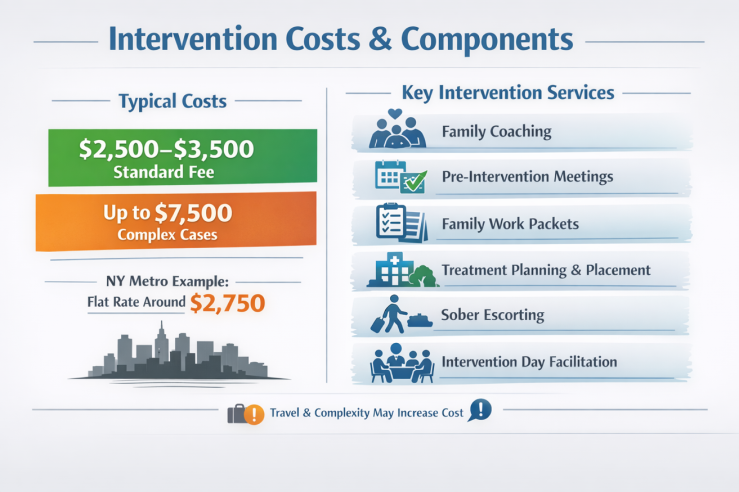
In the U.S., most professional interventions fall between $2,500–$3,500, with higher-complexity situations reaching a maximum of about $7,500 when additional clinical prep, travel, or expanded support is needed. A quality intervention is a structured process that often includes family coaching, pre-intervention planning meetings, family work packets, treatment planning, and—when appropriate—sober escorting to help a loved one enter care safely and successfully.
Key Takeaways
- Typical cost: $2,500–$3,500 for standard intervention services.
- Upper range: Higher-complexity cases may reach a maximum of about $7,500.
- NY Metro example: Some interventionists (e.g., Christopher Veto, NCACIP) may charge a local flat rate around $2,750.
- Travel increases cost: Travel outside the metro area can add fees (time, transportation, lodging).
- Core components: Family coaching, pre-intervention meetings, family work packets, treatment planning, and day-of facilitation.
- Sober escorting: Can reduce last-minute refusal and improve safe arrival to detox or treatment.
Typical Cost Range for Professional Interventions
In most cases, professional intervention services typically range from:
- $2,500–$3,500 for standard intervention services
- Up to $7,500 maximum for higher-complexity cases or expanded support services
In the New York metropolitan area, many interventionists use flat-fee pricing for local cases. For example, Christopher Veto, NCACIP Founder of Intervention NY) may charge a flat rate of approximately $2,750 for interventions within the New York metro region. Travel outside the immediate region may increase costs.
Families should always confirm pricing and scope of services in writing, including what is included in the base fee and what circumstances result in additional charges.
What Intervention Fees Usually Include
Many families assume they are paying only for the intervention meeting itself. In reality, a professional intervention is best understood as a process that includes preparation, planning, and follow-through.
1) Family Coaching and Preparation
Family coaching is often the most important part of the intervention process. Interventionists typically work with family members to help them understand addiction, shift unhealthy patterns, and create a unified plan.
- education on addiction, enabling, and boundaries
- communication coaching and emotional regulation strategies
- support in creating consequences that are realistic and enforceable
- preparing family members to stay consistent during and after the intervention
2) Pre-Intervention Planning Meetings
Most professional interventions include at least one structured pre-intervention planning meeting, and often multiple calls or sessions. These meetings are used to develop strategy, assign roles, and reduce the risk of escalation.
- reviewing the individual’s substance use history and current functioning
- screening for risk factors (withdrawal risk, violence, mental health instability)
- coaching family members on what to say and what to avoid
- planning timing, location, and who should participate
3) Family Work Packets and Structured Tools
Many interventionists provide family work packets or structured planning documents to keep the process organized and consistent. These may include:
- psychoeducation resources on addiction and recovery
- boundary-setting worksheets and coaching prompts
- planning checklists and role assignments
- guidance for letters or structured statements
- family agreements to support accountability after the intervention
4) Treatment Planning and Placement Coordination
A major component of professional intervention work is treatment planning. Interventionists often help families identify the right level of care and coordinate logistics so treatment is immediately available if the person agrees.
- matching the right level of care (detox, residential, outpatient, PHP/IOP)
- coordinating admissions and confirming bed availability
- planning the clinical handoff process
- supporting insurance verification steps (when applicable)
Without treatment planning, even a successful intervention can lose momentum if placement is not ready.
5) Sober Escorting (Recovery Escort) and Transportation Support
Some interventionists offer or coordinate sober escorting, a service that helps ensure a person arrives safely at detox or treatment after agreeing to go. This can be especially important when there is a risk of last-minute refusal, use, or emotional destabilization during transit.
- escorting the client to the airport or treatment center
- monitoring safety during travel
- reducing the risk of relapse before admission
- supporting calm, structured transition into care
Sober escorting may be included in a package or billed separately depending on the provider and travel requirements.
6) Facilitation of the Intervention Meeting
During the intervention itself, the interventionist manages structure, emotional intensity, and decision-making so the family can stay aligned and the plan can be executed safely.
- keeping the group on message
- managing conflict escalation and emotional reactions
- redirecting denial, avoidance, or manipulation
- guiding the conversation toward immediate treatment entry
Why Intervention Costs Vary
Even within the typical $2,500–$7,500 range, pricing can vary depending on the situation. Common cost drivers include:
Clinical Complexity
Co-occurring mental health concerns, repeated relapse, polysubstance use, or safety risks often require more preparation and more robust planning.
Number of Coaching Sessions Needed
Some families require only one planning meeting; others need multiple coaching sessions to build unity, reduce conflict, and prepare for follow-through.
Travel Outside the Metro Area
In New York, many interventionists charge flat fees within the metropolitan area. Travel outside the region may increase cost due to time, transportation, lodging, and scheduling constraints.
Helpful Resources in the New York Area
Intervention NY is a proud member of NAADAC, The Association for Addiction Professionals.
FAQs
How much does an interventionist cost in the U.S.?
Most professional intervention services fall between $2,500–$3,500, with more complex cases reaching a maximum of about $7,500 depending on preparation, travel, and added support.
How much does an interventionist cost in New York?
In the New York metropolitan area, many providers use flat-fee pricing for local cases. Some interventionists, such as Christopher Veto, NCACIP , may charge a local flat rate around $2,750. Travel outside the metro region may increase the total cost.
What is included in an intervention fee?
Common inclusions are family coaching, pre-intervention planning meetings, family work packets, treatment planning, and facilitation of the intervention meeting. Some providers also offer follow-up support.
What is sober escorting and why might it matter?
Sober escorting (recovery escorting) is when a trained professional accompanies the person to detox or treatment after they agree to go. It can reduce last-minute refusal, prevent relapse during transit, and support a safer transition into care.
Why would an intervention cost closer to $7,500?
Costs may rise when the case involves complex mental health concerns, repeated relapse, high family conflict, multiple planning meetings, extended support, or travel requirements outside the local region.
Conclusion
Professional interventions are often more affordable than many families assume. In most cases, intervention services fall between $2,500–$3,500, with higher-complexity situations reaching a maximum of about $7,500. The real value is not only the intervention meeting, but the preparation—family coaching, pre-intervention planning, treatment coordination, and when appropriate, sober escorting—that supports effective treatment entry and longer-term recovery outcomes.