
7-OH Withdrawal: Symptoms, Timeline, and Treatment Considerations
7-OH Withdrawal: Symptoms, Timeline, and Treatment Considerations
7-OH (7-hydroxymitragynine) is a potent alkaloid found in kratom (Mitragyna speciosa). While naturally present in small amounts in raw leaf products, concentrated extracts and enhanced formulations may contain significantly higher levels. Because 7-OH acts as a strong partial agonist at mu-opioid receptors, repeated use can lead to physiological dependence and withdrawal when discontinued.
Individuals who stop using 7-OH after sustained exposure may experience symptoms similar to mild-to-moderate opioid withdrawal.
Why 7-OH Can Cause Withdrawal
7-OH binds strongly to opioid receptors in the brain. With repeated exposure, the body adapts to this receptor stimulation. When intake stops abruptly, reduced receptor activation can trigger withdrawal symptoms.
The severity of 7-OH withdrawal depends on:
- Daily dosage
- Product potency (extract vs. raw leaf)
- Duration of use
- Concurrent substance use
- Individual metabolism
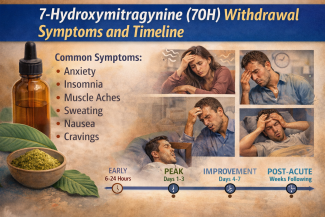
Common 7-OH Withdrawal Symptoms
Symptoms of 7-OH withdrawal may resemble traditional opioid withdrawal and can include:
- Anxiety and restlessness
- Insomnia
- Muscle aches
- Sweating
- Nausea
- Runny nose
- Chills
- Irritability
- Depressed mood
- Cravings for kratom or 7-OH products
While typically not life-threatening, symptoms can be distressing and may increase relapse risk.
7-OH Withdrawal Timeline
Early Phase (6–24 Hours After Last Use)
Initial 7-OH withdrawal symptoms may include anxiety, restlessness, and difficulty sleeping.
Peak Phase (Days 1–3)
Symptoms often intensify during this period. Muscle aches, sweating, nausea, and strong cravings may occur.
Improvement Phase (Days 4–7)
Physical symptoms typically begin to improve, although fatigue and mood changes may persist.
Post-Acute Symptoms (Weeks Following)
Some individuals report lingering anxiety, sleep disruption, or intermittent cravings, particularly after prolonged high-dose use.
Acute 7-OH withdrawal commonly lasts approximately 3–7 days, though timelines vary.
Is 7-OH Withdrawal Dangerous?
In most cases, 7-OH withdrawal is uncomfortable but not medically dangerous. However, individuals with:
- High-dose extract use
- Co-occurring opioid dependence
- Polysubstance use
- Underlying medical conditions
may benefit from medical supervision to ensure safety and reduce relapse risk.
Tapering vs. Abrupt Discontinuation
Some individuals attempt gradual dose reduction to minimize 7-OH withdrawal symptoms. Others discontinue abruptly. Currently, there is limited standardized research guiding taper protocols for concentrated 7-OH products.
Medical supervision is recommended when possible, particularly for heavy or prolonged use.
When to Seek Professional Support
Clinical evaluation may be appropriate if a person experiences:
- Severe cravings
- Inability to function due to symptoms
- Return to illicit opioid use
- Co-occurring mental health symptoms
Structured medication-assisted treatment (MAT) programs can assess whether medications such as buprenorphine are appropriate in cases of significant opioid receptor dependence. An overview of how comprehensive MAT programs operate — including monitoring and stabilization — is available here: Medication-Assisted Treatment (MAT).
7-OH vs. Traditional Kratom Withdrawal
Standard kratom leaf contains multiple alkaloids, including mitragynine and smaller amounts of 7-OH. Concentrated extract products may significantly increase 7-OH exposure, potentially intensifying dependence and withdrawal severity compared to traditional leaf use.
Product labeling may not always clearly indicate alkaloid concentration, making risk assessment more difficult for consumers.
Conclusion
7-OH withdrawal can produce opioid-like symptoms including anxiety, insomnia, muscle aches, sweating, and cravings. Acute symptoms typically last 3–7 days, though severity depends on dosage and duration of use. While often not medically dangerous, structured medical support can reduce relapse risk and improve recovery outcomes.