
Detox vs Outpatient Rehab in New Jersey
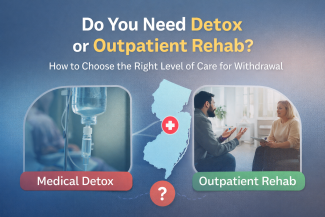
If you are searching for detox centers in New Jersey, alcohol rehab in NJ, or detox centers near Princeton, you are probably trying to answer one urgent question: do you need medical detox for withdrawal, or can you start with outpatient treatment?
The answer depends on what you are using, how often you are using it, whether you have withdrawal symptoms, and whether there is a safe and stable environment at home. Some people need 24/7 medical support during withdrawal. Others may be able to begin with outpatient care after a professional assessment.
This guide explains the difference between detox and outpatient rehab, the warning signs that suggest a higher level of care, and how to choose the safest next step for yourself or a loved one.
What Is the Difference Between Detox and Outpatient Rehab?
Detox and outpatient treatment are not the same thing. Detox is focused on safely managing withdrawal. Outpatient rehab is focused on therapy, recovery support, relapse prevention, and ongoing treatment while a person continues living at home.
What Medical Detox Does
Medical detox helps people safely withdraw from alcohol, opioids, benzodiazepines, and other substances under professional supervision. This level of care is often recommended when withdrawal symptoms could become serious or when someone has been using heavily for a long time.
Medical detox may include:
- 24/7 monitoring by licensed clinical staff
- Medication to reduce withdrawal symptoms and prevent complications
- Assessment of physical and mental health needs
- Planning for inpatient or outpatient treatment after detox
What Outpatient Rehab Does
Outpatient rehab allows a person to live at home while attending treatment during the week. It may include individual therapy, group counseling, family support, relapse prevention, and medication management.
Outpatient care may work well when:
- Withdrawal risk is low
- There is no history of severe withdrawal symptoms
- The person has a stable home environment
- There is strong support from family or friends
How to Tell if You May Need Detox Before Outpatient Treatment
One of the biggest mistakes people make is assuming they can stop on their own without medical support. In some cases, that is not just uncomfortable — it can be dangerous.
Signs You May Need a Detox Center in New Jersey
- You use alcohol or drugs every day or nearly every day
- You feel sick, shaky, anxious, or unable to function without using
- You have tried to stop before and could not get through withdrawal
- You have experienced seizures, hallucinations, panic, or severe insomnia during withdrawal
- You are using alcohol, opioids, or benzodiazepines regularly
Alcohol withdrawal can become dangerous quickly
Alcohol withdrawal can cause tremors, severe anxiety, confusion, seizures, and delirium tremens in some cases. That is why many people searching for alcohol rehab NJ or alcohol detox in New Jersey need a medical assessment before trying to quit on their own.
Opioid withdrawal is not usually fatal, but it can still require detox
Opioid withdrawal can be intense and difficult to manage without support. Many people relapse quickly because of the discomfort, cravings, and emotional distress that occur early in withdrawal. A structured detox program can make the process safer and more manageable.
Benzodiazepine withdrawal should not be managed without supervision
Withdrawal from benzodiazepines can be medically serious and often requires tapering under clinical care. If someone has been using Xanax, Klonopin, Ativan, or similar medications regularly, detox may be the safest starting point.
Signs You May Be Able to Start With Outpatient Treatment
Not everyone who searches for detox centers NJ needs inpatient detox. Some people may be appropriate for outpatient treatment if a clinical evaluation confirms that withdrawal risk is low.
You may be a candidate for outpatient care if:
- Your substance use is mild to moderate rather than severe
- You are not physically dependent
- You do not have dangerous withdrawal symptoms
- You have transportation, housing, and reliable support
- You are motivated to attend treatment consistently
Outpatient is not a shortcut
Outpatient care can be highly effective for the right person, but it only works when the level of care matches the clinical need. If the need is higher than expected, starting too low can increase the risk of relapse, dropout, or medical complications.
Detox vs Outpatient: Questions to Ask Before Choosing a Program
How severe is the substance use?
Daily use, long-term use, polysubstance use, and repeated relapse often point toward a higher level of care.
Are there current withdrawal symptoms?
If symptoms have already started — especially with alcohol, opioids, or benzodiazepines — detox may be necessary before therapy can begin.
Is there a safe place to recover?
Outpatient treatment depends heavily on the home environment. If home is unstable, triggering, or unsafe, outpatient may not be enough.
Has treatment been tried before?
If a person has already tried outpatient treatment and relapsed quickly, detox followed by a more structured program may be more appropriate.
Why the Right Level of Care Matters
Choosing the right program is not just about convenience. It is about safety, stabilization, and long-term recovery. Many people search for Princeton detox, detox centers in NJ, detox NJ, or alcohol rehab in NJ and see a mix of ads, map results, and treatment directories. The challenge is that visibility does not always mean the program is the best clinical fit.
What to look for in a quality detox or rehab program:
- Thorough assessment before admission
- Licensed medical and clinical staff
- Clear transition plan after detox
- Individualized treatment recommendations
- Support for mental health and co-occurring conditions
Detox-Only Programs vs Full Continuum of Care
Some programs focus only on withdrawal management. Others provide a full continuum of care, including detox, inpatient rehab, outpatient treatment, and aftercare planning. In most cases, people do better when detox is connected to ongoing treatment rather than treated as a standalone solution.
Why detox alone is usually not enough
Detox addresses the physical side of withdrawal, but it does not fully treat the behavioral, emotional, and psychological side of addiction. That is why many treatment professionals recommend moving directly from detox into a structured recovery plan.
Learn more: How to choose a drug detox center in New Jersey
How to Know if Help Is Needed for Yourself or a Loved One
Sometimes the person searching for help is not the one using substances. A spouse, parent, sibling, or adult child may be trying to understand whether a loved one needs detox or outpatient care.
Warning signs in a loved one may include:
- Loss of control over drinking or drug use
- Physical withdrawal symptoms when not using
- Frequent intoxication or isolation
- Failed attempts to quit
- Rapid decline in work, school, family, or health
If you are unsure, start with an assessment
You do not have to decide everything alone. A professional assessment can help determine whether detox, inpatient rehab, or outpatient care is the most appropriate next step.
Local Help for Detox and Rehab in New Jersey
If you are comparing options for detox centers NJ and want to understand the right level of care before starting treatment, a professional evaluation is the safest place to begin.
You can also explore detox centers NJ on Google Maps to review local options and treatment providers in your area.
For people looking for detox, alcohol rehab, or a structured plan for drug and alcohol treatment in New Jersey, visit New Jersey Behavioral Health Center to learn more about detox, treatment planning, and how to take the next step.
Final Thoughts
If you are trying to decide between detox and outpatient rehab, the most important question is not which option sounds easier. It is which option is clinically appropriate and safe.
Some people can begin with outpatient treatment. Others need medical detox first. The right answer depends on withdrawal risk, substance type, severity of use, and recovery environment.
When in doubt, get evaluated before trying to stop on your own. The right level of care can reduce risk, improve comfort, and create a stronger path toward long-term recovery.
If withdrawal symptoms are already happening or safety is a concern, seek immediate medical guidance. The sooner the right care begins, the better the chance of long-term stabilization and recovery.
Whether you are searching for yourself or someone you care about, help is available and recovery can begin with the right first step.