
Why Does Cocaine Cause Nosebleeds?
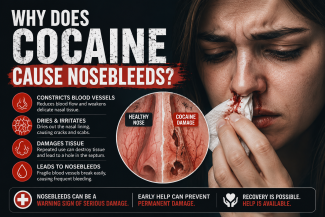
Quick Answer: Cocaine causes nosebleeds because it is a vasoconstrictor: snorting it narrows the blood vessels in the nose, cuts off oxygen to the lining, and dries and irritates the tissue until fragile vessels rupture. Repeated bleeding is an early warning sign of nasal damage that can progress to a perforated septum.
Cocaine can cause nosebleeds because it damages the delicate blood vessels and tissues inside the nose. When cocaine is snorted, it quickly narrows blood vessels, dries out the nasal lining, irritates the mucous membranes, and weakens the tissue that protects the inside of the nostrils.
Over time, this damage can lead to frequent nosebleeds, chronic crusting, nasal pain, infections, and in severe cases, a hole in the nasal septum.
How Cocaine Affects the Nose
The inside of the nose is lined with soft, sensitive tissue filled with tiny blood vessels. These blood vessels help warm, moisturize, and filter the air you breathe. Cocaine disrupts this process almost immediately after it is snorted.
Because cocaine is a powerful vasoconstrictor, it causes blood vessels in the nose to tighten. This limits blood flow and reduces the oxygen supply to the nasal lining. When tissue does not get enough oxygen, it becomes dry, fragile, and more likely to crack or bleed. Nosebleeds are usually one of the earliest signs of a broader pattern of injury — for the full progression from mild irritation to permanent collapse, see our guide on how cocaine damages the nose.
Why Cocaine Causes Nosebleeds
Cocaine-related nosebleeds usually happen because several types of damage occur at the same time.
1. Reduced Blood Flow
Cocaine sharply constricts the small blood vessels inside the nasal passages. This reduced circulation can weaken the nasal lining and make it harder for the tissue to heal after irritation or injury.
2. Fragile Blood Vessels
When blood vessels are repeatedly deprived of healthy circulation, they can become brittle. Even minor pressure from snorting, sneezing, or blowing the nose may cause these fragile vessels to break.
3. Dryness and Cracking
Cocaine dries out the mucous membranes inside the nose. As the lining becomes dry, it may crack, crust, and form scabs. When those scabs loosen or are picked away, bleeding can occur.
4. Chemical Irritation
Street cocaine may contain cutting agents or other chemicals that irritate the nasal lining. These substances can inflame the tissue, slow healing, and increase the risk of repeated bleeding.
5. Physical Abrasion
Cocaine powder can scratch the inside of the nose as it is inhaled. Straws, rolled paper, or other snorting tools may also scrape the nostrils and worsen irritation.
Can Cocaine Cause a Perforated Septum?
Yes. Repeated cocaine use can damage the nasal septum, which is the wall of cartilage and tissue that separates the nostrils.
Because cocaine reduces blood flow, the septum may not receive enough oxygen to stay healthy. Over time, tissue can break down and die. This can create a hole in the septum, known as a perforated septum. For a clinical look at how a perforation is evaluated and treated, see our guide on nasal damage and septal perforation from cocaine.
Signs of a perforated septum may include:
- Frequent nosebleeds
- Whistling sounds when breathing through the nose
- Chronic nasal crusting
- Nasal pain or pressure
- Difficulty breathing through the nose
- Recurring sinus or nasal infections
Are Cocaine Nosebleeds a Warning Sign?
Yes. Nosebleeds after cocaine use are often a warning sign that the nasal tissue is being damaged. Even occasional bleeding can mean that blood vessels and mucous membranes are becoming irritated, weakened, or injured.
If cocaine use continues, the damage may become more severe and harder to reverse.
Can the Nose Heal After Cocaine Use?
Some mild nasal irritation may improve after cocaine use stops, especially if the damage is limited to dryness or inflammation. However, more serious injuries may not fully heal on their own.
A perforated septum, collapsed nasal structure, or long-term tissue loss may require medical treatment. In some cases, surgery may be needed, but surgical repair is usually only considered after cocaine use has stopped completely.
When to Get Medical Help
Medical care is important if nosebleeds are frequent, heavy, painful, or difficult to stop. A doctor or ear, nose, and throat specialist can evaluate the nasal passages and check for tissue damage, infection, or septal perforation.
Seek medical attention if you experience:
- Nosebleeds that happen often
- Bleeding that does not stop after applying pressure
- Severe nasal pain
- Foul-smelling discharge
- Visible holes or wounds inside the nose
- Ongoing crusting or scabbing
- Trouble breathing through the nose
How to Reduce Cocaine-Related Nose Damage
The only reliable way to prevent cocaine-related nasal damage from getting worse is to stop using cocaine. Continuing to snort cocaine can increase the risk of chronic bleeding, infection, tissue death, and permanent changes to the nose.
People who are struggling to stop using cocaine may benefit from speaking with a medical professional, addiction treatment provider, therapist, or recovery support program. Because the nasal damage is downstream of the cocaine use itself, treating the addiction is the most durable fix — understanding why cocaine is so hard to quit is often the first step, and people on Long Island can find vetted programs through Cocaine Addiction Treatment on Long Island. Help is available, and treatment can reduce the risk of long-term physical and mental health complications.
Frequently Asked Questions About Cocaine and Nosebleeds
Why does cocaine make your nose bleed?
Cocaine makes the nose bleed by narrowing blood vessels, reducing blood flow, drying the nasal lining, and irritating delicate tissue inside the nostrils. This weakens blood vessels and makes them more likely to rupture.
Can one-time cocaine use cause a nosebleed?
Yes. Even one-time use can irritate the nasal lining and cause bleeding, especially if the tissue is already dry, inflamed, or sensitive.
Do frequent nosebleeds mean cocaine has damaged my nose?
Frequent nosebleeds may be a sign of nasal tissue damage. Repeated bleeding should be evaluated by a healthcare professional.
Can cocaine cause a hole in your nose?
Yes. Long-term snorting of cocaine can reduce blood flow to the nasal septum, causing tissue death and eventually a perforated septum.
Will cocaine nosebleeds stop if I quit?
They may improve if the damage is mild and cocaine use stops. More serious damage, such as a perforated septum, may require medical treatment.
Related Guides
- Coke Nose: How Cocaine Damages the Nose and When It Becomes Irreversible — the full progression of nasal damage, from irritation to collapse.
- Can Cocaine Cause a Hole in Your Nose? Long-Term Nasal Damage and Clinical Treatment Strategies — clinical evaluation and treatment of septal perforation.
- Is Cocaine the Hardest Drug to Quit? — why cocaine dependence is so difficult, and what recovery involves.
- Cocaine Overdose: Signs, Symptoms, and What to Do — recognizing an overdose and the growing fentanyl risk.
References
- National Institute on Drug Abuse. Cocaine Research Topics. NIDA, NIH. https://nida.nih.gov/research-topics/cocaine
- MedlinePlus. Cocaine. U.S. National Library of Medicine. https://medlineplus.gov/cocaine.html
- Distribution of cocaine-induced midline destructive lesions: systematic review and classification (nasal septal perforation). PMC. https://pmc.ncbi.nlm.nih.gov/articles/PMC9130192/
Last updated: July 6, 2026
Written by Benjamin Zohar, NCACIP — Nationally Certified Advanced Clinical Intervention Professional and ISSUP New York Network Moderator, who writes evidence-based substance-use education grounded in primary clinical and government sources.
Medically reviewed by Brandon McNally, RN — ICU Critical Care Nurse, who reviewed this article for medical accuracy.
This article is for informational purposes only and is not a substitute for professional medical advice. If you have frequent, heavy, or hard-to-stop nosebleeds, or other signs of nasal damage, consult a qualified healthcare provider or ENT specialist.