
Cocaine and Alcohol: Cocaethylene and Cardiac Risk
Medical Review: Brandon McNally, RN | Published: July 25, 2026 | Last Updated: July 25, 2026
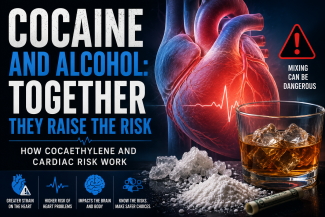
Quick answer: When cocaine and alcohol are used together, the liver produces cocaethylene — a psychoactive metabolite that does not exist unless both drugs are present. It lasts roughly twice as long as cocaine, is more toxic to the heart, and is associated with an 18- to 25-fold increase in the risk of sudden death compared with cocaine alone.
Chest pain, severe shortness of breath, confusion, seizure, or collapse after using cocaine and alcohol is a medical emergency. Call 911. Tell responders exactly what was taken — treatment for cocaine-related cardiac events differs from standard care, and withholding that information is dangerous. For substance use support, the free SAMHSA National Helpline is 1-800-662-4357.
Key Takeaways
- Cocaethylene is the only known psychoactive substance formed entirely inside the human body.
- It forms in the liver whenever cocaine and alcohol are present at the same time — no particular order or quantity is required.
- Cocaine has a half-life of roughly 45 to 90 minutes; cocaethylene's is about 144 minutes, so cardiac strain continues after the subjective high has faded.
- A systematic review found cocaethylene carries an 18- to 25-fold increase in sudden-death risk relative to cocaine alone.
- The combination is not a niche pattern — most people who use cocaine also drink, and a majority do so in the same session.
- The reason it feels better is the reason it is more dangerous: each drug masks the warning signs produced by the other.
On This Page
- What Is Cocaethylene?
- How It Forms
- Cocaine vs. Cocaethylene
- Cardiac Risk
- Session Timeline
- Why People Mix Them
- Liver and Brain
- Myths vs. Facts
- Emergency Signs
- Questions People Ask
- When to Seek Help
What Is Cocaethylene?
Cocaethylene is a psychoactive compound produced in the liver when cocaine and ethanol are metabolised at the same time. It is pharmacologically similar to cocaine — it blocks dopamine reuptake and produces comparable stimulant effects — but it persists longer in the body and appears to be more toxic to the cardiovascular system.
What makes it unusual is not just its toxicity. As a review published in Cureus notes, cocaethylene is the only known instance of a new psychoactive substance being formed entirely within the human body. Nobody manufactures it. Nobody sells it. It is created by the person who uses both drugs, in their own liver, every time.
The same review makes a second point worth sitting with: despite being known to science for decades, cocaethylene has not been extensively studied, and its metabolic pathways are still not fully mapped. Clinicians encounter it constantly and understand it less well than its prevalence would suggest.
How Cocaethylene Forms
Normally, the body breaks cocaine down through hydrolysis into benzoylecgonine — an inactive metabolite that produces no drug effect and is what most urine drug screens actually detect.
When ethanol is present in the bloodstream, that pathway shifts. Hepatic carboxylesterase catalyses a transesterification reaction instead, replacing a methyl group with an ethyl group. The product is cocaethylene: still active, still stimulant, and now cleared more slowly than the drug it came from.
Three things follow from this that matter clinically:
- There is no safe sequence. Cocaethylene forms whenever both substances are present together. Which one was taken first does not prevent it.
- There is no threshold dose. Formation depends on both being in the system, not on either reaching a particular level.
- Concentrations are unpredictable. How much cocaethylene a person produces depends on the timing and quantities of both drugs, which is why two people using the same amounts can have very different exposures.
Alcohol also changes cocaine's own pharmacokinetics. Ethanol causes nasal capillary vasodilation, and some studies have found serum cocaine concentrations roughly 30 percent higher when alcohol is consumed before insufflation. The person is not only producing a second active compound — they are absorbing more of the first one.
Cocaine vs. Cocaethylene: What Changes
| Cocaine | Cocaethylene | |
|---|---|---|
| Origin | Ingested | Formed in the liver from cocaine + ethanol |
| Elimination half-life | About 45–90 minutes | About 144 minutes |
| Primary action | Dopamine reuptake inhibition | Dopamine reuptake inhibition |
| Cardiotoxicity | Significant | Greater; associated with myocardial injury and cardiac arrest |
| Sudden-death risk | Baseline for comparison | 18–25 times higher than cocaine alone |
| Subjective effect | Euphoria with anxiety, jitteriness | Smoother, longer, less anxious — which drives repeat use |
| Risk window | Roughly tracks the high | Extends well past the high |
Clinical pearl: The dangerous window opens after the party ends. Cocaethylene's half-life is roughly double cocaine's, so cardiac strain is still climbing while the subjective high is fading. Patients describe cardiac events "coming out of nowhere" hours later, when they had stopped using and assumed the risk had passed. When taking a history, ask about alcohol in the same session specifically — people report cocaine use and omit the drinking, because they do not think of alcohol as part of the drug story.
Why the Heart Is the Main Concern
Cocaine on its own places substantial strain on the cardiovascular system: it raises heart rate and blood pressure, constricts coronary arteries, and increases myocardial oxygen demand while reducing supply. It is a well-documented cause of heart attack in people with no prior cardiac disease, including people in their twenties and thirties.
Cocaethylene appears to compound this. A systematic review of cardiovascular risk in simultaneous cocaine and alcohol use found that the presence of cocaethylene carries an 18- to 25-fold increase in the risk of sudden death compared with cocaine alone, and is associated with myocardial injury and cardiac arrest — probably through inhibition of cardiac ion channels.
Scale matters here. Cocaine accounts for over 500,000 emergency department visits annually in the United States, and ethanol co-ingestion is reported in roughly 34 percent of them. This is not an edge case that occasionally reaches an emergency room. It is a substantial share of all cocaine-related emergencies.
What Happens Across a Session
| Stage | What the person experiences | What is happening physiologically |
|---|---|---|
| First drink, then cocaine | Alcohol's sedation lifts; alertness returns | Nasal vasodilation increases cocaine absorption; cocaethylene synthesis begins |
| First 1–2 hours | A smoother, less anxious high than cocaine alone | Cocaethylene accumulating alongside cocaine; heart rate and blood pressure rising |
| Mid-session | Feeling less drunk than the amount consumed would suggest | Cocaine masking alcohol's sedative signals, enabling heavier drinking |
| 2–4 hours | The high fades; the person may stop using | Cocaine clearing; cocaethylene still circulating with a longer half-life |
| 4+ hours | "Coming down," often asleep or heading home | Cardiac strain persists after the subjective effects end — the highest-risk, lowest-awareness window |
Why People Mix Them — and Why That Matters
This combination is not unusual behaviour at the margins. Estimates suggest the large majority of people who use cocaine also drink alcohol, and a meta-analysis of ten studies conducted between 1985 and 2017 estimated that around 74 percent of cocaine users drink simultaneously. The most common way to use cocaine is also the most dangerous way.
The reasons are straightforward and mutually reinforcing:
- Alcohol takes the edge off cocaine. It reduces the jitteriness, anxiety and racing thoughts that many people find unpleasant about stimulants.
- Cocaine takes the sedation out of alcohol. People stay awake, feel less drunk, and drink considerably more than they otherwise would.
- Cocaethylene itself feels better. Longer, smoother, less anxious — a genuinely more pleasant experience than either drug alone.
- The settings overlap completely. Bars, parties, and social events supply both.
The clinical implication is important and frequently missed: for many people these are not two separate habits that happen to coincide. They are one pattern. Treating the cocaine use while leaving the drinking untouched leaves the trigger, the setting, and the neurochemical reinforcement fully intact. This is one reason cocaine has among the highest relapse rates of any substance — a pattern examined in more depth in 5 Most Addictive Drugs of Abuse in 2026: Evidence-Based Rankings.
Beyond the Heart: Liver and Brain
Liver
Cocaine and alcohol are each independently hepatotoxic, and the combination compounds that burden while the liver is simultaneously doing the metabolic work of producing cocaethylene.
Brain and blood vessels
Cocaethylene potentiates both the direct cardiotoxic and the indirect neurotoxic effects of either drug alone. The vascular risk is not limited to the heart: case reports document arterial dissection and massive stroke in people using cocaine and alcohol together, including in middle-aged patients presenting with catastrophic neurological injury.
Judgment and injury
Cocaine's masking of alcohol impairment has consequences beyond the drinking itself. A person who feels sober enough to drive is measurably impaired regardless of how alert they feel — and stimulant-driven confidence makes that misjudgment more likely, not less.
Myths vs. Facts
| Myth | Fact |
|---|---|
| Alcohol makes cocaine safer by smoothing out the anxiety. | It smooths the experience while producing a metabolite more cardiotoxic than cocaine itself. |
| Spacing them out an hour apart avoids the problem. | Cocaethylene forms whenever both are present. Cocaine's half-life alone means an hour changes very little. |
| If my heart were in trouble I would feel it during the high. | Cocaethylene outlasts the high. The highest-risk window is after the effects fade. |
| Cardiac events only happen to long-term heavy users. | Cocaine-related cardiac events occur in young people with no prior heart disease. |
| The cocaine is the drug; the alcohol is just a drink alongside it. | The combination creates a third active compound that neither produces alone. |
Emergency Warning Signs
Call 911 immediately for any of the following after cocaine and alcohol use:
- Chest pain, pressure, or pain radiating to the arm or jaw
- Severe shortness of breath
- Irregular, racing, or pounding heartbeat
- Seizure
- Sudden severe headache, facial droop, weakness on one side, or slurred speech
- Very high body temperature, hot dry skin, or confusion
- Loss of consciousness or unresponsiveness
Tell emergency responders exactly what was taken and when. Standard treatment for some cardiac presentations can be actively harmful in cocaine-associated cases, and clinicians need to know. Nobody is going to be arrested for the disclosure, and withholding it costs far more than it protects.
Frequently Asked Questions
What is cocaethylene?
Cocaethylene is a psychoactive metabolite formed in the liver when cocaine and alcohol are present in the body at the same time. It acts much like cocaine but has a longer half-life and greater cardiotoxicity. It is the only known psychoactive substance produced entirely inside the human body.
What happens when you mix cocaine and alcohol?
The liver produces cocaethylene, which prolongs and smooths the stimulant effect while increasing strain on the heart. Alcohol also increases cocaine absorption, and cocaine masks alcohol's sedative effects, which typically leads to heavier drinking than intended.
How long does cocaethylene stay in your system?
Cocaethylene has an elimination half-life of roughly 144 minutes, compared with about 45 to 90 minutes for cocaine. Meaningful amounts therefore remain in circulation for several hours after the subjective effects have ended.
Is mixing cocaine and alcohol more dangerous than cocaine alone?
Yes. A systematic review found the presence of cocaethylene carries an 18- to 25-fold increase in the risk of sudden death compared with cocaine use without alcohol, along with association with myocardial injury and cardiac arrest.
Does alcohol make cocaine stronger?
Effectively, yes. Some studies have found serum cocaine concentrations around 30 percent higher when alcohol is consumed before insufflation, because alcohol dilates nasal capillaries and increases absorption — on top of the cocaethylene that forms separately.
Can mixing cocaine and alcohol cause a heart attack?
Yes, including in young people with no history of heart disease. Cocaine constricts coronary arteries while increasing the heart's oxygen demand, and cocaethylene compounds that effect while circulating for longer.
How long should you wait between cocaine and alcohol?
There is no established safe interval, and framing the question that way is misleading. Cocaethylene forms whenever both substances overlap in the body, and cocaine's own half-life means that overlap persists for hours. The clinically honest answer is that no waiting period makes the combination safe.
Why does mixing cocaine and alcohol feel better?
Cocaethylene produces a longer, smoother, less anxious stimulant effect than cocaine alone, and each drug suppresses the unpleasant aspects of the other. That improved subjective experience is precisely what makes the combination both popular and hazardous.
Does cocaethylene show up on a drug test?
Standard urine screens look for benzoylecgonine, cocaine's main inactive metabolite, rather than cocaethylene specifically. Confirmatory laboratory testing can identify cocaethylene, and its presence is direct evidence that cocaine and alcohol were used together.
Can you die from mixing cocaine and alcohol?
Yes. Sudden cardiac death is the principal mechanism, and the risk is substantially higher than with cocaine alone. Stroke, hyperthermia, and injury related to impaired judgment also contribute.
When to Seek Help
Because heavy drinking is part of this pattern, stopping alcohol without medical supervision carries its own risk — Every1 Center provides medically supervised detox for stimulant and alcohol co-use. Where someone close to you cannot see it from the inside, Intervention New York works with families on structured intervention.
Two situations warrant prompt professional input. Anyone who has experienced chest pain, palpitations, or a frightening episode during or after using both should be evaluated by a physician regardless of how well they feel now. And anyone drinking heavily on a regular basis should not stop abruptly without medical guidance — alcohol withdrawal is among the few withdrawal syndromes that can be fatal, and it requires assessment to determine the appropriate level of care.
If cocaine and alcohol have become a paired pattern and someone close to you cannot see it from the inside, a structured intervention is often what moves a case where a cardiac scare has already happened and been dismissed.
Related Guides
- 5 Most Addictive Drugs of Abuse in 2026: Evidence-Based Rankings
- Is Cocaine the Hardest Drug to Quit? Withdrawal & Recovery
- What Is Fishscale Cocaine? Purity, Adulterants and Risk
- Cocaine Overdose: Signs, Symptoms, and What to Do
- Coke Nose: How Cocaine Damages the Nose and When It Becomes Irreversible
- Abstinence — Definition, Meaning in Addiction Recovery, and Why the Term Is Contested
- Strengthening New York's Recovery Community Through Evidence-Based Intervention & Education
References
- Pergolizzi J, et al. Cocaethylene: When Cocaine and Alcohol Are Taken Together. Cureus. 2022.
- Cardiovascular Risks of Simultaneous Use of Alcohol and Cocaine — A Systematic Review.
- Cocaethylene cardiotoxicity in emergency department patients with acute drug overdose.
- Neurotoxic and cardiotoxic effects of cocaine and ethanol.
- NIDA — Cocaine Research Report.
- SAMHSA National Helpline: 1-800-662-4357.
About the Author
Benjamin Zohar, NCACIP, is a Nationally Certified Advanced Clinical Intervention Professional and ISSUP network moderator specializing in addiction intervention, treatment navigation and emerging substance-use risks.
He publishes evidence-informed resources addressing counterfeit medications, fentanyl exposure, benzodiazepine safety, kratom dependence and concentrated 7-hydroxymitragynine products. His work published through ISSUP has been cited or referenced by GoodRx, The Washington Post, WIRED and Newsweek.
Written by: Benjamin Zohar, NCACIP
Medical Review
Medically reviewed by: Brandon McNally, RN
Medical Disclaimer
This article is intended for educational and public-health purposes. It does not provide individualized medical advice, diagnosis or a tapering schedule. Do not start, stop or alter a prescription medication without consulting a qualified healthcare professional. Call emergency services for seizures, difficulty breathing, loss of consciousness, severe confusion or other life-threatening symptoms.