Synthetic cannabinoids: Reflections from Mauritius
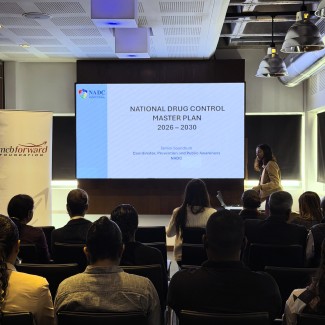
During a recent engagement in Mauritius, I had the opportunity to hear the National Agency for Drug Control (NADC) present the National Drug Control Master Plan 2026–2030 and to share the suite of resources available through ISSUP. This exchange took place as the country grapples with the death of an infant in Roche-Bois and debating the possible involvement of synthetic cannabinoids, mental illness and the relationship between them.
This brings together several responsibilities we share as substance use professionals: responding compassionately to tragedy, communicating evidence accurately, recognising emerging drug threats, and helping national strategies translate into effective prevention, treatment and recovery support.
At the centre of this discussion was the loss of a child’s life and a grieving family. News reports described the father’s arrest, allegations of synthetic-drug use and his reported claim of hearing a voice instructing him to harm his child. These accounts warrant concern, but they do not establish which substance was consumed, intoxication at the time, a psychiatric diagnosis or a causal explanation for the death. Our professional response must preserve that distinction.
For me, this raises a central question: how do we take the risks seriously while avoiding conclusions that the available evidence cannot support?
Synthetic cannabinoids can produce agitation, paranoia, hallucinations and psychosis, alongside serious physical complications such as seizures and cardiovascular or kidney injury. Their composition and strength can vary considerably. As the Alcohol and Drug Foundation explains, describing these products as “synthetic cannabis” is misleading because their effects and risks can differ substantially from those of cannabis. Dependence and potentially severe withdrawal add further complexity.
However, recognising that a substance can produce psychotic symptoms does not establish that it caused those symptoms in a particular person, or that those symptoms caused a violent act. Assessment must consider the timing of substance use and symptoms, previous mental health difficulties, other substances, medical conditions and the person’s circumstances. Comorbidity means that conditions coexist; it does not, by itself, explain their relationship. Clinical guidance supports comprehensive assessment and coordinated treatment of both psychosis and substance use, including reviewing diagnoses made during a crisis.
We should therefore resist both diagnostic certainty based on news reports and language that presents people with mental illness or substance use disorders as inherently dangerous. At the same time, concern about stigma must not displace careful assessment of immediate risk, domestic violence or the safety of children.
The concern in Mauritius rests also on evidence extending well beyond this incident. The National Drug Observatory Report 2024 records cannabis in 40.9% of registered drug offences and synthetic cannabinoids in 27.6%. In public health institutions, presumed new psychoactive substance (NPS) use accounted for 617 admissions, 57.1% of drug-related admissions, compared with 113 admissions associated with cannabis. NPS-related admissions increased from 414 in 2023 to 617 in 2024, approximately 49%.
These figures do require some mindful interpretation. Enforcement records do not measure population prevalence, and admissions do not necessarily represent different individuals. Crucially, the hospital category includes mixed and unspecified synthetic drugs: it cannot be relabelled as laboratory-confirmed synthetic-cannabinoid use. Nevertheless, the figures demonstrate a substantial acute-care burden requiring sustained attention.
In 2020, the Global Initiative Against Transnational Organized Crime described the rapid expansion of synthetic-cannabinoid markets in Mauritius, Mayotte and the Comoros. Its analysis linked market growth to accessibility, profitability and, in Mauritius, affordability relative to cannabis and heroin. That account provides regional context for current concerns, while remaining a historical reflection rather than a description of every current market condition.
The Master Plan presented by the NADC offers a framework for responding to this complexity. Its four pillars cover drug supply reduction, drug demand reduction, health and wellbeing, and a coordinated response. Particularly relevant are its commitments to workforce capacity to address co-occurring mental health conditions, better follow-up and aftercare, and improved sharing of forensic information through early warning systems.
The complementary paper in Annex G also calls for sustained, evidence-based prevention, stronger referral pathways and a review of cannabis policy informed by public health, human rights, criminal justice consequences and safeguards for young people. It explicitly avoids endorsing a particular cannabis policy model at this stage. These are strategic directions and proposals; their value will depend on implementation, resources and measurable improvements in care.
Mauritius’s experience sits within a changing international picture. In August 2026, UNODC reported that its Early Warning Advisory had received information on 1,525 substances from 155 countries and territories. Synthetic cannabinoids represented 24% of substances reported for the first time during the preliminary 2025–2026 reporting period. These are surveillance findings about emerging substances, rather than estimates of how many people use them. They underline the need for countries to exchange information before unfamiliar products become established locally.
Vaping becomes an important part of this discussion. It describes a means of administration, but not a reliable indication of what a product contains. UNODC has documented synthetic cannabinoids in vaping products believed to contain THC, alongside other psychoactive substances in mislabelled products. Its April 2025 alert highlights variable concentrations and the challenges these products create for prevention and treatment. This international evidence does not establish the extent of synthetic-cannabinoid vaping in Mauritius, but it gives local surveillance and professional education a clear issue to examine.
In practice, asking whether someone “vapes” is only the beginning. We also need to ask what they believe the product contains, how it was obtained and what effects followed its use. (See also: The product may not be what it says: What emerging synthetic drugs and dangerous mixtures mean for practice). Prevention messages should explain uncertainty about product contents without implying that every vaping product contains synthetic cannabinoids. Similarly, cannabis, synthetic cannabinoid receptor agonists and emerging semi-synthetic cannabinoid products should not be treated as interchangeable categories.
These challenges give practical meaning to the ISSUP resources I shared in Mauritius. Knowledge Share allows members to exchange research, alerts and practice experience; Networks create opportunities for discussion across countries and disciplines; and the Online Learning Hub provides access to the Universal Prevention, Treatment and Recovery Curricula. Together with webinars and curated resources, these offer ways to connect emerging evidence with professional learning.
So perhaps we could use the Mauritius experience to examine four aspects of our own work:
- Preparedness: Can frontline teams recognise and respond to suspected synthetic-cannabinoid complications, including presentations involving vaping?
- Continuity of care: Do emergency, mental health, substance use and family-support services have clear pathways for working together?
- Early warning: Can clinical concerns reach laboratories and public health authorities, and can verified findings return quickly to practitioners and communities?
- Communication: Do our messages distinguish suspected exposure from confirmed findings, and association from causation?
The contribution of our international community is to make learning useful across settings. We can share verified alerts, discuss difficult clinical questions, strengthen prevention and support national partners as they implement their strategies. My reflection from Mauritius is that synthetic cannabinoids deserve a sustained place in this work, with the safety and dignity of individuals, children and families guiding our response.
Sources:
- Le Mauricien: Roche-Bois: Jean Perrine a caché son bébé mort sous un amas de vêtements
- NICE: Coexisting severe mental illness (psychosis) and substance misuse: assessment and management
- Mauritius: National Drug Observatory Report 2024
- GI-TOC: Sun, sand and synthetics: the sharp rise of synthetic cannabinoids in the Indian Ocean islands
- Mauritius: National Drug Control Master Plan 2026–2030
- UNODC: Global Forensic Early Warning System monitors over 1,500 psychoactive substances
- UNODC: Increasing range of drugs and new psychoactive substances found in vaping products
- ISSUP: Website guides, resources and learning opportunities
Further reading
- Mauritius Prime Minister’s Office: First NDCC meeting sets anti-drug priorities
- Craft and colleagues: Synthetic cannabinoid withdrawal symptoms and comparison with high-potency cannabis
- UNODC: Early Warning Advisory on New Psychoactive Substances
- ISSUP: A guide to evidence-based substance use prevention resources