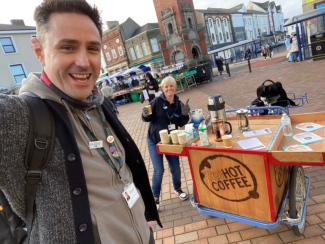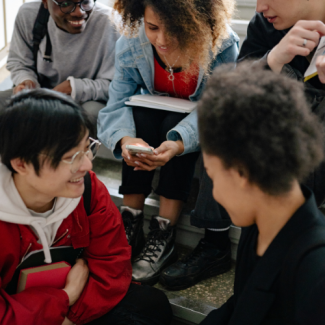
The range of services, programmes, and community resources that help individuals sustain recovery and improve their health, wellbeing, and quality of life after or alongside treatment for substance use disorders. These supports may include peer support, recovery coaching, mutual-help groups, housing assistance, employment services, family support, and community-based recovery programmes. Recovery support recognises that recovery is an ongoing process and that long-term wellbeing often requires continued social, practical, and emotional support. By strengthening personal resilience, social connections, and opportunities for reintegration, recovery support plays an important role in comprehensive responses to substance use.
Recovery Support
Understanding alcohol use disorder and help-seeking in a Hispanic faith-based community
Abstract Introduction Hispanic Americans are disproportionately affected by alcohol use disorders (AUD) yet many are reluctant to seek alcohol treatment. Faith-based communities could serve as an effective setting for raising awareness and...
Path to Freedom: Buddhist Psychology for Addiction Recovery - Course Syllabus
This course is designed to complement and strengthen existing training curricula in addiction prevention and recovery by providing a deeper, structured understanding grounded in Buddhist psychology. It builds upon and further advances...
Spotting the Signs, Building a Shield
This substance abuse awareness infographic portrays the risk factors of using substances. The most common risk factors are listed on this infographic to educate others on how and why people may undergo substance abuse. Resources such as...
Cost–benefit analysis of a 24/7 text-based online emotional support platform for at-risk youth in Hong Kong
Source: Yip PSF, Chen J, Tang RLM, et al. Cost–benefit analysis of a 24/7 text-based online emotional support platform for at-risk youth in Hong Kong. BMJ Open 2026;16:e107806. doi: 10.1136/bmjopen-2025-107806 Abstract Objectives This study...
Romancing the Brain: Conflict Resolution for Recovery (CRR) Training
Join CRR expert Cynthia Moreno Tuohy, BSW, NCAC II, CDC III, SAP, for a two-day virtual Romancing the Brain: Conflict Resolution for Recovery (CRR) Zoom training from 12:00pm - 7:00pm ET (11CT/10MT/9PT) on Thursday, June 25 - Friday, June 26, 2026.
Anti-Stigma Language Guide
We’re really pleased to launch our first report on stigma and language, which you can read on this page or download here. We hope it will be a useful guide for organisations that are less familiar with the drug and alcohol treatment sector...
Stigma, Substance Use, and the Struggle to Access Rehab
Phoenix Futures provide a wide range of harm reduction, treatment and advocacy services. We have a keen interest, and long history, in addressing stigma and on behalf of the Anti-Stigma Network we seek to broader anti-stigma movement. In...
Ecological Momentary Assessment and Ecological Momentary Interventions in Substance Use Disorders Recovery
INTRODUCTION: Ecological Momentary Assessment (EMA) can capture fluctuations in an individual’s recovery while minimizing recall bias by collecting real-time data in daily life. Ecological Momentary Interventions (EMIs) build on EMA to...
INTERSECTION OF SCIENCE AND SPIRITUALITY IN RECOVERY
The reality that recovery from substance use disorders (SUD) can emerge through multiple pathways and not be linear, too, was powerfully demonstrated during the January Pathways to Progress Summit hosted by the 1:11 Project Africa at...
International Cannabinoid Research Society Symposium
The International Cannabinoid Research Society is delighted to announce that our 36th annual ICRS Symposium will be held from June 28-July 2 – in Dijon, France. The Symposium will open with a welcome reception on June 28 and close on the evening of July 2, with a departure date on July 3.